Search

GEOGRAPHY EDUCATION

Supporting geography educators everywhere with current digital resources.

Tag

diffusion

Music and Resistance

“Life imitated art in early 1980 when South African school children, fed up with an inferior apartheid-era education system, took to chanting the lyrics of Pink Floyd‘s ‘Another Brick in the Wall.’ The song, with its memorable line stating, “We don’t need no education,” had held the top spot on the local charts for almost three months, a total of seven weeks longer than it did in America. By May 2, 1980, the South African government had issued a ban on ‘Another Brick in the Wall,’ creating international headlines.”

Source: www.youtube.com

How a song about rigid school rules in England became banned in South Africa is a fantastic lesson in cultural diffusion and glocalization (where the global becomes intensely local).  Here we see an historical example of a global cultural phenomenon taking on local political dimensions.  If you are interested in teaching more about the social and historical content of music, check out TeachRock.org.      


Questions to Ponder: Why would this song resonate in South Africa?  How might the video/lyrics map onto the South African situation? 


Tags culturediffusion, globalization, popular culture, South AfricaAfrica, music.

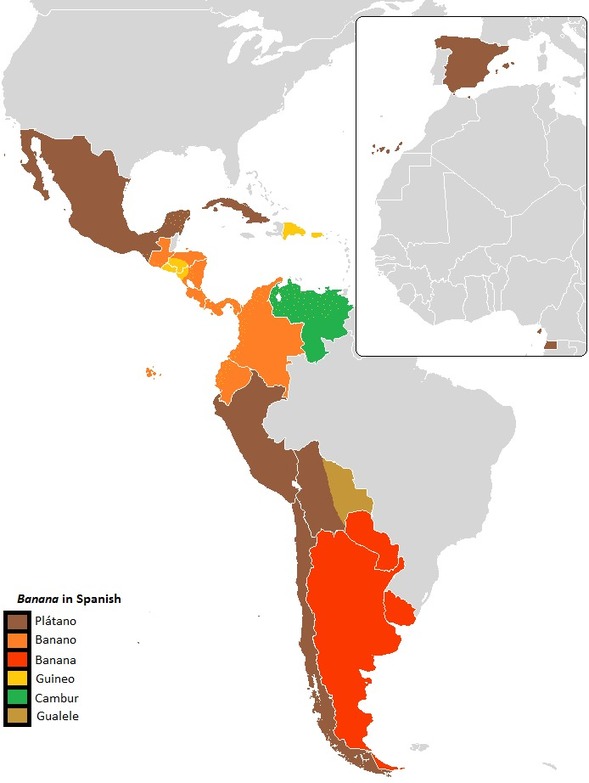
How to Say ‘Banana’ in Spanish

Source: i.imgur.com

I’ve lived in both the plátano and banano sub-regions of the Spanish-speaking realm and this discrepancy was one I always found curious (likewise, peanut butter is called crema de cacahuate in Mexico, but mantequilla de maní in Costa Rica). I’ve had many humorous encounters with friends from throughout the Spanish-speaking world when words that mean one thing in a particular country have VERY different connotations in another.


Questions to Ponder: Why do languages have different vocabularies in distinct places?  Why makes a language especially prone to a varied set of regionalized terms?


Tags: language, colonialismdiffusion, culture, mapping, regions.

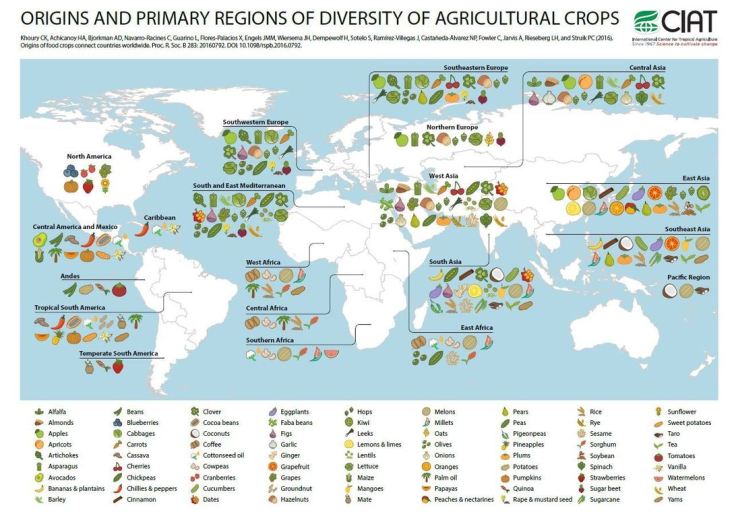
Where our food came from

“Explore the geographic origins of our food crops – where they were initially domesticated and evolved over time – and discover how important these ‘primary regions of diversity’ are to our current diets and agricultural production areas.”

Source: blog.ciat.cgiar.org

This is an incredibly rich website with great interactive maps, dynamic charts, and text with rich citations.  This is one of those resources that an entire class could use as a starting point to create 30+ distinct project.  This is definitely one of the most important and best resources that I’ve shared recently, one that I’m going to use in my class.  Where did a particular crop originally come from?  Where is it produced today?   How do these historic and current agricultural geographies change local diets and economies around the world?  All these issues can be explored with this interactive that includes, but goes beyond the Columbian Exchange


Tags: foodeconomicfood production, agribusiness, agriculture, APHG, unit 5 agriculture, globalizationbiogeography, ecology, diffusion.

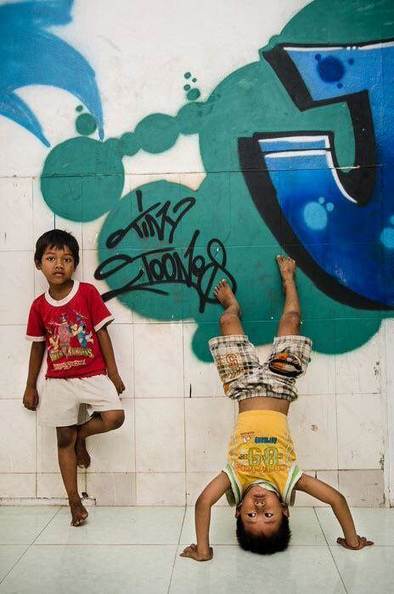
Break Dancing, NGOs, and Global Lives

Deported to Cambodia, Former Gang Member Gets A Second Chance. When Tuy Sobil was deported to Cambodia from the U.S., it was the first time he had ever stepped foot in the Southeast Asian country.

Source: www.nbcnews.com

My students have enjoyed this video about a break-dancing NGO that was created by a former refugee from the United States who was subsequently deported to Cambodia (this article serves as some added background and a follow-up to the story).  This story shows the influence of urban youth culture and various strands of geography in this young man’s global life.


Tags: Cambodia, diffusion, cultureNGOs, globalization.

How religion(s) spread across the world

VIDEO: 5,000 years of religious history in two minutes.

Source: www.businessinsider.com

Short, sweet and to the point–this video is a great way to show the historical geographies of major world religions.  What are the cultural barriers to the diffusion of one of these particular religions?  What geographic factors helped to facilitate the expansion of one of these world religions?  


Tags: religiondiffusion, culture, ChristianityIslamBuddhismHinduismJudaism,
unit 3 culture.


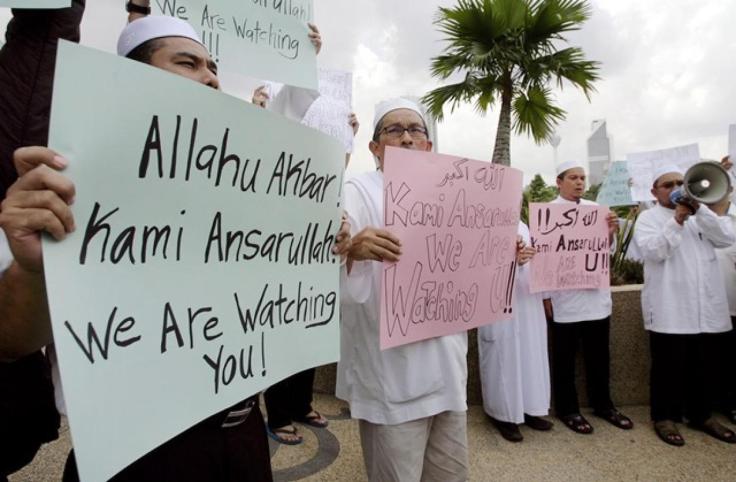
Malaysia’s ‘Allah’ controversy

Is limiting the use of the Arabic word for God a sign of growing intolerance towards minorities?

Source: stream.aljazeera.com

In Arabic, the word Allah means God.  Christian Arabs refer to God as Allah and Arabic versions of the Bible reference Allah.  As Arabic and Islam have diffused in interwoven patterns, the linguistic root and the theological meanings have became intertwined to some.  BBC World and Al-Jazeera have reported on this issue as the Malaysian government has attempted to ban the use of the word Allah to any non-Muslim religious group.  Language and religion just got very political.  

Tags: languagereligion, political, Malaysia, SouthEastAsia, culture, Islam.

Blog at WordPress.com.

Up ↑