Search

GEOGRAPHY EDUCATION

Supporting geography educators everywhere with current digital resources.

Tag

economic

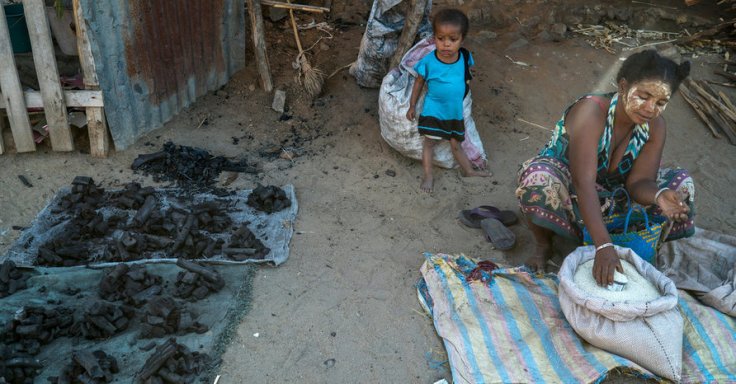
Africa’s Charcoal Economy Is Cooking. The Trees Are Paying.

In Madagascar, the booming charcoal business is contributing to deforestation and may exacerbate the effects of global warming.

Source: www.nytimes.com

Deforestation does not happen in a vacuum–it occurs in an economic, political, and historical context.  Rural Africans have less access to high value commodities and converting forests into charcoal is one of the few options (similar to the issue in Haiti).  The short-term economic gain for a few individuals leads to long-term environmental problems such as soil erosion, flooding, and habitat destruction for many species.  


Tags: biogeography, environmentecology, poverty, development, economic, labor, Madagascar, erosionAfrica, resourcespolitical ecology.

How To Get A Country To Trust Its Banks

“It’s something you can see on every block in most major cities. You probably see one every day and never give give it a second thought. But in Yangon, Myanmar in 2013, an ATM was a small miracle. For decades, Myanmar was cut off from the rest of the world. There were international sanctions, and no one from the U.S. or Europe did business there.”

Source: www.npr.org

We often assume that one form of technology, a system, institute should work equally well where ever it is.  But the nuances of cultural geography mediate how societies interact with technological innovations, and as demonstrated in this Planet Money podcast, “People in Myanmar (Burma) were reluctant to use ATMs because they didn’t trust the banks. They weren’t sure that the machines would actually give them their money.”  


Tags: Burma, Southeast Asia, poverty, development, economicpodcast.

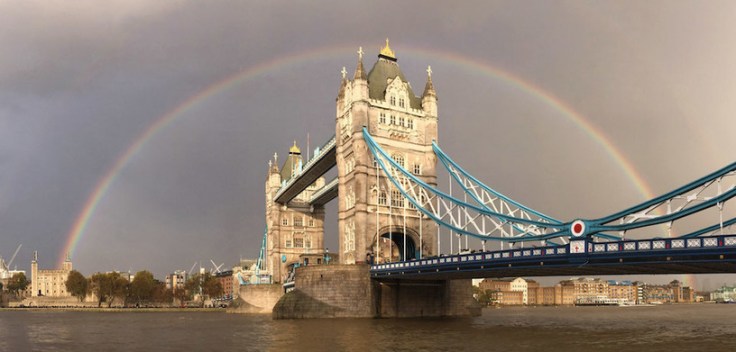
London Should Secede From the United Kingdom

Beyond the stunning act that has become Britain’s vote to leave the European Union lies a deeper message: Democracy is not destiny, but devolution. Ceaseless entropy — the second law of thermodynamics — applies to politics as well. The more countries democratize, the more local populations seek greater self-rule.

Source: foreignpolicy.com

In his book Connectography by Parag Khanna, he argues that connectivity and networks are more important today.  Using those ideas, Khanna discusses London’s options after the recent Brexit vote in this op-ed.

Brexit: Reaction and the Aftermath

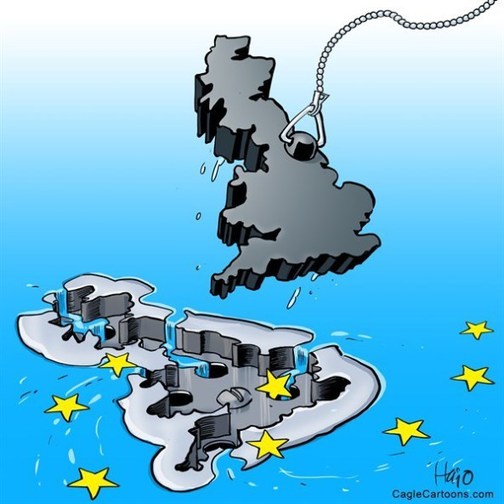
“The reactions to the Brexit have come in from all corners.  Since this was so shocking, newspapers articles that are insightful are using hyperbole in their titles to get our attention (Britain just killed globalization as we know it–Washington Post; Will Brexit mark the end of the age of globalization?–LA Times).  There have also been some excellent political cartoons and memes, so I wanted to archive a few of them here.”  


Tags: Europe, supranationalismglobalization, economic, political, images.

Source: geographyeducation.org

In stunning decision, Britain votes to leave the E.U.

The country opted to become the first ever to leave the 28-member bloc in a result that will send economic and political shockwaves across the globe.

Source: www.washingtonpost.com

The foundations of the European Union have their historical roots in World War II.  To ensure that European countries stop attacking each other, they knit their economies together and cooperated more on political and economic policies.   

The UK has narrowly voted to leave the European Union (52%-48%).  The Brexit (Britain + Exit) was expected to be close, but shows discontent with London.  The ‘Remain’ campaign dominated in London, Scotland and Northern Ireland while the ‘Leave’ campaign found its strength across England and Wales (see maps). 

The fallout of this vote is big and far-reaching.  The first global reaction was financial panic as numerous stock exchanges plummeted.  UK Prime Minister David Cameron will resign.  Already Spain is calling for joint control of Gibraltar (which they’ve wanted anyway) and using this as an opportunity to advance a Spanish agenda.  Many in Scotland chose to stay in the UK in part because they wanted Scotland to remain in the EU.  Another referendum on Scottish Independence feels eminent at this point.       

Still confused?  Here are answers to 9 frequently asked questions about the Brexit as well as a good overview from the Washington Post.


Tags: Europe, supranationalism, economic, political.

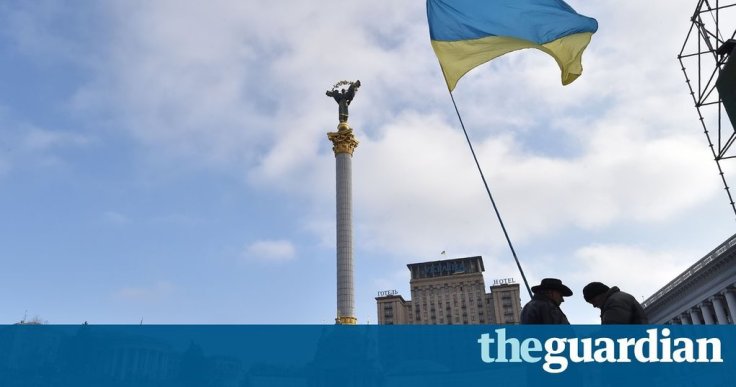
Why Ukraine needs Russia more than ever

As the country risks becoming a failed state, Kiev must recognise that economic survival depends on Moscow not the west

Source: www.theguardian.com

This is a politically inflammatory title for an op-ed article, given the recent Russia’s seizure of the Crimean Peninsula from Ukraine.  Regions and economic regional linkages form and continually reform.  Our most likely business partners aren’t necessarily our best friends.      


Tags: op-ed, economic, regions, UkraineRussia.  

Cities are the New Nations

“Political geography is not determinant anymore, because cities are more important.”

Source: www.citylab.com

Controlling borders and territory were the main factors in geopolitics for centuries.  In his book Connectography by Parag Khanna, he argues that connectivity and networks are more important today.  The world’s most connected cities act in ways that transcend political boundaries.      


Cutting Haiti’s Forests

The major environmental problem facing Haiti’s biodiversity is explained, including video of tree-cutting within a national park.

Source: www.youtube.com

Deforestation does not happen in a vacuum–it occurs in an economic, political, and historical context.  Having successfully staged a slave revolution against France in 1806, they were ostracized from the global community (since the powers that be did not want to see slave rebellions or colonial uprising elsewhere) and were forced to look within for their own energy resources.  The nation’s forests were (and still are) converted into charcoal, leading to long-term environmental problems such as soil erosion, flooding, and habitat destruction for many species.  All of this increased  increased Haiti’s disaster vulnerability in the earthquake of 2010.     


Tags: Haiti, biogeography, environmentecology, video, poverty, development, economic, labor.

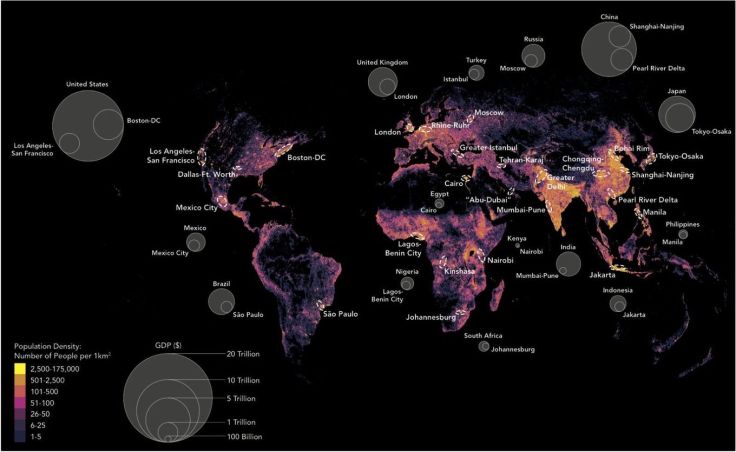
Megacities, not nations, are the world’s dominant, enduring social structures

“Cities are mankind’s most enduring and stable mode of social organization, outlasting all empires and nations over which they have presided. Today cities have become the world’s dominant demographic and economic clusters.”

Source: qz.com

This map is a sneak peek preview from the new book Connectography by Parag Khanna.  This main point of the book and article is that economic and social connectivity is the new driving force is of geopolitics, not just global economics.  Supply chains matter more than borders and the largest cities are the controlling nodes of those supply chains.  


Tags: political, globalization, urbaneconomic.

Create a free website or blog at WordPress.com.

Up ↑