Search

GEOGRAPHY EDUCATION

Supporting geography educators everywhere with current digital resources.

Tag

economic

There has never been a country that should have been so rich but ended up this poor

“Venezuela has become a failed state.  According to the International Monetary Fund’s latest projections, it has the world’s worst economic growth, worst inflation and ninth-worst unemployment rate right now. It also has the second-worst murder rate, and an infant mortality rate that’s gotten 100 times worse itself the past four years. And in case all that wasn’t bad enough, its currency, going by black market rates, has lost 99 percent of its value since the start of 2012. It’s what you call a complete social and economic collapse. And it has happened despite the fact that Venezuela has the world’s largest oil reserves. Never has a country that should have been so rich been so poor.  There’s no mystery here. Venezuela’s government is to blame–which is to say that Venezuela is a man-made disaster. It’s a gangster state that doesn’t know how to do anything other than sell drugs and steal money for itself.”


Tags: Venezuela, South America, op-ed, economic, political, governance.


Source: www.washingtonpost.com
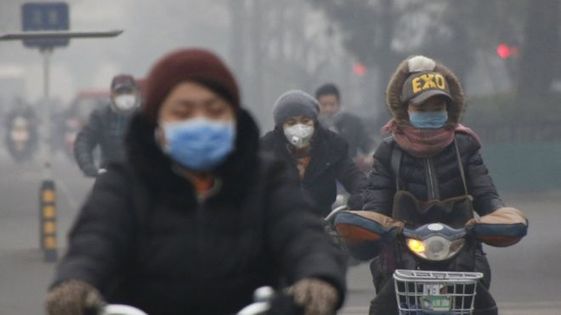
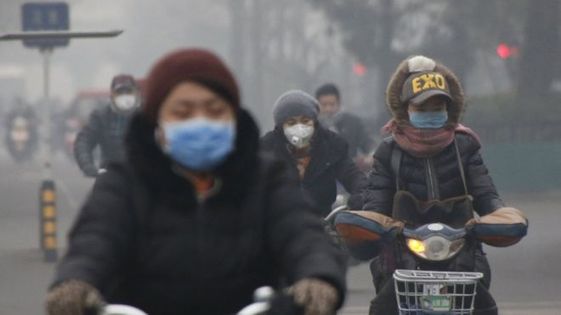
China pollution: First ever red alert in effect in Beijing

“Schools in Beijing are closed and outdoor construction halted as the Chinese capital’s first ever pollution “red alert” comes into effect over smog levels.”

Source: www.bbc.com

A large part of China’s rapid economic growth has been dependent on cutting corners in labor and environmental standards.  This is one reason why I don’t think that the Chinese economy can continue this growth indefinitely.


Tags: pollutionChina, development, economic, megacities, East Asia, industry, sustainability, urban ecology.

China pollution: First ever red alert in effect in Beijing

“Schools in Beijing are closed and outdoor construction halted as the Chinese capital’s first ever pollution “red alert” comes into effect over smog levels.”

Source: www.bbc.com

A large part of China’s rapid economic growth has been dependent on cutting corners in labor and environmental standards.  This is one reason why I don’t think that the Chinese economy can continue this growth indefinitely.


Tags: pollutionChina, development, economic, megacities, East Asia, industry, sustainability, urban ecology.

China’s hungry cattle feasting on alfalfa grown on Utah farm

China has long depended on the U.S. breadbasket, importing up to $26 billion in U.S. agricultural products yearly. But increasingly, Chinese investors aren’t just buying from farms abroad. They’re buying the farms.

Source: www.mcclatchydc.com

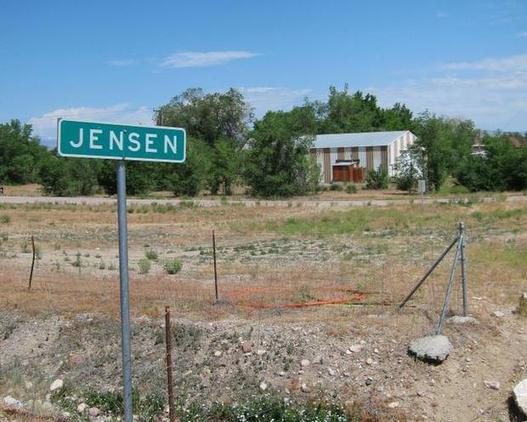
Globalization is often described as a homogenizing force, but is also pairs together odd bed fellows.  A small Utah town near the Colorado border, Jensen is now home to the largest Chinese-owned hay farm in the United States. Utah’s climate is right for growing alfalfa, and China’s growing cattle industry make this a natural global partnership.  Large container ships come to the United States from China, and return fairly empty, making the transportation price relatively affordable.  Locally back in the United States though, water resources are scarce and many see this as a depletion of local water exported to China.  Some states see this as a threat and are considering banning foreign ownership of farmland.  This article shows the merging various geographic themes: the global and local, the industrial and the agricultural, the human and the physical.         

Tags: agriculture, agribusinesstransportation, globalizationwaterChinaindustry, economic, physical, Utah.

The tragedy of the Arabs

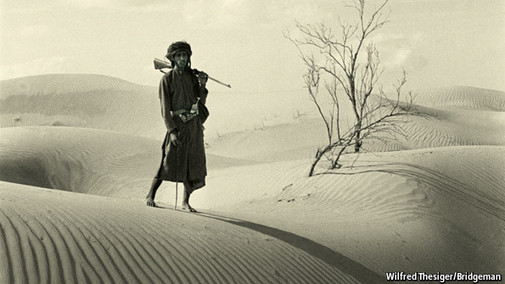
“A THOUSAND years ago, the great cities of Baghdad, Damascus and Cairo took turns to race ahead of the Western world. Islam and innovation were twins. The various Arab caliphates were dynamic superpowers—beacons of learning, tolerance and trade. Yet today the Arabs are in a wretched state. Even as Asia, Latin America and Africa advance, the Middle East is held back by despotism and convulsed by war.  

Pluralism, education, open markets: these were once Arab values and they could be so again. Today, as Sunnis and Shias tear out each others’ throats in Iraq and Syria and a former general settles onto his new throne in Egypt, they are tragically distant prospects. But for a people for whom so much has gone so wrong, such values still make up a vision of a better future.”

Source: www.economist.com

While the title of the article is more inflammatory than I would prefer, the analysis in this article from the Economist does a good job linking the cultural, economic and political struggles in the Middle East.

Tags: political, culture, economic, Islam, MiddleEast.

This Is the Traffic Capital of the World

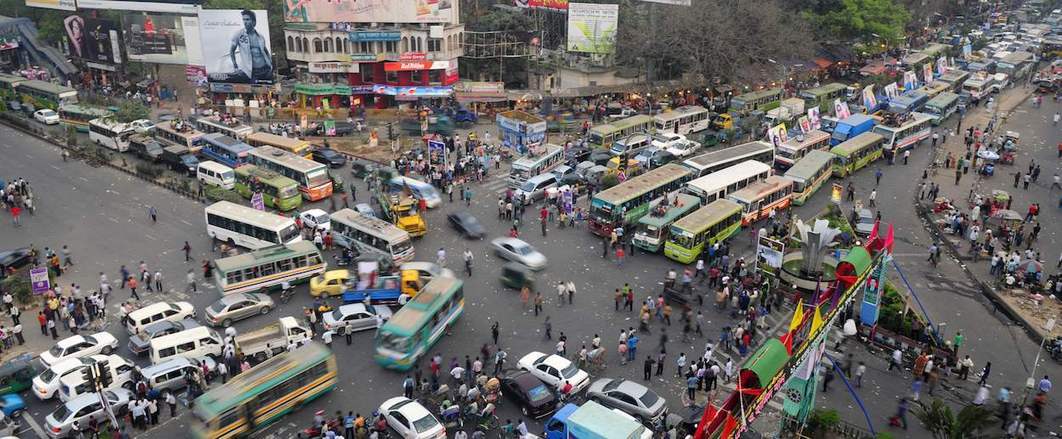
There are only 650 major intersections here—but somehow only 60 traffic lights.

Source: www.newrepublic.com

Dhaka is the capital of Bangladesh and (as I often tell my students) it is the biggest city that nobody has ever heard of.  The infrastructure is so incredibly limited that traffic jams cost the city an estimated $3.8 billion in delays and air pollution.  This is an excellent article to explore some of the problems confronting megacities. 

Tags: Bangladeshtransportation, planning, density, South Asia, development, economic, megacities.

Beijing’s Facelift

“A government-initiated redevelopment plan will transform one of the oldest neighborhoods in Beijing into a polished tourist attraction.”

Source: www.youtube.com

This 2010 video (and related article) showcases one of China’s urban transformation projects.  Urban revitalization plans are not without critics, especially those who see the cultural transformation of a neighborhood they deem worthy of historical preservation.  This process is occurring all over the world (we’ve recently seen this in Brazil as they were preparing for the World Cup).  This is one of the videos that I’ve put into my interactive map with over 65 geography videos to share in the classroom.
 

Labor Day 2012

If you are a fan of the 40 hour work week, 8 hour work day, health benefits, child labor laws and this lovely thing called “the weekend,” you have the labor movement to thank.  The Department of Labor has put together a page entitled ‘The History of Labor Day.’  This helps us understand that the benefits that we enjoy today are the legacy of generations of workers who courageously fought for for workers rights.

Tags: Labor, industry, economics, unit 6 industry and video.

See on www.youtube.com

Can Europe Survive the Rise of the Rest?

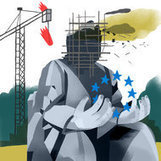
The European Union will never manage to compete with China and other rising powers unless it unites politically, scales up and becomes a genuine giant.

This author argues that the main driving forces that led towards European unification in the decades after WWII are now gone or are diminished in importance.  As many of the economies of Europe, especially southern Europe are struggling, it is time for the European Union to rediscover and restructure it’s raison d’être–it’s reason for being–if it wants to continue to compete on a global level.

Tags: Supranationalism, Europe, political, unit 4 political and economic.

See on www.nytimes.com

Create a free website or blog at WordPress.com.

Up ↑