Search

GEOGRAPHY EDUCATION

Supporting geography educators everywhere with current digital resources.

Tag

economic

The World Bank is eliminating the term “developing country” from its data vocabulary

“In the 2016 edition of its World Development Indicators, the World Bank has made a big choice: It’s no longer distinguishing between ‘developed’ countries and “developing” ones in the presentation of its data. The change marks an evolution in thinking about the geographic distribution of poverty and prosperity. But it sounds less radical when you consider that nobody has ever agreed on a definition for these terms in the first place. The International Monetary Fund says its own distinction between advanced and emerging market economies “is not based on strict criteria, economic or otherwise.” The United Nations doesn’t have an official definition of a developing country, despite slapping the label on 159 nations. And the World Bank itself had previously simply lumped countries in the bottom two-thirds of gross national income (GNI) into the category, but even that comparatively strict cut-off wasn’t very useful.”

Source: qz.com

Labels and categories are so often problematic, but they are also necessary to make sense of the vast amount of information.  Regional geography is inherently about lumping places together that have commonalities, but acknowledging that many differences from place to place makes the world infinitely varied and complex.  Since we can’t process an infinite amount of complexity, we categorize, for better or for worse.  In education, we are continually trying to show how some categorizations fail, hoping that our students will categorize the information they receive in better ways (non-racist ways for example).  The regional terms we use–Latin America, the Middle East, Europe, etc.—impacts how we think about the world.  Each of those terms highlights a few similarities and ignores some important differences.  The terms More Developed Countries (MDCs), Newly Industrialized Countries (NICs), and Less Developed (LDCs) is how many people have socioeconomically categorized the world’s countries, some preferring developing countries instead of LDCs because it less stigmatizing.  In 2015, many at the World Bank have thought that the term “Developing Countries” obscures more than it reveals.  In 2016, the World Bank removed the term from its database since there are more differences than similarities in the economic structures and trajectories of developing countries.         


Questions to Ponder: What are some of the major problems that you see with the term developing country?  Even with its problems, what utility is there in the term?  Will you keep using the term or will you abandon it?  How come? 


Tagsdevelopment, statistics, economicindustry.

Homeland of tea

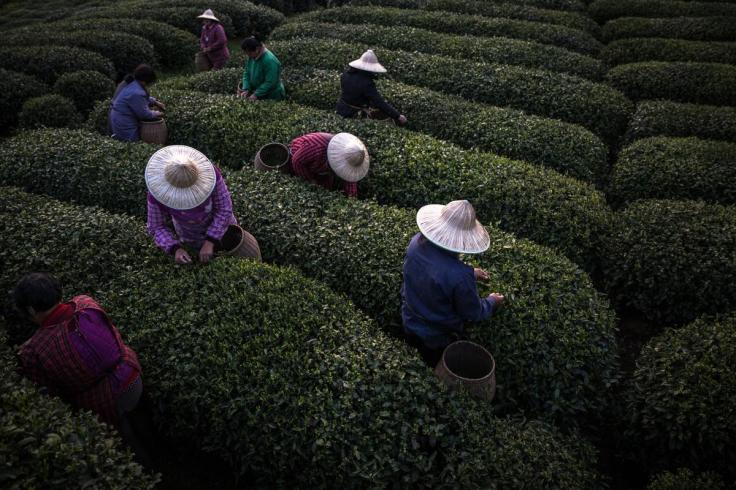
“China is the world’s biggest tea producer, selling many varieties of tea leaves such as green tea, black tea, oolong tea, white tea and yellow tea. Different regions are famous for growing different types of tea. Hangzhou is famous for producing a type of green tea called Longjing or the Dragon Well tea. Tea tastes also vary regionally. Drinkers in Beijing tend to prefer jasmine tea while in Shanghai prefer green tea. Processing raw tea leaves for consumption is a time and labor-intensive activity and still done by hand in many areas in China. The Chinese tea industry employs around 80 million people as farmers, pickers and sales people. Tea pickers tend to be seasonal workers who migrate from all parts of the country during harvest time. In 2016, China produced 2.43 million tons of tea.”

Source: www.bostonglobe.com

Tea, the world’s most popular beverage, doesn’t just magically appear on kitchen tables–it’s production and consumption is shaped by geographic forces, cultural preferences, and regional variations.  These 21 images show the cultural, region, and environmental, economic, and agricultural context of tea.  


Tagsimages, foodChina, East Asia, economic, labor, food production, agriculture.

How Does it Grow? Garlic

How Does it Grow? Garlic from How Does it Grow? on Vimeo.

Telling the stories of our food from field to fork.
Episode Two: Peeling back the layers of nature’s most powerful superfood.

Source: vimeo.com

This 5-minute video is a good introduction to garlic, it’s production, environmental requirements, nutritional profile and diffusion.  Historically, garlic was far more important than I ever imagined.  The geography of food goes far beyond the kitchen and there are many more episodes in the “How Does it Grow?” series to show that.

Tags: foodeconomicfood production, agribusiness, industryvideo, agriculture.

How a Texas grocery chain kept running after Hurricane Harvey

“One of my stores, we had 300 employees; 140 of them were displaced by the flooding. So how do you put your store back together quickly? We asked for volunteers in the rest of the company. We brought over 2,000 partners from Austin, San Antonio, the Rio Grande Valley. They hopped into cars and they just drove to Houston. They said, we’re here to help. For 18 hours a day, they’re going to help us restock and then they’ll go sleep on the couch at somebody’s house.”

Source: www.linkedin.com

Natural disasters complicate the logistics that make our modern economy run.  We take these flows for granted–until they are disrupted. This article is a excellent view into how to operate when disaster strikes. 


Tagseconomicindustry, laborglobalizationplace, transportation.

Amazon Is Building a Colossal Warehouse Where America’s Biggest Mall Once Stood

“The Seattle-based internet book seller Amazon just announced plans to open an enormous fulfillment center in the North Randall, Ohio. This is a big deal for the small community which has suffered greatly since the Randall Park Mall, once the largest in America, shut down due to retail sales moving online. Amazon is actually building its new warehouse on the same land where the mall once stood. The irony of this is lost on no one.”

Source: gizmodo.com

Questions to Ponder: Where is the geography in this new development?  What economic forces are shaping and reshaping places?


Tagseconomicindustry, laborglobalizationplace, transportation.

Self-driving technology and highway trucks with no one at the wheel

Technological innovation and automation are transforming entire industries. As self-driving trucks hit the road, what could possibly go wrong?

Source: www.youtube.com

What jobs can be automated?  This is a question I ask all of my students because job disruption is something that every future wage earner should consider as they plan out their careers.  Would you be outsource-able? Could technology render your skill set unnecessary in the future?  What are the impacts of creative destruction on the economic, cultural, and political characteristics of a place?  How would those changes impact regions? 


Tagseconomicindustry, laborglobalizationtransportation, unit 6 industry.

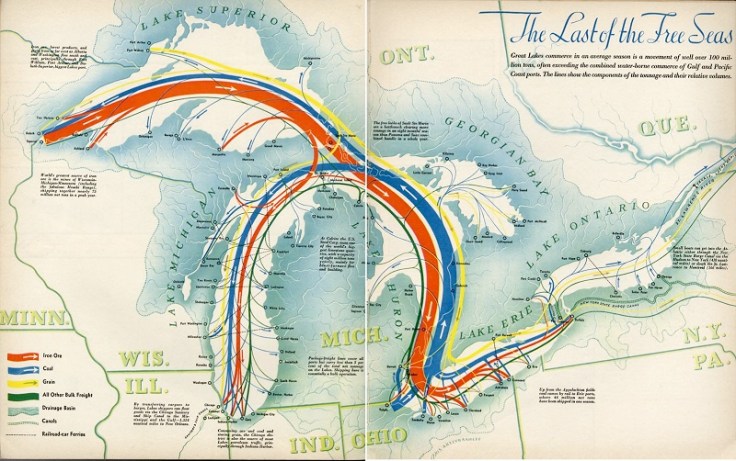
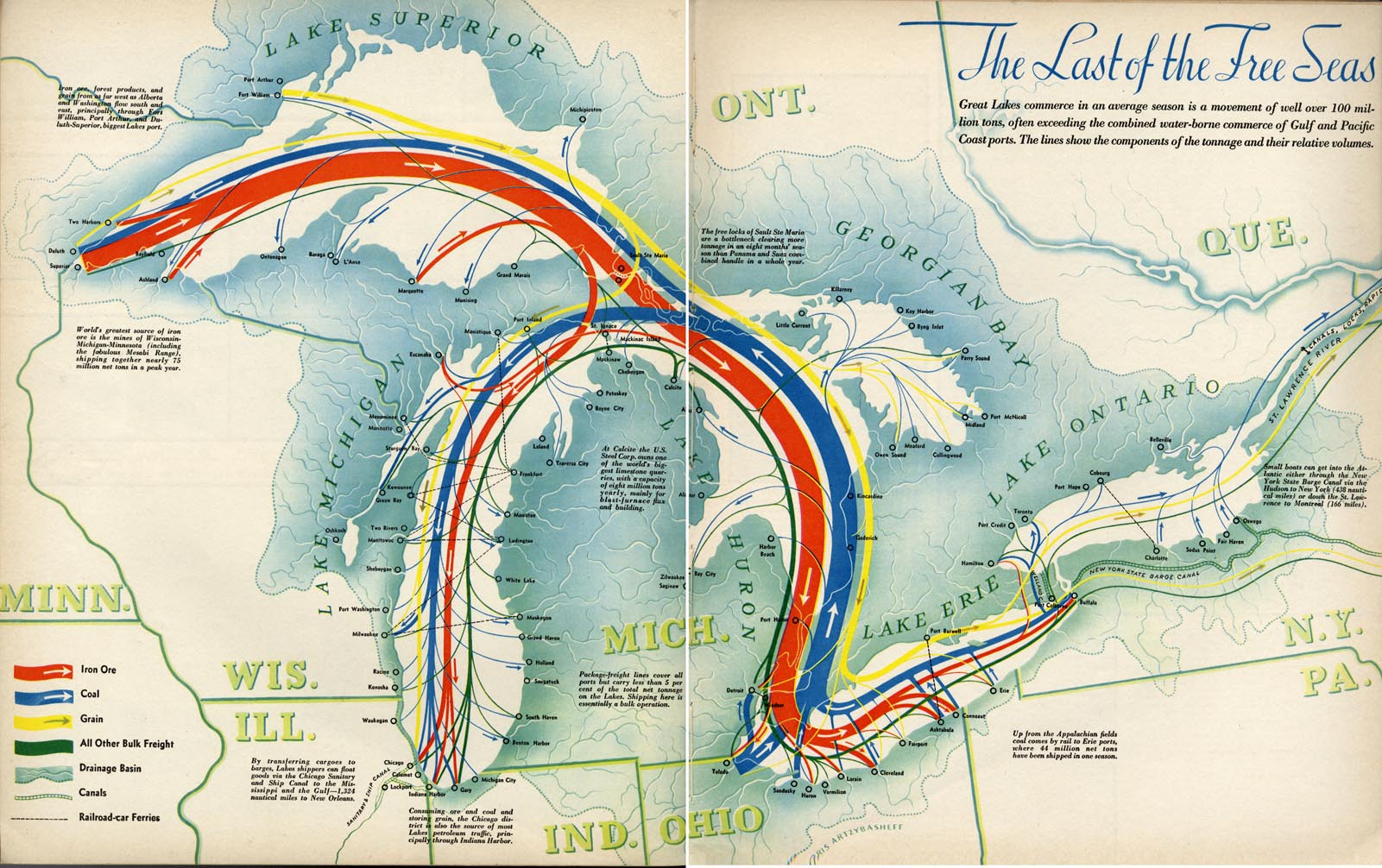
“The Last of the Free Seas”

“The Last of the Free Seas is the title of this fantastic map of the Great Lakes made by Boris Artzbasheff.  It was published in Fortune Magazine in July 1940.”

Source: www.reddit.com

The inland waterways were absolutely critical to the demographic and economic development of the eastern part of the United States, especially from 1820-1940.  Before World War II, Great Lakes shipping exceeded the tonnage of U.S. Pacific Coast shipping (see hi-res map here). World War II and the beginning of the Cold War led to a consolidation of naval power for the United States and its allies, greatly expanding Pacific shipping trade and spurring fast-developing economies countries. 


Great Lakes shipping dramatically declined, in part because steel production has gone to lower-cost producers that were connected to the U.S. economy through the expanded trade.  Some could see irony since the steel warships created from the Great Lakes manufacturing enabled expanded Pacific and Atlantic trade that led to the decline of Great Lakes manufacturing and regional struggles in the rust belt.  Still, more than 200 million tons of cargo, mostly iron ore, coal, and grain, travel across the Great Lakes annually.


This deindustrialization clearly is a huge economic negative but the environmental impacts for lakeside communities has been enormous.  Industrial emissions in the watershed and shipping pollution in the lakes went down as waterfowl populations returned and more waterfront property became swimmable again.  Still this map of the environmental stress on the Great Lakes shows they are far from pristine.    


Tagsenvironment, historicalwater, resources, transportation, industry, economicregions, globalization.


What on Earth Is Wrong With Connecticut?

Conservatives say the state has a tax problem. Liberals say it has an inequality problem. What it really has is a city problem.


Connecticut is losing rich companies (and their tax revenues) while it’s adding low-wage workers, like personal-care aides and retail salespeople. Yet it remains a high-tax state. That’s a recipe for a budget crisis.


The rise and fall of Connecticut fits into the story of American cities. In the 1970s, American metros were suffering a terrible crime wave, and New York was dropping dead. That meant boom times for New York’s suburbs and southwestern Connecticut. But now many of those companies are moving back, lured by newly lower-crime cities and the hip urban neighborhoods where the most educated young workers increasingly want to live.


Finally, the hottest trend in American migration today is south, west, and cheap—that is, far away from Connecticut, both geographically and economically. Texas is growing rapidly, and seven of the 10 fastest-growing large metropolitan areas in 2016 were in the Carolinas and Florida. Of the 20 fastest-growing metros, none are in the northeast.


Tags: urban, regions, economic.

Source: www.citylab.com

Why 80% of Singaporeans live in government-built flats

Lots of countries show off their public-housing projects, but few are quite as devoted to them as Singapore, where four-fifths of the permanent population live in subsidised units built by the government, most of them as owner-occupiers. The city-state’s suburbs bristle with HDB towers, painted calming pastel hues. This vast national housing system surprises visitors who think of Singapore as a low-tax hub for expatriate bankers and big multinationals. But HDB is a linchpin of economic and social policy and an anchor for the ruling People’s Action Party (PAP), which has led Singapore since independence. It is also a tantalising but tricky model for Singapore’s fast-urbanising neighbours to follow.

Source: www.economist.com

Singapore is such a fascinating case study.  Over 90% of the Singapore’s land is owned by the government and the American ideal of independent home ownership is seen as antithetical to cultural norms.  The government heavily subsidies young couples to live near their parents and create tight-knit communities with homelessness was eradicated (that’s the optimists’ perspective).  This is all well and good for young, straight couples that choose to support the ruling political party, but critics often point out that the housing focus has also created a paternalistic component to the government that is much stronger in Singapore than in other countries.  This article nicely goes with the 2017 APHG reading professional development talk entitled “The Geographies of Home” that focused on Singaporean and Japanese examples.    


Tag: Singapore, urban, neighborhood, economicplanning, housing, cultural norms.

Blog at WordPress.com.

Up ↑