Search

GEOGRAPHY EDUCATION

Supporting geography educators everywhere with current digital resources.

Tag

economic

Why 80% of Singaporeans live in government-built flats

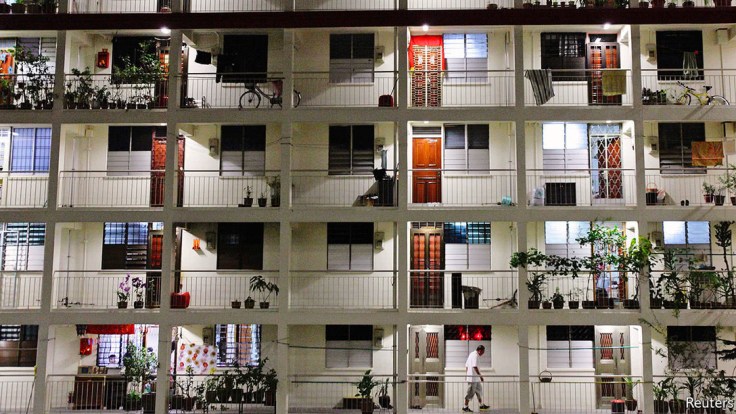
Lots of countries show off their public-housing projects, but few are quite as devoted to them as Singapore, where four-fifths of the permanent population live in subsidised units built by the government, most of them as owner-occupiers. The city-state’s suburbs bristle with HDB towers, painted calming pastel hues. This vast national housing system surprises visitors who think of Singapore as a low-tax hub for expatriate bankers and big multinationals. But HDB is a linchpin of economic and social policy and an anchor for the ruling People’s Action Party (PAP), which has led Singapore since independence. It is also a tantalising but tricky model for Singapore’s fast-urbanising neighbours to follow.

Source: www.economist.com

Singapore is such a fascinating case study.  Over 90% of the Singapore’s land is owned by the government and the American ideal of independent home ownership is seen as antithetical to cultural norms.  The government heavily subsidies young couples to live near their parents and create tight-knit communities with homelessness was eradicated (that’s the optimists’ perspective).  This is all well and good for young, straight couples that choose to support the ruling political party, but critics often point out that the housing focus has also created a paternalistic component to the government that is much stronger in Singapore than in other countries.  This article nicely goes with the 2017 APHG reading professional development talk entitled “The Geographies of Home” that focused on Singaporean and Japanese examples.    


Tag: Singapore, urban, neighborhood, economicplanning, housing, cultural norms.

In the Same Ballpark

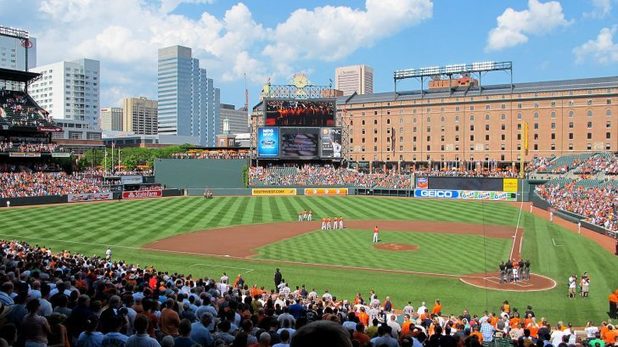
“In 1992, the Baltimore Orioles opened their baseball season at a brand new stadium called Oriole Park at Camden Yards, right along the downtown harbor. The stadium was small and intimate, built with brick and iron trusses—a throwback to the classic ballparks from the early 20th century. It was popular right from the start.

These new Populous ballparks are small and old fashioned-looking but they also feature modern amenities—comfortable seats and fancy foods. And while designed to be different, they tend to follow a similar aesthetic format, featuring a lot red brick and green-painted iron. These new parks also feature asymmetrical playing fields, which are in many cases dictated by the surrounding cityscape.”

Source: 99percentinvisible.org

This podcast is filled with important urban geographic issues: downtown revitalization, landscape aesthetics, sense of place, planning, public/private revitalization, etc.  And to boot, this podcast uses America’s pasttime to discuss these topics. I typically really enjoy the thoughtful exploration of the untold stories that make up our world found in the 99 Percent Invisible podcast.

How Does it Grow? Avocados

How Does it Grow? Avocados from How Does it Grow? on Vimeo.

Avocados have become a super trendy food, but few of us know how they’re even grown or harvested. We visit a California farm to uncover the amazing story of the avocado — and share the secrets to choosing, ripening and cutting the fruit.

Source: vimeo.com

My childhood house in the Los Angeles area had an avocado tree in the backyard; I now realize that the climatic demands of avocado production means this is a rarity in the United States, but as a kid I thought guacamole was as ubiquitous as peanut butter.  This 5-minute video is a good introduction to the avocado, it’s production, environmental requirements, nutritional profile and diffusion.  The geography of food goes far beyond the kitchen and there are more episodes in the “How Does it Grow?” series to show that. WARNING: the video does mention the Nahuatl origin of the word (‘testicle-fruit’) in the video so as you manage your own classroom…just so you know. 

Tags: foodeconomic, agribusiness, video, agriculture.

Five gentrification myths debunked

‘Gentrification’ is a messy bogeyman of a term deserving more critical analysis. If ‘gentrification’ is ‘exclusive economic development’, what we want is INCLUSIVE economic development.

Source: www.youtube.com

This post will need many disclaimers, but I think that it is a valuable addition to our gentrification materials since the key take-home point is that gentrification doesn’t happen the same way in all places (geographic context matters!). Some of the generalizations about gentrification around the country might not apply to some specific examples.  Are these generalizations true in some (and possibly most) contexts?  Sure, but unfortunately once people hear the word gentrification, they assume a base set of assumptions about the situation which may or may not be true.  The 5 myths outlined in this video (more detail in this Washington Post article) are:

  1. Gentrification leads to lower crime.
  2. Gentrification causes widespread displacement.
  3. Longtime residents hate gentrification.
  4. Gentrifiers are white.
  5. Gentrification happens naturally.

Tags: neighborhood, gentrificationurban, place, culture, economic   

Pro Wrestling and Economic Restructuring

“For decades, professional wrestling in North America operated under a system of informally defined ‘territories.’ Each territory represented an individual promotion with its own stable of talent that drew crowds to local arenas and broadcast the product on regional television stations. In 1982, Vince McMahon purchased his father’s company, the World Wrestling Federation. For almost two decades, he endured an epic conquest of the pro wrestling world that led to where he is today: standing tall as the undisputed king of the industry.”

Source: www.youtube.com

This may seem like a strange video for geography educators and students.  In one sense, the history of a wrestling entertainment business is trivial, but this provides a great example of how using economies of scale can overcome regional advantages as new technologies enter the market.  Maybe is not a ‘real’ sport, but the example of wrestling might pique a few students’ interest as the economic principles are made manifest. 


Questions to Ponder: How do emerging technologies lead to economic disruption?  Why was regional systems so prevalent in the 1950s and1960s?  If Vince McMahon didn’t pursue this plan, would there still be smaller, regional wrestling organizations?  Why or why not? 


Tags: regions, economic, diffusiontechnologysport, industry

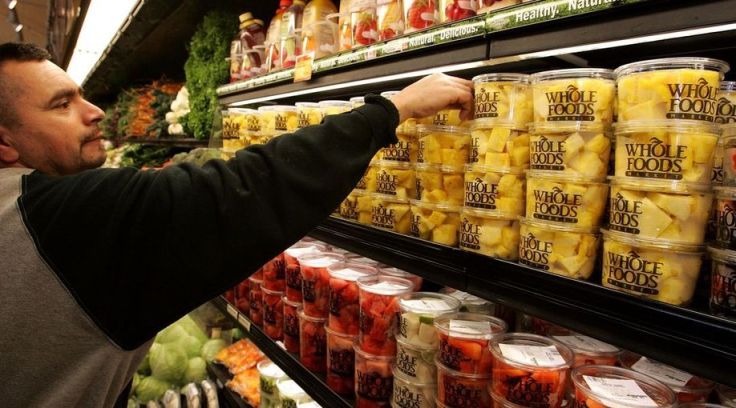
The real reason Amazon buying Whole Foods terrifies the competition

Amazon’s zero-profit strategy is a disaster for anyone who goes up against it.

Source: www.vox.com

I have more questions than definitive answers, so let’s get right to it. 


Questions to Ponder: How have technological and logistical shifts in various industries made this once unthinkable union workable?  How will a retailer like Amazon change the food industry on the production side of the equation? What are the advantages and disadvantages of creative destruction (eliminating old jobs by creating new ones)?  Who stands to benefit the most, and who are the most negatively impacted?    


Tagsindustry, economic, scale, agriculture, food production, agribusiness, food

What Rio doesn’t want the world to see

“Rio is hiding poor people. See Part II: https://www.youtube.com/watch?v=c3BRTlHFpBU

Source: www.youtube.com

This isn’t news, but it isn’t just about Rio de Janeiro, since the World Cup and Olympics have already come and gone. Yet the urban planning designed for the world’s gaze remains.  Some strategies used were to create economic development and stimulate the local communities, but more often than not, the poor of the city and the poor communities cities were swept under the rug without addressing the issues that creating poverty with the city.  Many of the poor communities closest to Olympic venues were demolished without real viable housing options for the displaced residents.


Questions to Ponder: Can you think of other ways (of other examples) that city planning is used to hide the poor or the ‘less desirable’ parts of the city?  Why does this happen?  How should urban planning approach economic redevelopment, poverty, and community?   


Tags: Brazil, urban, squatter, neighborhood, economicplanning, urbanism.


Drought and Famine

In which John Green teaches you a little bit about drought, which is a natural weather phenomenon, and famine, which is almost always the result of human activity. Throughout human history, when food shortages strike humanity, there was food around. There was just a failure to connect those people with the food that would keep them alive. There are a lot of reasons that food distribution breaks down, and John is going to teach you about them in the context of the late-19th century famines that struck British India.

Source: www.youtube.com

Famine is exacerbated by natural factors such as drought, but those only stress the system, they rarely cause the actual starvation.  The real failure is that the political/economic systems created by governments and how they handle stains in the food production/distribution systems.  Widespread famines are very rare in democracies and are much more prevalent in authoritarian regimes.  Many of the recent examples have come from collectivation strategies that governments have implemented (currently Venezuela, but historically the Soviet Union and China).  The Choices program has some good resources about teaching current events with the famines today.


Tags: food, povertyhistoricalcolonialism, economic, political, governance, agriculture, crash course


The Fallacy of Endless Economic Growth

What economists around the world get wrong about the future.


The idea that economic growth can continue forever on a finite planet is the unifying faith of industrial civilization. That it is nonsensical in the extreme, a deluded fantasy, doesn’t appear to bother us. We hear the holy truth in the decrees of elected officials, in the laments of economists about flagging GDP, in the authoritative pages of opinion, in the whirligig of advertising, at the World Bank and on Wall Street, in the prospectuses of globe-spanning corporations and in the halls of the smallest small-town chambers of commerce. Growth is sacrosanct. Growth will bring jobs and income, which allow us entry into the state of grace known as affluence, which permits us to consume more, providing more jobs for more people producing more goods and services so that the all-mighty economy can continue to grow. “Growth is our idol, our golden calf,” Herman Daly, an economist known for his anti-growth heresies, told me recently.


Tagsop-ed, economicindustry, sustainability, development, consumption, climate change, environment, resources.


Source: psmag.com

Create a free website or blog at WordPress.com.

Up ↑