Search

GEOGRAPHY EDUCATION

Supporting geography educators everywhere with current digital resources.

Tag

economic

From Risking His Life To Saving Lives, Ex-Coal Miner Is Happy To Take The Paycut

The “Brave New Workers” series tells stories of Americans adapting to a changing economy. This week: after years working in the coal mines of West Virginia, a miner charts a new career in health care.

Source: www.npr.org

This series, Brave New Workers, is all about workers adapting to the shifting economic geographies.  Some industries are seen as foundational to a community and there is much angst about the loss of particular jobs.  New technologies are disruptive, and the process of job creation/job loss is sometimes referred to as creative destruction.  My uncle, once about a time, was a typewriter repairman.  Clearly, the personal computer was going to render his niche in the economic system obsolete so he became a web developer.  Not everyone successfully makes a seamless transition, but this collection of stories is emblematic of the modern American worker, needing to nimbly adapt to the labor market.


Tagspodcast, industry, manufacturinglabor, economic, USA.  

Venezuela Is Starving

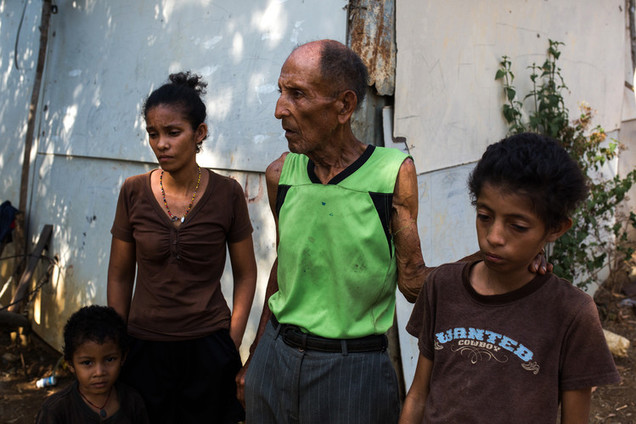
Once Latin America’s richest country, Venezuela can no longer feed its people, hobbled by the nationalization of farms as well as price and currency controls. The resulting hunger and malnutrition are an unfolding tragedy.

Source: www.wsj.com

Widespread famines are very rare in democracies and are much more prevalent in authoritarian regimes.  This is because food production is but a small part of a larger picture; the system of food production and distribution in Venezuela has been decimated by the nationalization of private farms.  Individual farmers can’t make a profit in the new political economy and consequently are going to stop producing for the market.  This vicious cycle is political in nature more so than in is agricultural. 


Tags: food, poverty, Venezuela, South America, economic, political, governance, agriculture, food production.

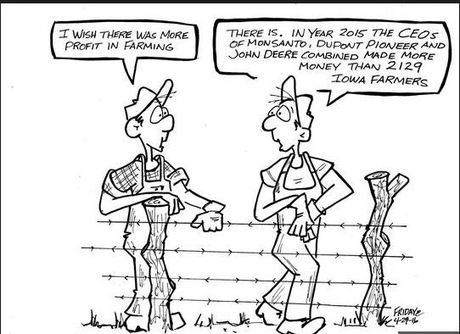
Long-time Iowa farm cartoonist fired after creating this cartoon

“Rick Friday has been giving farmers a voice and a laugh every Friday for two decades through his cartoons in Farm News.
Now the long-time Iowa farm cartoonist tells KCCI that he has been fired. Friday announced Sunday that his job was over after 21 years in a Facebook post that has since gone viral.”

Source: www.orrazz.com

There are some intriguing layers connected to the politics of agribusiness in this story.  First off, the political cartoon highlights a pithy truth–that while the ‘traditional’ farmer is a lucrative position, in the global economy, there are corporations that are amassing fortunes in agribusiness.  The second connection is more telling–the newspaper company felt compelled to fire the cartoonist as for voicing this perspective as the newspaper advertisers flexed their pocketbooks to change the direction of the news being reported.  


Tags: agriculture, food production, agribusiness, foodeconomicindustry, scale, media

Entomophagy: Bugs in the system

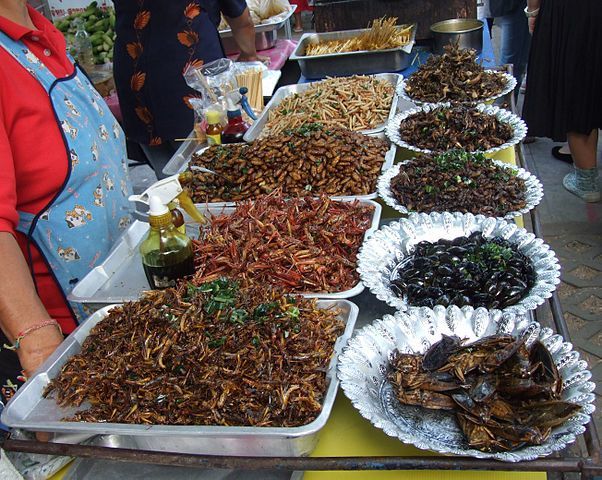
IT WOULD once have been scandalous to suggest the merits of eating insects; these days, it has become old hat. Western-educated entrepreneurs will sell you protein bars made from cricket flour. TED talks extol entomophagy’s virtue. Top-end restaurants in the West’s largest cities tout insect-based dishes.

Source: www.economist.com

While it might make economic, nutritional, and environmental sense, I’m sure that many are squeamish at the idea of insects primarily because in violates many deeply ingrained cultural taboos.  The main reasons listed in the video for promoting the production and consumption of more insects:

  1. Insects are healthier than meat.
  2. It is cheap (or free) to raise insects.
  3. Raising insects is more sustainable than livestock.


Questions to Ponder: Would you be willing to try eating insects?  How do you think this idea would go over with your family and friends?  What cultural barriers might slow the diffusion of this practice?    


Tagsfoodculturediffusion, economic, agriculture.

Why do people and nations trade?

//cdn.embedly.com/widgets/media.html?src=https%3A%2F%2Fplayer.vimeo.com%2Fvideo%2F164108675&wmode=opaque&url=https%3A%2F%2Fvimeo.com%2F164108675&image=https%3A%2F%2Fi.vimeocdn.com%2Fvideo%2F587047534_1280.jpg&key=359ed8ab27db4f02a128049b1f89d6a1&type=text%2Fhtml&schema=vimeo

“Mark Blyth of Brown University explains international trade.” 

Source: vimeo.com

To understand international trade, you need to understand how the factors of production vary from place to place, resulting in different locations having a comparative advantage on a global market.  This video nicely explains that with the example of Scotland’s comparative advantage raising sheep with southern Europe’s comparative advantage in producing wine.   Does the size of a country matter in trade?  You betcha.


Tags: regions, economic, diffusion, industry

Britain’s Prime Minister Theresa May Triggers Article 50, Making ‘Brexit’ Official

The United Kingdom has officially kicked off the process of ‘Brexit,’ almost nine months to the date after the country’s momentous vote to leave the European Union.


Tags: EuropeUK, supranationalismglobalization, economic, political, images.

Source: www.youtube.com

How did Zimbabwe get so poor?

President Mugabe’s economic mismanagement of Zimbabwe has brought the country poverty and malnutrition. After 36 years in charge, he’s looking to extend his rule by 5 more years.

Source: www.youtube.com

Poverty at the national level is usually not a function of limited resources, but more often it is a sign of weak institutions.  This is but one example of how governmental mismanagement can put a country’s developmental progress back decades.


Tags: Africa, Zimbabwe, development, economic, political.

Ship to shore: tracking the maritime motorways

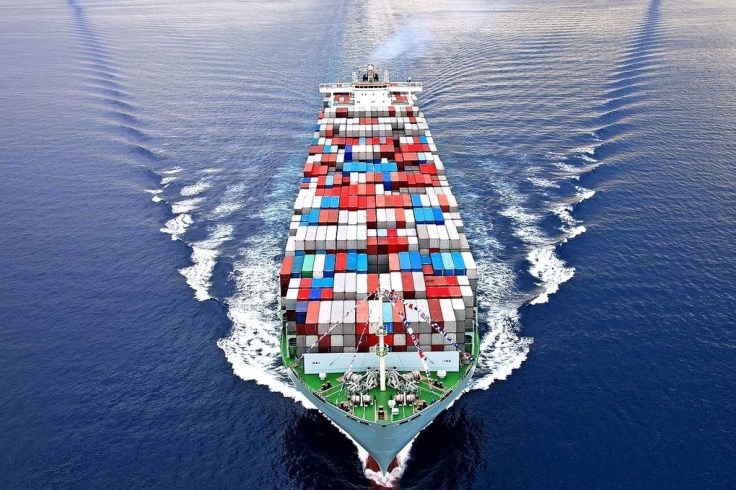
“It is estimated that 97 per cent of all trade – the things we buy in shops – will have been transported in containers by ships at sea. The container vessel, stacked high with uniformly-sized metal boxes, has become a symbol of our globalized world. This is a world of imports and exports, a world where moving things across huge distances keeps the price of daily commodities low as items are manufactured in one place, then packaged in another, before arriving on the shores where they will eventually be sold. In recent geographical literature, attention has turned to the world at sea – a space traditionally overlooked. Geography means ‘Earth-writing’ and geographers have taken the origins of the term very seriously. They have written primarily about the Earth: the ground, the soil, the land. The sea is something ‘out there’ – seemingly disconnected from our everyday lives. However, an appreciation of the world as made from flows and connections has enabled geography to recognize that the sea is essential to our landed life.” http://wp.me/p2Ij6x-5DS


Tags: transportation, globalization, diffusion, industry, economic.

Source: geographical.co.uk

Special Economic Zones

“Special Economic Zones (SEZs) are the most rapidly spreading kind of city, having catapulted exports and growth from Mauritius and the Dominican Republic to Shenzhen and Dubai — and now across Africa. Today more than 4000 SEZs dot the planet, a major indication of our transition towards the “supply chain world” explored in Connectography.  See more maps from Connectography and order the book here.”


Tags: globalizationurban, economicindustry, regions.

Source: www.paragkhanna.com

Create a free website or blog at WordPress.com.

Up ↑