Search

GEOGRAPHY EDUCATION

Supporting geography educators everywhere with current digital resources.

Tag

environment

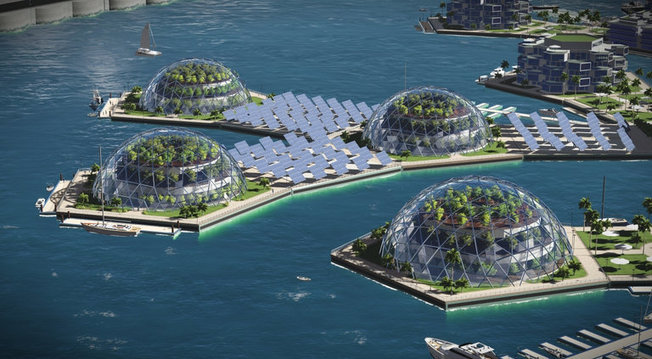
As Climate Change Accelerates, Floating Cities Look Like Less of a Pipe Dream

A costly plan to build floating islands shows how climate change is pushing the search for innovative solutions, but some critics ask who will ultimately benefit.

Source: www.nytimes.com

As coastal communities are considering what the tangible impacts of climate change might be, things that were once considered science fiction could be a part of how people adapt to the modifications we’ve collectively made to our global environment that we depend on to sustain life.  


Tags: physicaltechnologysustainability, climate change, environment, resources, watercoastal, environment dependenvironment adapt, environment modify.

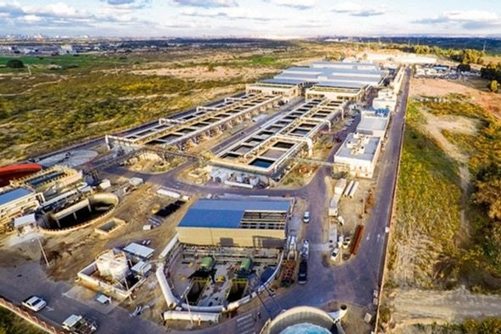
Israel Proves the Desalination Era Is Here

One of the driest countries on Earth now makes more freshwater than it needs


Driven by necessity, Israel is learning to squeeze more out of a drop of water than any country on Earth; researchers have pioneered new techniques in drip irrigation, water treatment and desalination. “The Middle East is drying up,” says Osnat Gillor, a professor at the Zuckerberg Institute who studies the use of recycled wastewater on crops. “The only country that isn’t suffering acute water stress is Israel.” That water stress has been a major factor in the turmoil tearing apart the Middle East, but Bar-Zeev believes that Israel’s solutions can help its parched neighbors, too — and in the process, bring together old enemies in common cause.


Tags: drought, water, environment, Israeltechnology, Middle East.

Source: www.scientificamerican.com

Creating RI’s Off-Shore Wind Farm

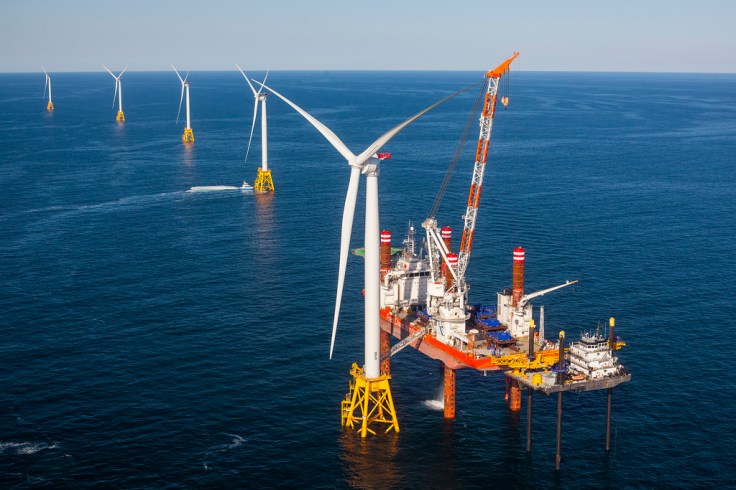
Today, to the southeast of Block Island, there are five new structures rising from the ocean. These are the towers of the Block Island Wind Farm (BIWF), the first offshore wind energy installation in the United States. The turbines will generate 30 megawatts of energy; providing electricity to 17,000 households on Block Island and coastal Rhode Island (McCann, 2016), and replacing the diesel generators that previously powered New Shoreham. The turbines are on schedule to begin turning in November 2016 once commissioning is complete.

Source: uri.maps.arcgis.com

One of the overriding, major take-home points of this ESRI StoryMap, is that a project of this scale, scope, and magnitude requires geographic data across many disciplines (to see the largest off-shore wind farm in the world, click here).


Tags: mapping, Rhode IslandESRIStoryMap, GISresources, water, coastalenergy, environment depend.

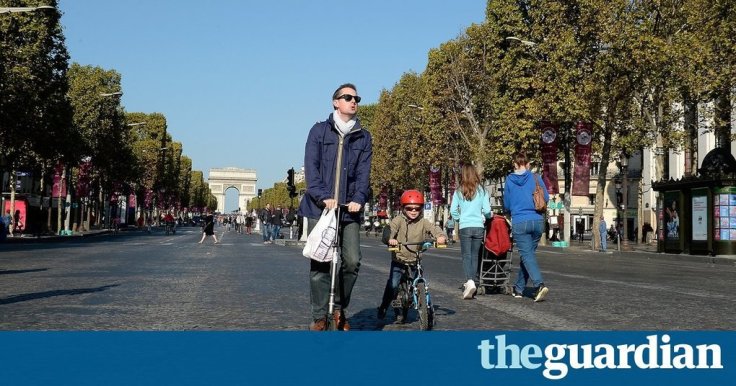
Paris mayor unveils plan ​to restrict traffic and pedestrianize city center

Anne Hidalgo says she wants to cut the number of cars in French capital by half as part of campaign to tackle pollution

Source: www.theguardian.com

The world’s biggest cities are struggling to maintain access to congested downtown areas and still ensure that the downtown maintains it’s historic sense of place that generate so much tourism and concentration of cultural amenities.  Pollution is driving cities to change as the private automobile as the default mode of transportation becomes less feasible and unsustainable as cities expand to be far larger than they ever have been before.  


Tags: urban, environmentpollution, urban ecology, France, place, tourism, Paris, megacities, transportation.

WORKSHEETS: Climate Migrants

“The ESRI storymap on climate refugees does a phenomenal job sampling locations in the world that experience migration effects as a result of climate change. Attached is a guided worksheet that accompanies the ESRI Climate Migrant Storymap.”

Source: www.thehumanimprint.com

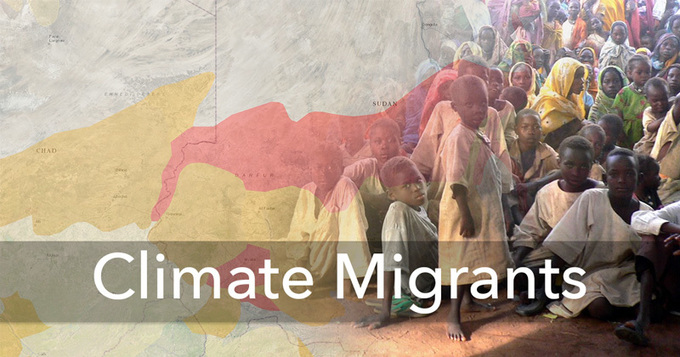
This StoryMap shows some key regions where migrants are fleeing some of the negative impacts of climate change and one APHG teacher has created a fabulous worksheet to guide students through this great resource.   


TagsAPHG, climate changemigrationrefugees, environment, coastalmappingESRIStoryMap, political ecology.

The Sargasso Sea

“The Sargasso Sea occupies almost two thirds of the North Atlantic Ocean. Within this sea, circling ocean currents accumulate mats of Sargassum seaweed that shelter a surprising variety of fishes, snails, crabs, and other small animals. The animal community today is much less diverse than it was in the early 1970s, when the last detailed studies were completed in this region. This study shows that animal communities in the Sargasso Sea are definitely changing. The next step is to find out why.”

Source: www.youtube.com

Often, we define oceans and seas based on their borders with land as their defining characteristics (this is one reason why many don’t know about the Southern Ocean as a distinct body of water or consider it an ocean). The Sargasso Sea is defined by ocean currents; it is surrounded by great currents but is itself without a strong current, making it perilous for early seafarers.  These oceanic doldrums became shrouded in superstition as stories of the fabled Bermuda Triangle spread, but the truth is all in the ocean currents.   


Tags: water, biogeography, environment, physical.

Climate Migrants

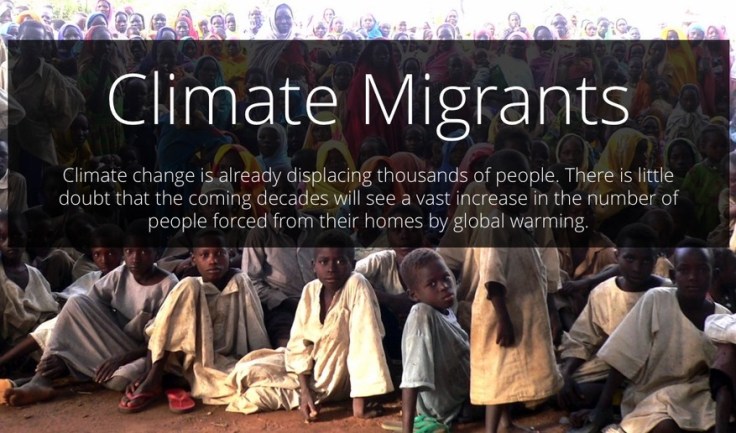
Climate change has already displaced tens of thousands of people. If it continues unabated, it could lead to one of the largest mass human migrations in history.

Source: storymaps.esri.com

This StoryMap shows some key regions where migrants are fleeing some of the negative impacts of climate change, a trend that appears very likely to increase in the future.  It is also an excellent example of the ESRI’s new Cascade template for creating a web app. 


Tags: physical, weather and climate, climate change, environment, resources, watercoastalmappingESRIStoryMap, visualization, environment depend, political ecology.

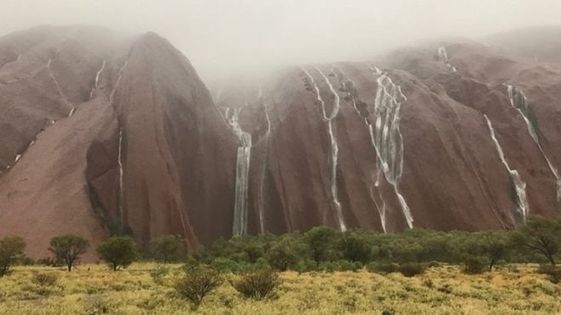
Australia flood: Uluru national park closed after huge rainfall

Record rainfall in central Australia leads to flash floods and the closure of Uluru national park.


Tags: Australia, environmentweather and climate, water.

Source: www.bbc.com

Skokomish River salmon cross the road

“Watch salmon race across the road on their way to spawn; for more footage, watch this extended version.”

Source: www.youtube.com

We often see examples of how human modifications to ecosystems or watersheds have devastatingly negative impacts.  This is a remarkable example from Washington’s Olympic Peninsula that shows the resiliency of natural systems to overcome human modifications to the physical landscape.  If you study the world, you will always have something to both amaze and surprise you.   


Tagsfluvial, biogeography, environment, geomorphology, physicalwater, environment adapt, environment modify.
Blog at WordPress.com.

Up ↑