Search

GEOGRAPHY EDUCATION

Supporting geography educators everywhere with current digital resources.

Tag

food production

The Spice Trade’s Legacy

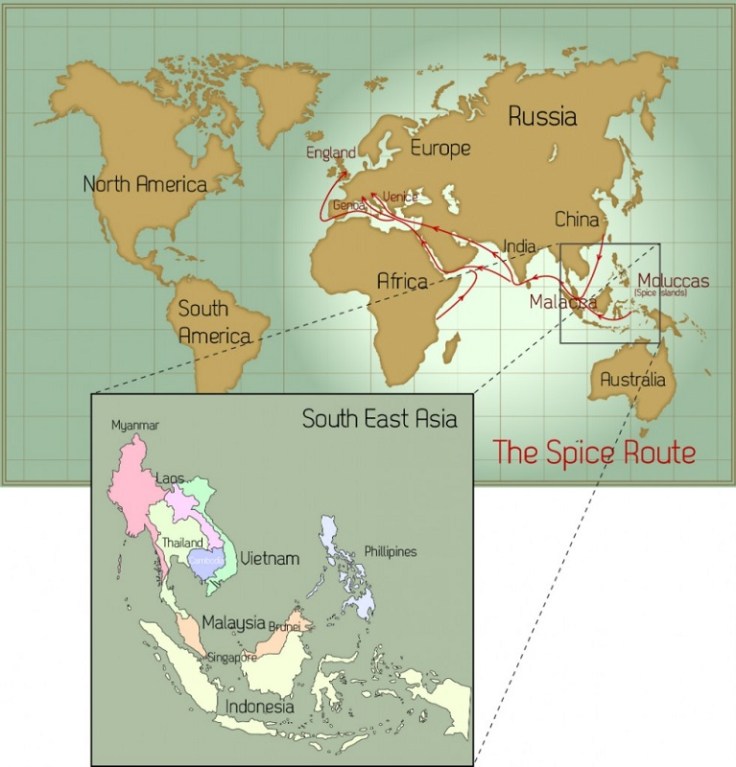
“In its day, the spice trade was the world’s biggest industry. It established and destroyed empires and helped the Europeans (who were looking for alternate routes to the east) map the globe through their discovery of new continents. What was once tightly controlled by the Arabs for centuries was now available throughout Europe with the establishment of the Ocean Spice Trade route connecting Europe directly to South Asia (India) and South East Asia.”

Source: cleanfooddirtygirl.com

The spice trade changed how we eat forever but it did so much more.  The fall of Constantinople to the Ottoman Empire cut off Europe from the vital trade routes to the east and access to the most prized commodities of the day.  What drove European exploration to get around Africa and to cross the Atlantic?  It was to reshape their situation location relative to the economic networks that shaped the emerging global economy.  In essence, the spice trade reshaped the fortunes and trajectories of several major world regions.   


Tags: Southeast Asia, food productiondiffusionglobalization, agriculture, economicindustry, economic, historical, regions.
Cotton Candy Grapes?!?

Source: www.grapery.biz

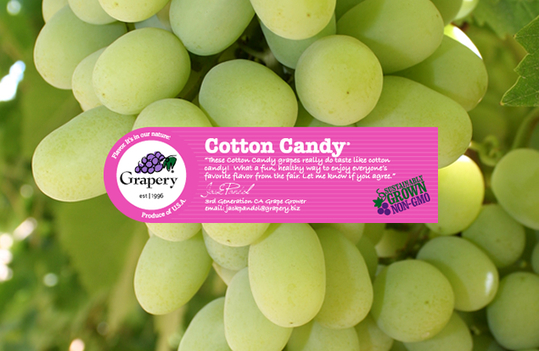
After years of seeing fruit-flavored candy, we are now seeing candy-flavored fruit. The company Grapery is very careful to highlight that these patented fruit varieties are not GMOs, but the cotton candy flavored grapes are cross pollinated by hand (by fruit geneticists). You can watch this 4 minute CBS video about the agricultural production and marketing of this new product. Yes, I’ve experimented with these at a friend’s house, and they really do taste like cotton candy (and no, I’m not planning on purchasing any).     


Questions to Ponder: Does this make you leery about eating this or totally excited to try it? How come?  Why is the company so adamant to state that these grapes are non-GMO? According to the video, what are the primary concerns of most grape producers and how does that contrast with this company?  


Tagsfood, food production, agribusiness, agriculture, GMOstechnology.

Why the US government wants Americans to eat more cheese

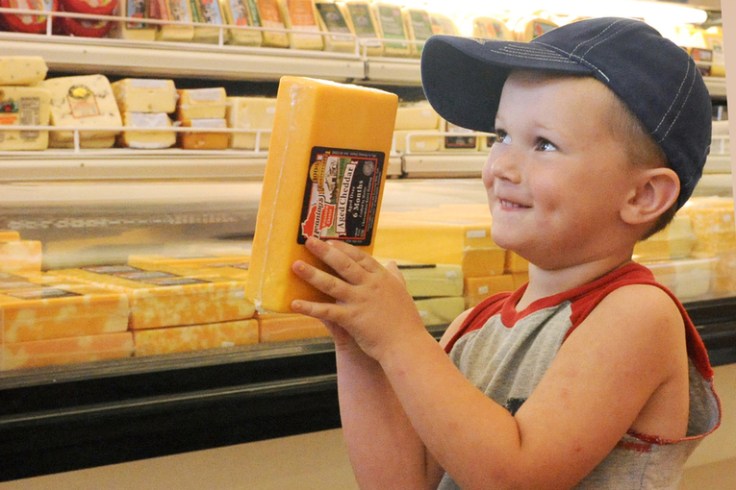
The USDA said today that it will buy $20 million worth of cheese to donate to food banks and pantries in an effort to help America’s struggling dairy producers.

Source: www.csmonitor.com

Do politics, economics, and government policies help to shape agriculture patterns?  Absolutely.  This is an interesting, current example that shows how Chinese and Russian policies are impacting American dairy producers, and how the U.S. government is stepping in. 


Questions to Ponder:  Should the U.S. government protect businesses that are in dire straits?  What would happen if the government did not offer agricultural subsidies/bailouts?  What will happen (or not happen) because of these subsidies/bailouts?  Any way you slice it, 11 million tons is a lot of cheddar.     


Tags: agriculture, food production, economicfood, agribusiness,

Making Ethanol from Sugarcane

This segment highlights how sugarcane is processed into ethanol for fuel and other uses.

Source: www.youtube.com

Sugarcane ethanol has proven to be one of the most environmentally safe alternative fuel sources. In addition to its green energy properties, sugarcane ethanol has fueled the Brazilian economy for over a decade. The Brazilian automotive industry have developed a complex, “Flex Fuel” engine that allows vehicles to run off of both gasoline and ethanol. Also, sugarcane ethanol has been one of their leading exports in the global economy. Due to recently discovered fuel deposits in Brazil and around the globe, there has been a decline in the need for sugarcane ethanol. This has negatively impacted the economy in addition to the Brazilian job market. But thanks to the engineering of cellulosic ethanol, Brazil is striving to become the green energy superpower yet again.


Questions to Ponder: Since cellulosic ethanol production is so expensive, do you think that will deter production and customers from purchasing it? Do you think that Brazil will ever become independent of fossil fuels as a result of their successful sugarcane ethanol production?


Tagsenergy, resourcespolitical ecologyagriculture, food production, land use, Brazil, South America.

Where our food came from

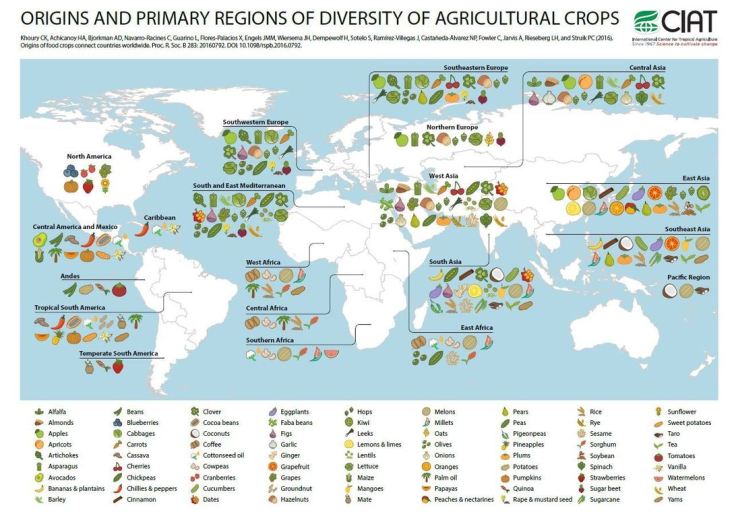
“Explore the geographic origins of our food crops – where they were initially domesticated and evolved over time – and discover how important these ‘primary regions of diversity’ are to our current diets and agricultural production areas.”

Source: blog.ciat.cgiar.org

This is an incredibly rich website with great interactive maps, dynamic charts, and text with rich citations.  This is one of those resources that an entire class could use as a starting point to create 30+ distinct project.  This is definitely one of the most important and best resources that I’ve shared recently, one that I’m going to use in my class.  Where did a particular crop originally come from?  Where is it produced today?   How do these historic and current agricultural geographies change local diets and economies around the world?  All these issues can be explored with this interactive that includes, but goes beyond the Columbian Exchange


Tags: foodeconomicfood production, agribusiness, agriculture, APHG, unit 5 agriculture, globalizationbiogeography, ecology, diffusion.

Sustaining Seven Billion People

“With seven billion people now living on Earth, the ever growing demand is putting unprecedented pressure on global resources—especially forests, water, and food. How can Earth’s resources be managed best to support so many people? One key is tracking the sum of what is available, and perhaps nothing is better suited to that task than satellites.”

Source: earthobservatory.nasa.gov

Agricultural production is one of the ways in which people modify the environment more than any other.  Global population is expected to top out at around 9 billion around 2050, so will we be able to sustainably feed all of the entire human population?  Satellite imagery can help answer these questions. 

Tagsremote sensing, geospatial, images, sustainability, agriculture, food production, environment modify, unit 5 agriculture

Blog at WordPress.com.

Up ↑