Search

GEOGRAPHY EDUCATION

Supporting geography educators everywhere with current digital resources.

Tag

geospatial

GeoInquiries for APHG

GeoInquiries™ are short, standards-based inquiry activities for teaching map-based content found in commonly used textbooks. Each activity is designed using a common inquiry model and can be presented quickly from a single computer and projector or modified for students’ hands-on engagement. Collections of 15–20 activities per topic enhance your curriculum throughout the year.” SOURCE: ESRI
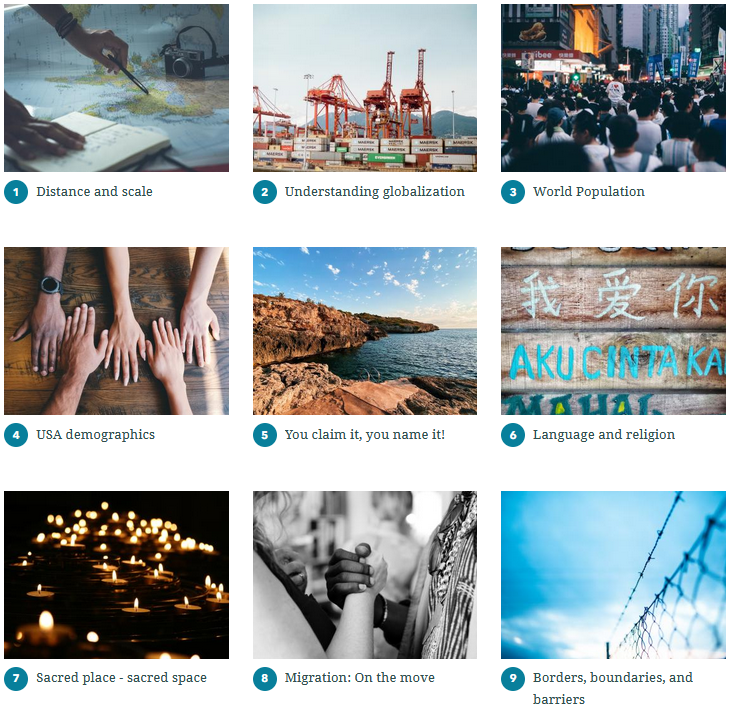
ESRI has produced GeoInquires for many diverse subjects, from American Literature to World History.   Not surprisingly, I’m especially interested in the AP Human Geography collection with 15 mapping activities that align with content and skills of the course.   You don’t need mapping expertise to use these lessons–check them out! 

TagsmappinggeospatialESRI, APHG.

Using lidar data to see the past

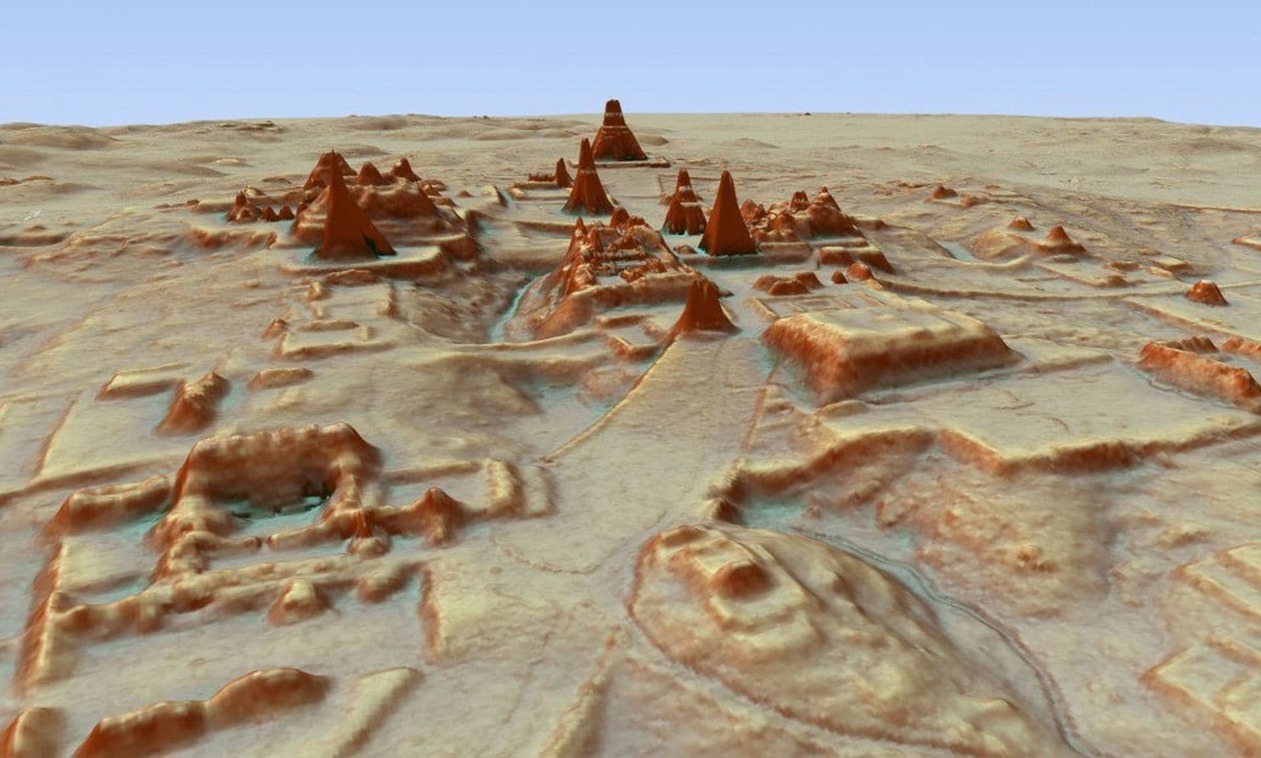
A lidar image reveals ancient Mayan structures

Archaeologists have spent more than a century traipsing through the Guatemalan jungle, Indiana Jones-style, searching through dense vegetation to learn what they could about the Maya civilization. Scientists using high-tech, airplane-based lidar mapping tools have discovered tens of thousands of structures constructed by the Maya: defense works, houses, buildings, industrial-size agricultural fields, even new pyramids. SOURCE– National Geographic: Everything we thought we knew about the Maya is being upended

Lidar technology gives us the visual answer to the question, “If you were to strip a forest of all its vegetation, what would you see? The lidar system fires rapid laser pulses at surfaces and measures how long it takes that light to return to sophisticated measuring equipment. Doing that over and over again lets scientists create a topographical map of sorts. Months of computer modeling allowed the researchers to virtually strip away half a million acres of jungle that has grown over the ruins. What’s left is a surprisingly clear picture of how a 10th-century Maya would see the landscape.

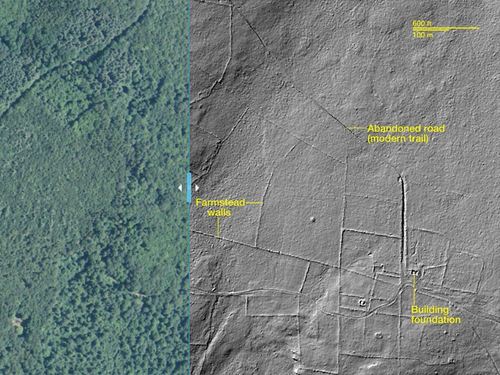
A New England lidar images reveals old land use patterns.

This technology also has local applications here in New England. New England’s wooded hills hold a secret—they weren’t always forested. Instead, many were once covered with colonial roads and farmsteads and food production was the primary local economic activity. Today we can use lidar to see remnants of this historical landscape by mapping stone walls and other features. SOURCE–National Geographic: Lost New England revealed by high-tech archaeology

ArcGIS application: Lidar can also be used quickly assess damage and change after a geologically violent incident, as seen in the Oso landslide in Washington state.  View the impact in ArcGIS online in this ArcGIS map, utilizing LiDAR I and II data layers.   

Questions to Ponder:

  • How does lidar work?
  • How can it be used in GIS?
  • What are 2 changes to our understanding of the Maya that come out of this Lidar data?
  • What are 2 New England applications that you found interesting?
  • Examine the Oso landslide in ArcGIS online. How does this visual representation change your understanding?

Leading the Location Intelligence Revolution

"As GPS devises, sensors, and drones proliferate, the power of location intelligence increases exponentially. This means LI can bring clarity to the most pressing business challenges – even those that at first glance don’t seem location related. Esri has location down to a science – The Science of Where. Examples from the Bavarian Police Department, Switzerland’s largest retailer, Migros, the Port of Rotterdam, and the European Environment Agency, provide just a taste of the broad scope of challenges that can be tackled through the lens of where."

Source: www.youtube.com

This video is a good demonstration of the value of GIS, geospatial technologies, and locational intelligence. 

GeoEd Tags: GIS, esri, video, mapping, cartography, geospatial, technology.

Scoop.it Tags: GIS, ESRIvideo, mapping, cartography, geospatial, technology.

Five Tips and Strategies on How to Interpret a Satellite Image

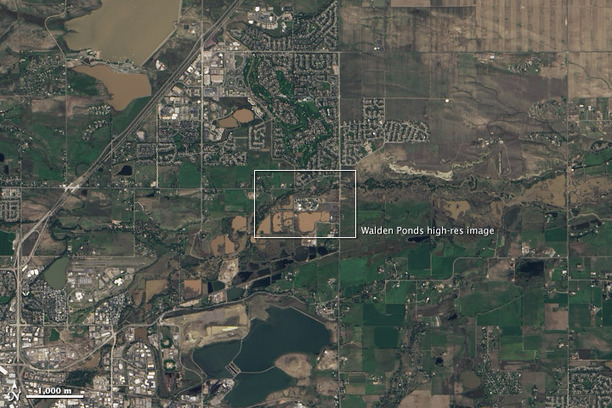
What do you do when presented with a new satellite image? Here’s what the Earth Observatory team does to understand the view.

  1. Look for a scale
  2. Look for patterns, shapes, and textures
  3. Define the colors (including shadows)
  4. Find north
  5. Consider your prior knowledge

Question #2: READ TO ANSWER FOR MORE INFO ON THE FIVE TIPS: earthobservatory.nasa.gov

Question #3: Also search through NASA’s Earth Observatory (Images or Articles) and the Jefferson Grid Instagram account.

Aerial photography can be quite beautiful, as can satellite imagery. These are more than just pretty pictures; interpreting aerial photography and satellite imagery is not easy; here is a great article that gives an introduction on how to interpret satellite imagery. With a little training, satellite images become rich data sources (instead of some visually meaningless data).  Using Stratocam, you can explore and tag some of the amazing place on Earth. 

Tags: mapping, perspective, remote sensing, geospatial, unit 1 Geoprinciples.

Maya civilization was much vaster than known, thousands of newly discovered structures reveal

Scientists using high-tech, airplane-based lidar mapping tools have discovered tens of thousands of structures constructed by the Maya.


Archaeologists have spent more than a century traipsing through the Guatemalan jungle, Indiana Jones-style, searching through dense vegetation to learn what they could about the Maya civilization. Scientists using high-tech, airplane-based lidar mapping tools have discovered tens of thousands of structures constructed by the Maya: defense works, houses, buildings, industrial-size agricultural fields, even new pyramids.

The lidar system fires rapid laser pulses at surfaces and measures how long it takes that light to return to sophisticated measuring equipment. Doing that over and over again lets scientists create a topographical map of sorts. Months of computer modeling allowed the researchers to virtually strip away half a million acres of jungle that has grown over the ruins. What’s left is a surprisingly clear picture of how a 10th-century Maya would see the landscape.

Tags: lidar, spatial, remote sensing, geospatial, unit 1 GeoPrinciplesGuatemala, Middle America.

Source: www.washingtonpost.com

Choosing a Map Projection

“Cartographers at National Geographic discuss how they select an appropriate map projection for the September 2012 magazine map supplement. –World maps usually center on the land, with the Pacific Ocean divided as bookends. To show each ocean as a whole with the least distortion for our ‘Beneath the Oceans’ supplement map, we used a map projection called an interrupted Mollweide centered on the Pacific.”

Source: www.youtube.com

There is no one perfect map projection that fits all circumstances and situations. Think of a situation in which this map projection would be an ideal way to represent the Earth and in another situation that same projection would give you an incredibly limited perspective.  This video provides good insight into how to choose a map projection for a cartographic project. Here is National Geographic’s lesson using this video.

Tags: cartography, K12, geospatial, NationalGeographic, water.

Esri GeoInquiries™ for World History

“The Esri Education Outreach team is pleased to announce the release of a sample pack from the forthcoming GeoInquiries™ collection for World History classrooms.  The sample pack includes the first four activities supporting high school World History instruction with ArcGIS Online.  Eleven additional activities will be released over the coming weeks.”

Source: education.maps.arcgis.com

ESRI has produced GeoInquires for Earth Science, US History, Environmental Science, AP Human Geography, 4th grade, and has recently released a now has a set for World History.

Tagsmappinggeospatialempire, historical, ESRI, K12, edtech.

The Geography Teacher’s Introduction to OpenStreetMap

“Wed, Mar 15, 2017 8:00 PM – 9:00 PM EDT, the NCGE will be offering a free webinar for educators on the OpenStreetMap project and how you can incorporate it into your class.”

Source: attendee.gotowebinar.com

My students and I join OpenStreetMap (OSM) projects, especially when there is a major humanitarian need…it’s a great way to make service learning and geospatial technologies come together. If you are interested learning more about OSM projects for the classroom, sign up for this NCGE webinar seminar as soon as possible, since this event is right around the corner (the webinar program is one of the many great reasons to become a member of NCGE). 


TagsNCGE, mappingedtech, cartography, geospatial, disasters, STEM.


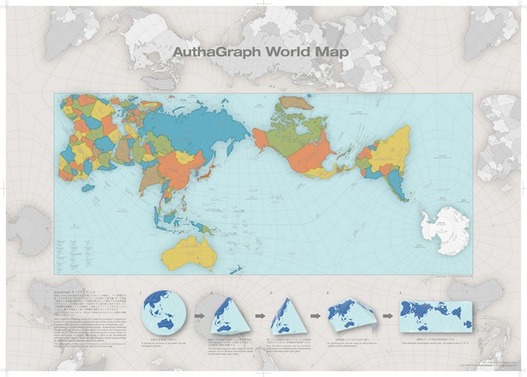
A More Accurate World Map Wins Prestigious Japanese Design Award

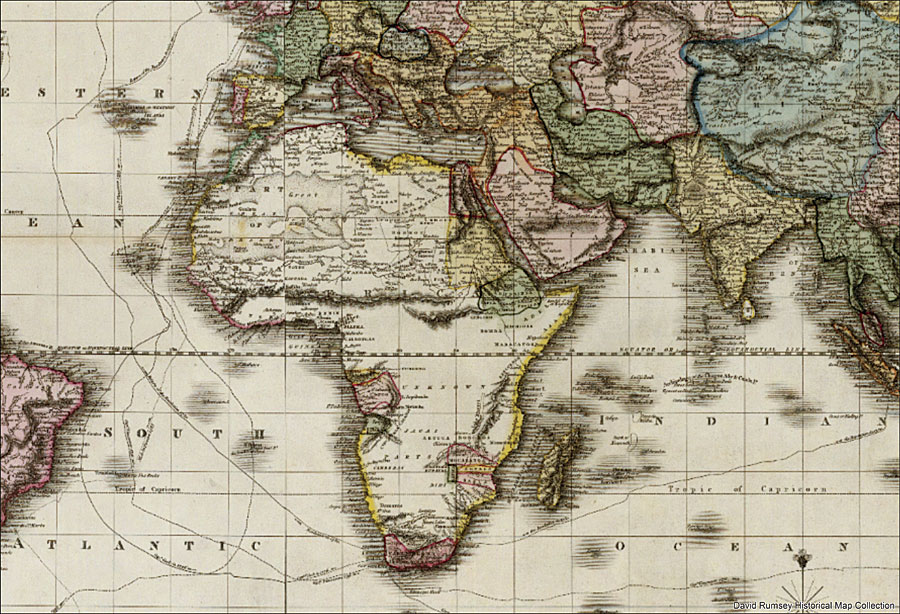
“To design a map of the world is no easy task. Because maps represent the spherical Earth in 2D form, they cannot help but be distorted, which is why Greenland and Antarctica usually look far more gigantic than they really are, while Africa appears vastly smaller than its true size. The AuthaGraph World Map tries to correct these issues, showing the world closer to how it actually is in all its spherical glory.”

Source: mentalfloss.com

This just shows how subjective the concept of “accurate” can be. First off, this is a fabulous map that nicely minimizes distortions (distance, direction, area, and shape) of the land on our planet. Any criticism of the map just shows the impossibility of making an accurate 2D map of a 3D Earth, but I still think that there is plenty of room to discuss the flaws/distortions that were chosen instead of others. It is interesting to note that a Japanese contest awarded this map with it’s top honor (I doubt a Brazilian organization would feel the same way about this map). This map does make with some traditional cartographic conventions in its representation of Earth.  


Questions to Ponder: What are some elements of this map that are different from more traditional maps? This map claims to be more accurate; does that make it more useful?    


Tags: visualization, mapping, cartography, geospatial, technology.

Create a free website or blog at WordPress.com.

Up ↑