Search

GEOGRAPHY EDUCATION

Supporting geography educators everywhere with current digital resources.

Tag

historical

How the U.S. Air Force Mapped the World at the Dawn of the Cold War

One specialized unit gathered data that could guide a missile to a target thousands of miles away.


The work of the 1370th bridged a crucial gap in the history of military technology. By the late 1950s, both the United States and the Soviet Union had developed intercontinental ballistic missiles, but satellite navigation systems like GPS weren’t yet up and running. That left military planners with a huge challenge: how to program a missile to hit a target on the other side of the world. Even a tiny mistake could be disastrous.


Tags: mapping, cartography, technology, historical.

Source: news.nationalgeographic.com
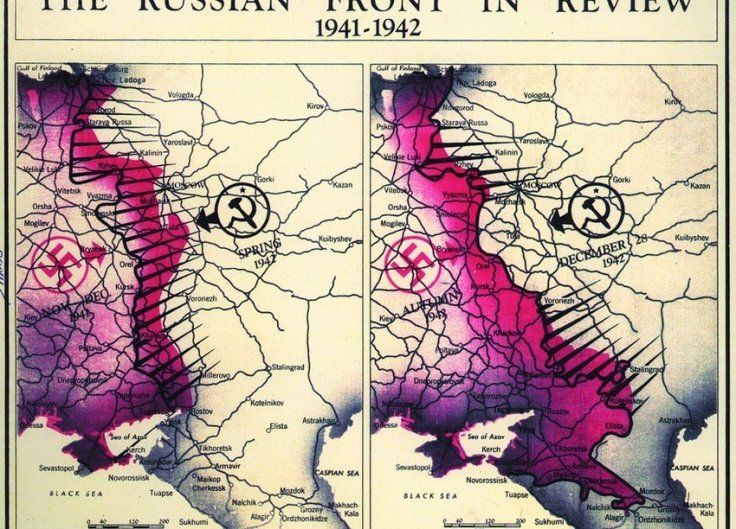
CIA’s Cartography Division Shares Declassified Maps

“As much as James Bond is defined by his outlandish gadgets, one of the most important tools for real-life spies is actually much less flashy: maps. Whether used to gather information or plan an attack, good maps are an integral part of the tradecraft of espionage. Now, to celebrate 75 years of serious cartography, the Central Intelligence Agency has declassified and put decades of once-secret maps online.  These days, the C.I.A. and other intelligence agencies rely more on digital mapping technologies and satellite images to make its maps, but for decades it relied on geographers and cartographers for planning and executing operations around the world. Because these maps could literally mean the difference between life and death for spies and soldiers alike, making them as accurate as possible was paramount, Greg Miller reports for National Geographic.”


Tags: mapping, geopolitics, maphistorical, map archives

Source: www.smithsonianmag.com

The silent minority

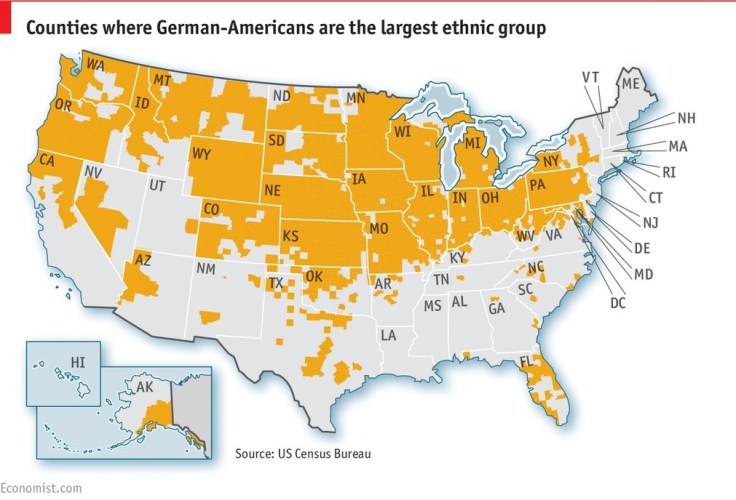
America’s largest ethnic group has assimilated so well that people barely notice it


German-Americans are America’s largest single ethnic group (if you divide Hispanics into Mexican-Americans, Cuban-Americans, etc). Yet despite their numbers, they are barely visible. During the first world war, parts of America grew hysterically anti-German. Many stopped speaking German and anglicized their names. The second world war saw less anti-German hysteria, but Hitler and the Holocaust gave German-Americans more reasons to hide their origins.


Tagsculturemigrationhistorical, ethnicityUSA.

Source: www.economist.com

How Pearl Harbor changed Japanese-Americans

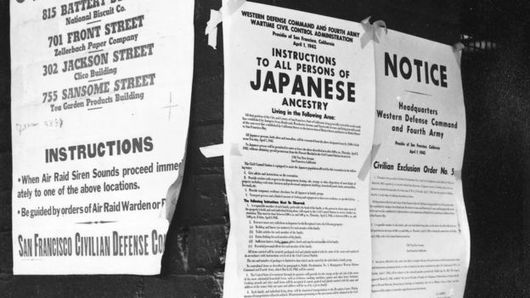
“In February 1942, President Franklin Roosevelt issued Executive Order 9066, sending 120,000 people from the US west coast into internment camps because of their ethnic background. Two-thirds of them were born in America. The treatment of Japanese-Americans during the World War Two was denounced by President Ronald Reagan in 1988 as ‘a policy motivated by racial prejudice, wartime hysteria, and a failure of political leadership.’ He signed the Civil Liberties Act to compensate more than 100,000 people of Japanese descent who were incarcerated in internment camps.


Tags: historicalethnicity, war.

Source: www.bbc.com

Gullah Culture

“While Gullah was not originally a written language and has never had a governing authority or dictionary, linguistic scholars have found that the language is internally consistent and in some ways more efficient and expressive than standard English. Elements of the language have seeped into African-American Vernacular English across the country.”


For the first time in recent memory, the Charleston County School Board is discussing how to address the specific needs of Gullah and Geechee students, children of a culture whose linguistic origins trace back to the west coast of Africa via the trans-Atlantic slave trade. Some teachers have said the students’ way of speaking — whether in the heavily West African-influenced Gullah language or in the more Anglicized dialects sometimes known as Geechee — can present an obstacle to understanding in the classroom. Like many Lowcountry Gullah speakers of her generation, the current head of state for the Gullah/Geechee Nation carries painful memories of adults who taught her to hold her family’s way of speaking in contempt.


Tags: language, culture, raceeducation, historical.

Source: www.youtube.com

Finding North America’s lost medieval city

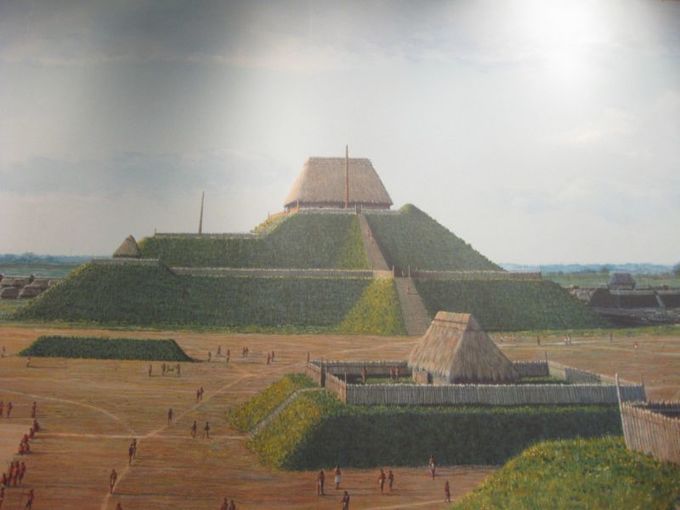
Cahokia was North America’s biggest city—then it was completely abandoned. I went there to find out why.

Source: arstechnica.com

The earthen mounds of Cahokia on the flat flood plains must have been the most awe-inspiring demonstration of political power and economic wealth in its day.  Like so many other civilizations before them (and many more in the future?), Cahokia probably declined from too many environmental modifications that led to unforeseen consequences.


Tagsurban ecology, indigenousenvironment, environment modify, historical, North America.

Human Population Through Time

It took 200,000 years for our human population to reach 1 billion—and only 200 years to reach 7 billion. But growth has begun slowing, as women have fewer babies on average. When will our global population peak? And how can we minimize our impact on Earth’s resources, even as we approach 11 billion?

Source: www.youtube.com

As stated in a Vox article, “The video above, from the American Museum of Natural History, shows essentially all of human history in just six minutes. It shows humanity spreading across the world over a few hundred thousand years — even as our population remained under 1 million. After that came the rise and fall of many empires and civilizations, plagues, wars, and so on — all the way to our current population of around 7 billion.”  Admittedly, the video is a bit “slow” in the middle, but that is a major part of the story of human population growth, and only serves to show how dramatic the population growth is at the end.  This video brings up more questions than it has answers.


Tags: demographicsmappingmigration, populationhistorical, unit 2 population 

The Spice Trade’s Legacy

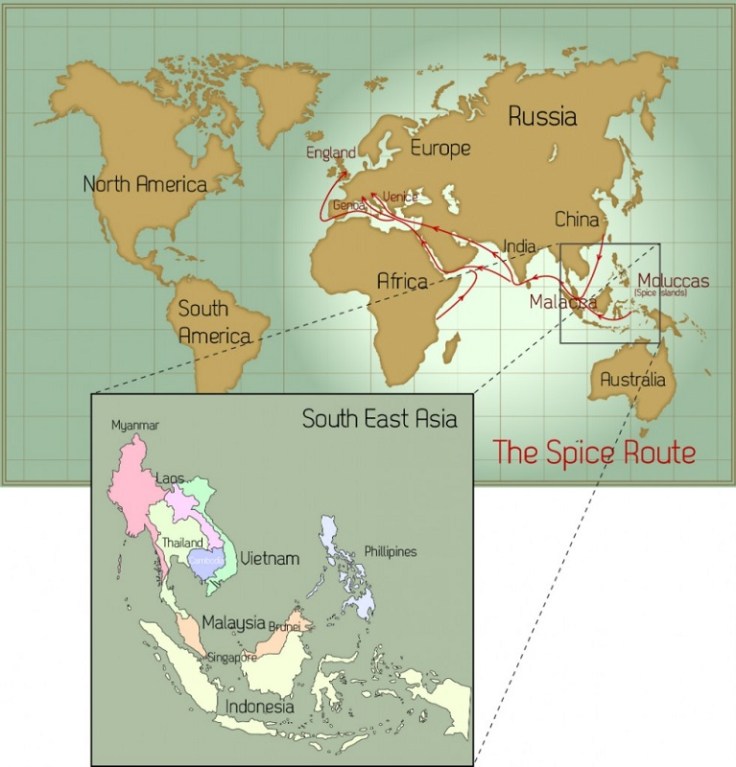
“In its day, the spice trade was the world’s biggest industry. It established and destroyed empires and helped the Europeans (who were looking for alternate routes to the east) map the globe through their discovery of new continents. What was once tightly controlled by the Arabs for centuries was now available throughout Europe with the establishment of the Ocean Spice Trade route connecting Europe directly to South Asia (India) and South East Asia.”

Source: cleanfooddirtygirl.com

The spice trade changed how we eat forever but it did so much more.  The fall of Constantinople to the Ottoman Empire cut off Europe from the vital trade routes to the east and access to the most prized commodities of the day.  What drove European exploration to get around Africa and to cross the Atlantic?  It was to reshape their situation location relative to the economic networks that shaped the emerging global economy.  In essence, the spice trade reshaped the fortunes and trajectories of several major world regions.   


Tags: Southeast Asia, food productiondiffusionglobalization, agriculture, economicindustry, economic, historical, regions.

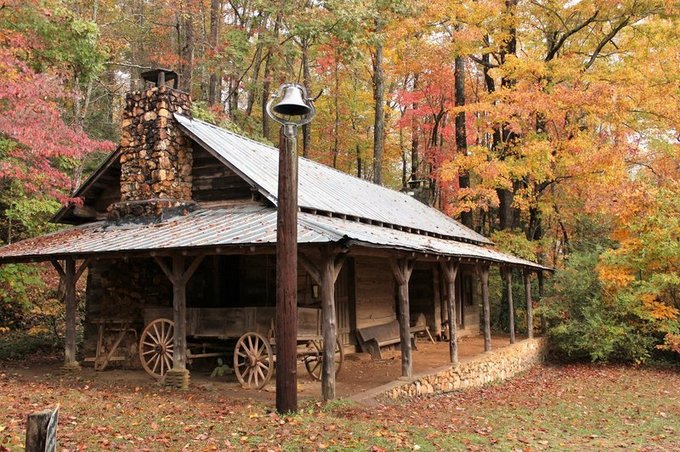
In The Mountains Of Georgia, Foxfire Students Keep Appalachian Culture Alive

For 50 years, high school students in Rabun County have chronicled their region’s disappearing traditions and mountain people, from blacksmiths to moonshiners, in publications and a living museum.

Source: www.npr.org

This is an excellent, rich example of preserving old elements of rural, folk cultures that are rapidly disappearing.  The project ties local students to the region to appreciate past more and creates a remarkable archive for the future. 


Tagsculture, historicalrural, folk culturesthe Southpodcast, unit 3 culture.

Create a free website or blog at WordPress.com.

Up ↑