Search

GEOGRAPHY EDUCATION

Supporting geography educators everywhere with current digital resources.

Tag

industry

From Risking His Life To Saving Lives, Ex-Coal Miner Is Happy To Take The Paycut

The “Brave New Workers” series tells stories of Americans adapting to a changing economy. This week: after years working in the coal mines of West Virginia, a miner charts a new career in health care.

Source: www.npr.org

This series, Brave New Workers, is all about workers adapting to the shifting economic geographies.  Some industries are seen as foundational to a community and there is much angst about the loss of particular jobs.  New technologies are disruptive, and the process of job creation/job loss is sometimes referred to as creative destruction.  My uncle, once about a time, was a typewriter repairman.  Clearly, the personal computer was going to render his niche in the economic system obsolete so he became a web developer.  Not everyone successfully makes a seamless transition, but this collection of stories is emblematic of the modern American worker, needing to nimbly adapt to the labor market.


Tagspodcast, industry, manufacturinglabor, economic, USA.  

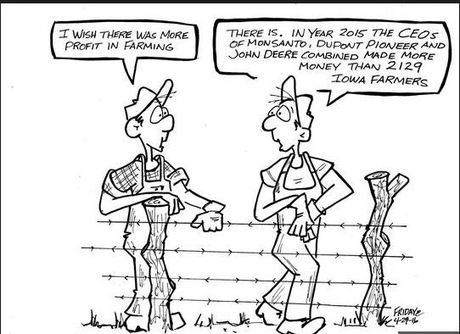
Long-time Iowa farm cartoonist fired after creating this cartoon

“Rick Friday has been giving farmers a voice and a laugh every Friday for two decades through his cartoons in Farm News.
Now the long-time Iowa farm cartoonist tells KCCI that he has been fired. Friday announced Sunday that his job was over after 21 years in a Facebook post that has since gone viral.”

Source: www.orrazz.com

There are some intriguing layers connected to the politics of agribusiness in this story.  First off, the political cartoon highlights a pithy truth–that while the ‘traditional’ farmer is a lucrative position, in the global economy, there are corporations that are amassing fortunes in agribusiness.  The second connection is more telling–the newspaper company felt compelled to fire the cartoonist as for voicing this perspective as the newspaper advertisers flexed their pocketbooks to change the direction of the news being reported.  


Tags: agriculture, food production, agribusiness, foodeconomicindustry, scale, media

Why do people and nations trade?

//cdn.embedly.com/widgets/media.html?src=https%3A%2F%2Fplayer.vimeo.com%2Fvideo%2F164108675&wmode=opaque&url=https%3A%2F%2Fvimeo.com%2F164108675&image=https%3A%2F%2Fi.vimeocdn.com%2Fvideo%2F587047534_1280.jpg&key=359ed8ab27db4f02a128049b1f89d6a1&type=text%2Fhtml&schema=vimeo

“Mark Blyth of Brown University explains international trade.” 

Source: vimeo.com

To understand international trade, you need to understand how the factors of production vary from place to place, resulting in different locations having a comparative advantage on a global market.  This video nicely explains that with the example of Scotland’s comparative advantage raising sheep with southern Europe’s comparative advantage in producing wine.   Does the size of a country matter in trade?  You betcha.


Tags: regions, economic, diffusion, industry

Ship to shore: tracking the maritime motorways

“It is estimated that 97 per cent of all trade – the things we buy in shops – will have been transported in containers by ships at sea. The container vessel, stacked high with uniformly-sized metal boxes, has become a symbol of our globalized world. This is a world of imports and exports, a world where moving things across huge distances keeps the price of daily commodities low as items are manufactured in one place, then packaged in another, before arriving on the shores where they will eventually be sold. In recent geographical literature, attention has turned to the world at sea – a space traditionally overlooked. Geography means ‘Earth-writing’ and geographers have taken the origins of the term very seriously. They have written primarily about the Earth: the ground, the soil, the land. The sea is something ‘out there’ – seemingly disconnected from our everyday lives. However, an appreciation of the world as made from flows and connections has enabled geography to recognize that the sea is essential to our landed life.” http://wp.me/p2Ij6x-5DS


Tags: transportation, globalization, diffusion, industry, economic.

Source: geographical.co.uk

Special Economic Zones

“Special Economic Zones (SEZs) are the most rapidly spreading kind of city, having catapulted exports and growth from Mauritius and the Dominican Republic to Shenzhen and Dubai — and now across Africa. Today more than 4000 SEZs dot the planet, a major indication of our transition towards the “supply chain world” explored in Connectography.  See more maps from Connectography and order the book here.”


Tags: globalizationurban, economicindustry, regions.

Source: www.paragkhanna.com

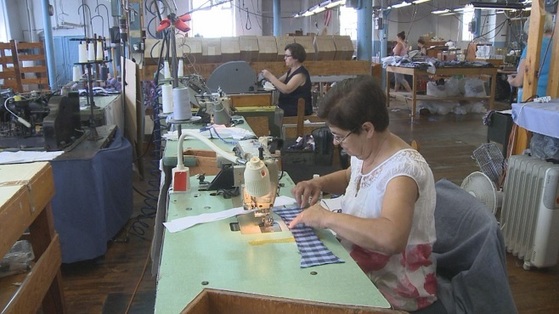
Providence area sees biggest shift away from manufacturing jobs in US

A new study illustrates just how drastically employment has plunged in Rhode Island’s historic industrial base over recent decades. Since 1980, the Providence metropolitan area has experienced the largest shift in the country away from manufacturing jobs and into work requiring college degrees, according to a paper by Stephan Whitaker, a research economist at the Federal Reserve Bank of Cleveland. “In 1980, 40% of workers in the Providence metro area worked in manufacturing and 25% worked in degree-intensive fields,” Whitaker writes. “By 2014, manufacturing had dropped to just 11%, and degree-intensive jobs had risen to 47%.”


Tags: urbanindustrymanufacturinglabor, economic, Rhode Island.

Source: wpri.com

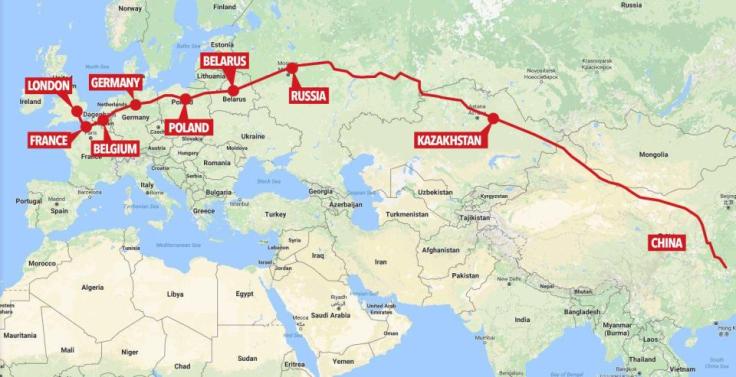
China sends first freight train to London

Time for a long trip along the new silk road.


The train is part of Chinese President Xi Jinping’s vision for ‘One Belt, One Road’ — dubbed by some as the new silk road. It’s China’s infrastructure initiative, which Xi hopes will improve China’s economic ties with Europe, Asia and the Middle East.


Tags: regions, transportationeconomic, globalization, diffusion, industry.

Source: www.cnn.com

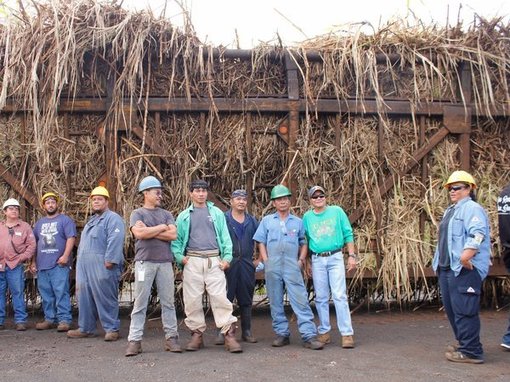
The Final Days Of Hawaiian Sugar

The sugar industry in Hawaii dominated the state’s economy for over a century. But it has shrunk in recent years. Now, the last of the state’s sugar mills has wrapped up its final harvest.

Source: www.npr.org

I grew up hearing commercials that sold the purity of the Hawaiian sugar Industry (C & H, Pure Sugar, that’s the one!).  These commercials sold not just the purity of Hawaii’s sugar, but also of the people and the place.  These commercials were some of my first geographic imaginings of an exotic tropical paradise on the peripheral edge of the United States.  Just like the imagined tropical bliss, the actual sugar industry of Hawaii is also coming to an end.  “For over a century, the sugar industry dominated Hawaii’s economy. But that changed in recent decades as the industry struggled to keep up with the mechanization in mills on mainland U.S. That and rising labor costs have caused Hawaii’s sugar mills to shut down, shrinking the industry to this one last mill.”   


Tags: industrymanufacturinglabor, economic, agribusiness, agriculture.

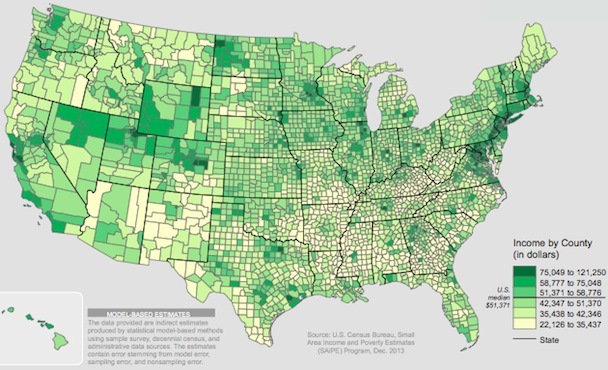
America’s Wealth Is Staggeringly Concentrated in the Northeast Corridor

“At the county level, America is a tremendously unequal place.”

Source: www.citylab.com

The concentration of wealth within U.S. cities is one of the most powerful geographic patterns in North America (and remains of of the key geographic stories of the 2016 presidential election). NYC served as a hub for the import/export of primary economic resources during the 18th and 19th centuries as the Erie Canal opened up the interior of the United States to become part of NYC’s hinterland.  NYC expanded as a hub for the manufacturing of consumer products and then began to transition to a more tertiary based economy. “There are more than 3,000 counties in the U.S. Of the 75 with the highest incomes, 44 are located in the Northeast, including Maryland and Virginia. The corridor of metropolitan statistical areas that runs from Washington, D.C., through Baltimore, Philadelphia, New York and Boston includes 37 of these top-earning counties (where the median family takes home at least $75,000 a year).”


Tags: urbanindustrymanufacturinglabor, economic, NYC, Washington DC. Boston.

Blog at WordPress.com.

Up ↑