Search

GEOGRAPHY EDUCATION

Supporting geography educators everywhere with current digital resources.

Tag

labor

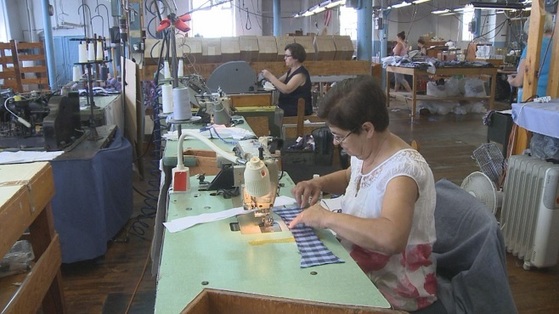
From Risking His Life To Saving Lives, Ex-Coal Miner Is Happy To Take The Paycut

The “Brave New Workers” series tells stories of Americans adapting to a changing economy. This week: after years working in the coal mines of West Virginia, a miner charts a new career in health care.

Source: www.npr.org

This series, Brave New Workers, is all about workers adapting to the shifting economic geographies.  Some industries are seen as foundational to a community and there is much angst about the loss of particular jobs.  New technologies are disruptive, and the process of job creation/job loss is sometimes referred to as creative destruction.  My uncle, once about a time, was a typewriter repairman.  Clearly, the personal computer was going to render his niche in the economic system obsolete so he became a web developer.  Not everyone successfully makes a seamless transition, but this collection of stories is emblematic of the modern American worker, needing to nimbly adapt to the labor market.


Tagspodcast, industry, manufacturinglabor, economic, USA.  

Providence area sees biggest shift away from manufacturing jobs in US

A new study illustrates just how drastically employment has plunged in Rhode Island’s historic industrial base over recent decades. Since 1980, the Providence metropolitan area has experienced the largest shift in the country away from manufacturing jobs and into work requiring college degrees, according to a paper by Stephan Whitaker, a research economist at the Federal Reserve Bank of Cleveland. “In 1980, 40% of workers in the Providence metro area worked in manufacturing and 25% worked in degree-intensive fields,” Whitaker writes. “By 2014, manufacturing had dropped to just 11%, and degree-intensive jobs had risen to 47%.”


Tags: urbanindustrymanufacturinglabor, economic, Rhode Island.

Source: wpri.com

The Staggering Wealth Of Mexico City

Walk on the streets and you´ll be exposed to its informal economy: people who do what they can to eke out a living including washing windshields, selling food, or even singing, dancing, and performing acrobatics for a tip.

What Americans may not know is that Mexico City is home to the wealthiest people, the poshest neighborhoods, the most exclusive shops, entertainment venues, and cultural centers on the planet.

Source: xpatnation.com

Mexico City has been the economic center of Mexico for a long time and is a true primate city. “Wealth accumulation in Mexico City has historically been concentrated in the hands of a few. In colonial times, the elite was mostly composed of Spanish-born immigrants who held high-ranking offices or worked as business owners or export-oriented merchants. Later, the wealthy were those who owned large estates known as haciendas…It is estimated that around 40 percent of Mexico’s income is owned by just 10 percent of its population, while 52.3 percent of Mexican citizens live in poverty.”


Tags: urban, megacitieseconomic, labor, Mexico.

The Final Days Of Hawaiian Sugar

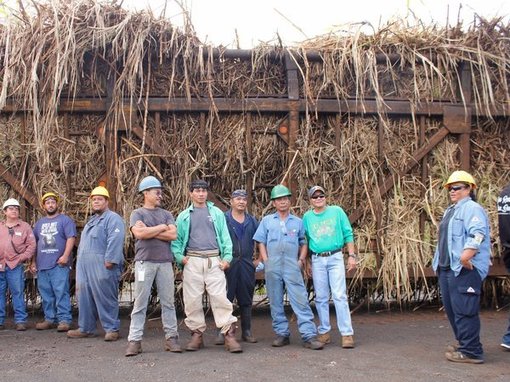
The sugar industry in Hawaii dominated the state’s economy for over a century. But it has shrunk in recent years. Now, the last of the state’s sugar mills has wrapped up its final harvest.

Source: www.npr.org

I grew up hearing commercials that sold the purity of the Hawaiian sugar Industry (C & H, Pure Sugar, that’s the one!).  These commercials sold not just the purity of Hawaii’s sugar, but also of the people and the place.  These commercials were some of my first geographic imaginings of an exotic tropical paradise on the peripheral edge of the United States.  Just like the imagined tropical bliss, the actual sugar industry of Hawaii is also coming to an end.  “For over a century, the sugar industry dominated Hawaii’s economy. But that changed in recent decades as the industry struggled to keep up with the mechanization in mills on mainland U.S. That and rising labor costs have caused Hawaii’s sugar mills to shut down, shrinking the industry to this one last mill.”   


Tags: industrymanufacturinglabor, economic, agribusiness, agriculture.

America’s Wealth Is Staggeringly Concentrated in the Northeast Corridor

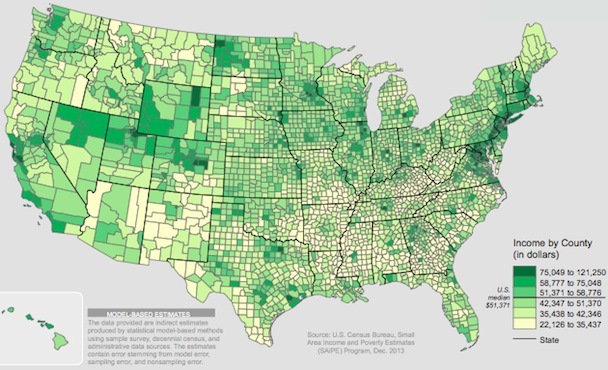
“At the county level, America is a tremendously unequal place.”

Source: www.citylab.com

The concentration of wealth within U.S. cities is one of the most powerful geographic patterns in North America (and remains of of the key geographic stories of the 2016 presidential election). NYC served as a hub for the import/export of primary economic resources during the 18th and 19th centuries as the Erie Canal opened up the interior of the United States to become part of NYC’s hinterland.  NYC expanded as a hub for the manufacturing of consumer products and then began to transition to a more tertiary based economy. “There are more than 3,000 counties in the U.S. Of the 75 with the highest incomes, 44 are located in the Northeast, including Maryland and Virginia. The corridor of metropolitan statistical areas that runs from Washington, D.C., through Baltimore, Philadelphia, New York and Boston includes 37 of these top-earning counties (where the median family takes home at least $75,000 a year).”


Tags: urbanindustrymanufacturinglabor, economic, NYC, Washington DC. Boston.

Germany reunified 26 years ago, but some divisions are still strong

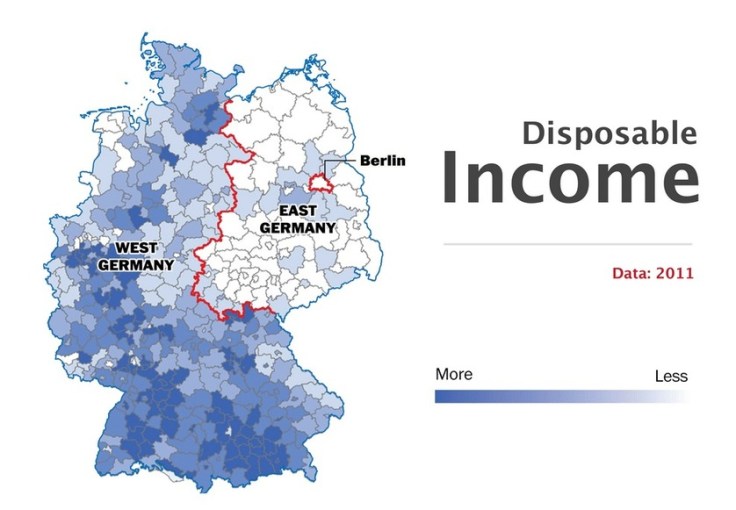
“While 75 percent of Germans who live in the east said that they considered their country’s reunification a success, only half of western Germans agreed. With eastern and western Germans blaming each other for past mistakes over the past two years, that frustration has likely increased. Younger citizens, especially — who do not usually identify themselves with their area of origin as strongly anymore — have grown worried about the persistent skepticism on both sides. But where do those divisions come from? And how different are eastern and western Germany today?”

Source: www.washingtonpost.com

This series of 10 maps (and 1 satellite image) highlights many of the cultural and economic divisions between East and West, despite efforts to in the last 26 years to smooth out these discrepancies. The social geographies imposed by the Iron Curtain and the Berlin Wall are still being felt from this relic border and will for years to come. 


Tags: Germany, industry, laboreconomichistorical, politicalborders.

This is where your smartphone battery begins

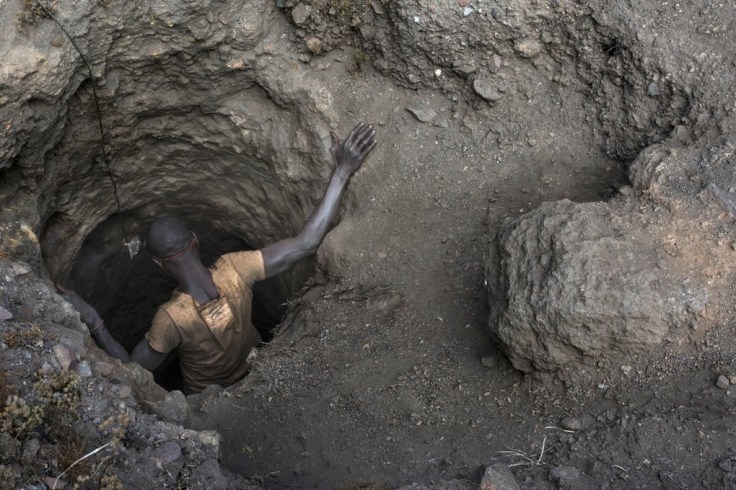
Workers, including children, labor in harsh and dangerous conditions to meet the world’s soaring demand for cobalt, a mineral essential to powering electric vehicles, laptops, and smartphones, according to an investigation by The Washington Post.

Source: www.washingtonpost.com

The Democratic Republic of the Congo (DRC) is a land rich with minerals and resources vital for high end consumer goods (laptops, cellphones, electric cars, etc.).  This in-depth investigation from the Washington Post of the cobalt mining districts in the DRC (60% of global cobalt production) is incredible.  It has great videos, maps, and an detailed article that cuts across the geographic themes (exploited local labor, global commodity chains, political governance, polluted water supply, medical geography, etc.).  


Just two days ago, the United States pulled the families of all governmental officials out of the DRC amid political turmoil and violence in the streets of Kinshasa, highlighting the fact that the weakness of political institutions in the DRC are a major reason for this situation.  


Tags: Congolaborwatermedical, environmentpollution, political, conflict, resourcespolitical ecology, Africa.

Africa’s Charcoal Economy Is Cooking. The Trees Are Paying.

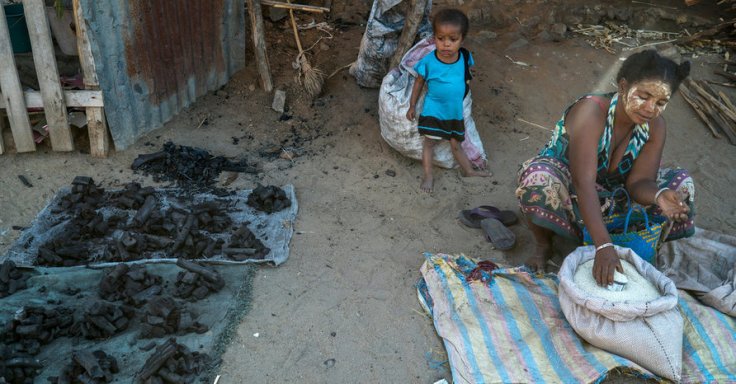
In Madagascar, the booming charcoal business is contributing to deforestation and may exacerbate the effects of global warming.

Source: www.nytimes.com

Deforestation does not happen in a vacuum–it occurs in an economic, political, and historical context.  Rural Africans have less access to high value commodities and converting forests into charcoal is one of the few options (similar to the issue in Haiti).  The short-term economic gain for a few individuals leads to long-term environmental problems such as soil erosion, flooding, and habitat destruction for many species.  


Tags: biogeography, environmentecology, poverty, development, economic, labor, Madagascar, erosionAfrica, resourcespolitical ecology.

Pros and Cons of Cotton Production in Uzbekistan

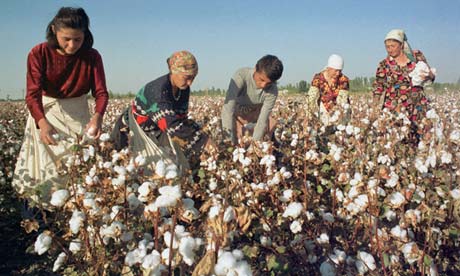
“This case study considers the pros and cons of cotton production in Uzbekistan. Since the country’s independence from the Soviet Union in 1991, revenues from cotton taxation have contributed substantially to developing the industrial sector, boosting the current account, achieving energy and food-grain self-sufficiency, and buffering domestic shocks in food and energy prices. Nonetheless, some argue that the state procurement system hampers the development of the agricultural sector. Often the payments for cotton hardly cover farmers’ production costs, and the quasi mono-culture of cotton production has adversely affected environmental sustainability.”

Source: cip.cornell.edu

Uzbekistan is a top world producer and exporter of cotton. There are many sectors involved in managing the cotton commodity chain to partake in the production. Not only is it a source of income, but provides labor jobs and food consumption. However, the land where the cotton production takes place is suffering. This land faces many types of land degradation that has an impact on the cotton. In order to secure the land, there are possible solutions and policies to improve the agriculture and the cotton benefits. Once the world’s fourth largest lake, the Aral Sea, is located in Uzbekistan, and has had a major impact on the cotton industry. This production has given Uzbekistan a world-wide reputation in cotton production, but is also known for destroying one of the world’s largest lakes.  Just because it is your greatest economic competitive advantage, doesn’t mean that it is environmentally sustainable.


Questions to Ponder: How much does the cotton production contribute to Uzbekistan economically? What are the solutions to address the demising Aral Sea? Who is impacted the most because of the land issues?


Tags:  agriculture, labor, Uzbekistan, physical, weather and climateland use, environmentAral Sea.

Blog at WordPress.com.

Up ↑