Search

GEOGRAPHY EDUCATION

Supporting geography educators everywhere with current digital resources.

Tag

MiddleEast

Changes in Iran

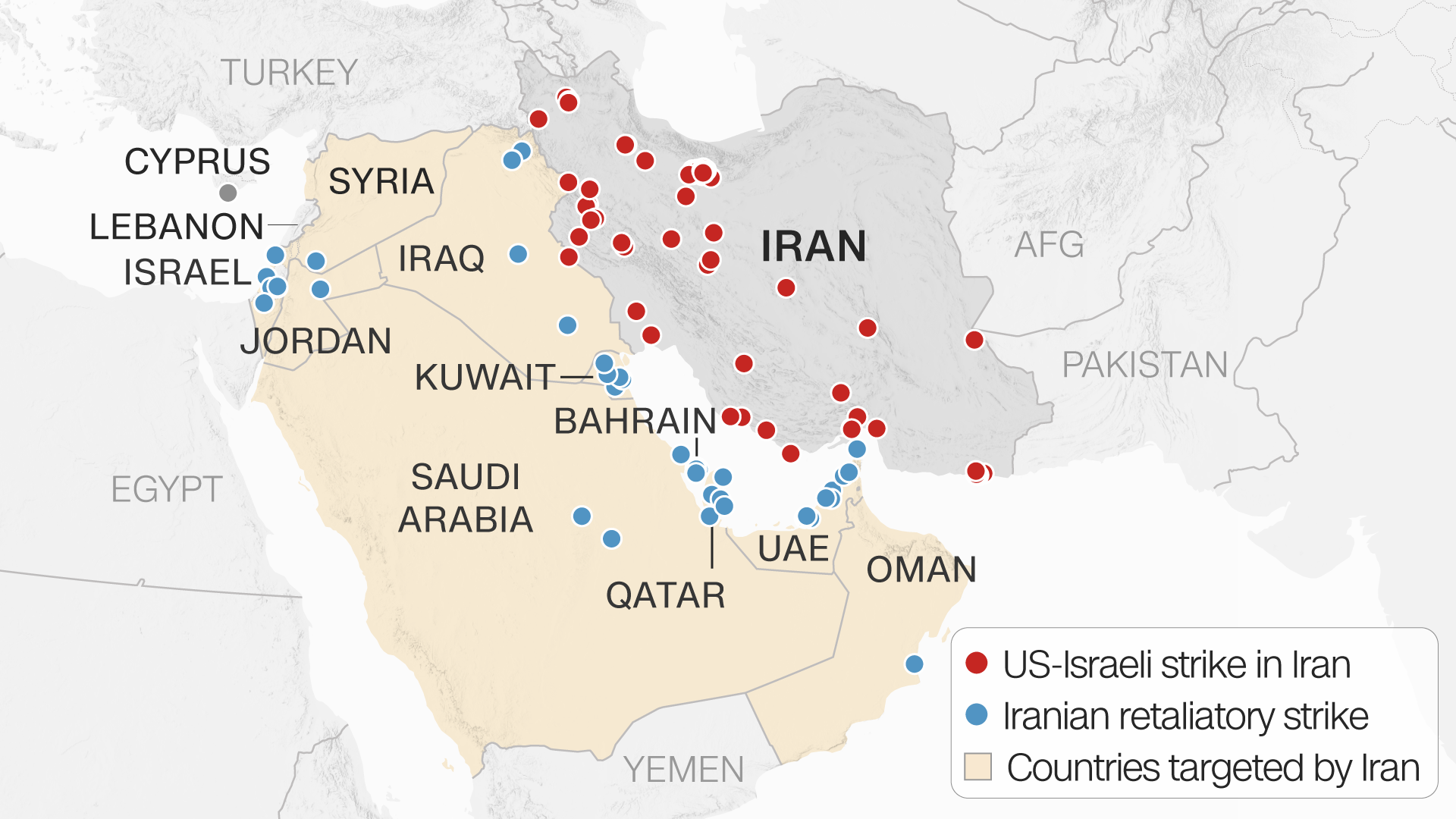
Map showing the countries bombed by Iran in the days after the death of Khamenei. SOURCE: CNN

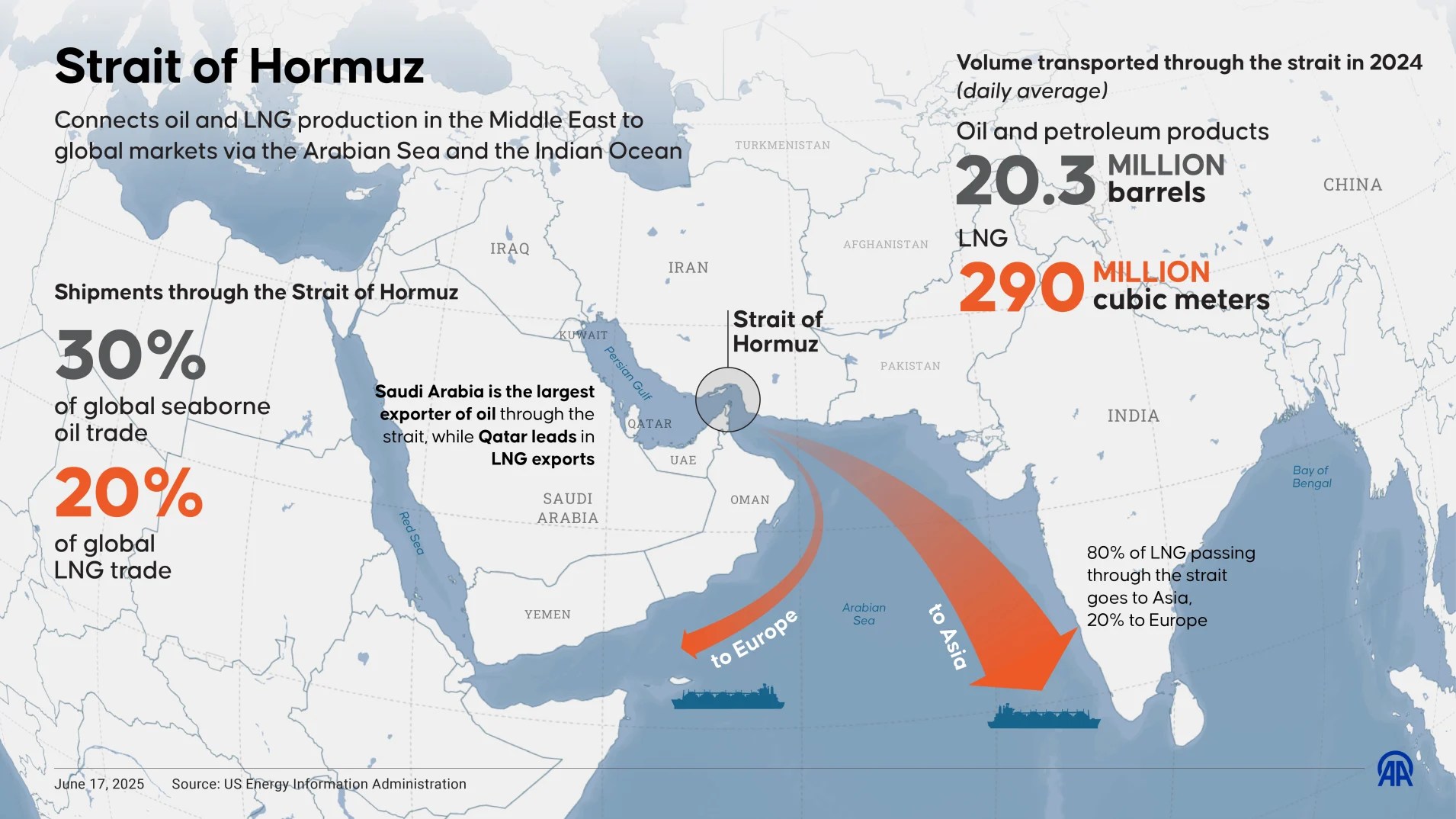
In writing this with the assumption that you’ve all seen the headlines about the US/Israeli strikes on Iran that led to the death of Iran’s Supreme Leader, Ayatollah Khamenei. Post of my students are currently asking “now what?” Things are still murky as I’m writing this, but the news often will make no sense without the regional geographic context. Understanding the Sunni/Shia divide is vital to understanding why Iran, after being attacked, bombed at least a dozen countries including many other Muslim countries. They are expending their weapons without an ability to replenish their supplies and facing. They’ve threatened to attack any ship going through the Straits of Hormuz, and which doesn’t mean much if we don’t understand what a choke point is, and why their are economic vital, and geopolitically strategic. Fellow Gulf countries like Kuwait, Bahrain, Qatar, and Saudi Arabia are seeing this as a closure as a maritime crisis that will profoundly economically damage them.

The economic and political importance of a choke point is highlighted in a crisis that closes it. SOURCE: CNBC

Nine U.S. bases in the Middle East have been bombed in drone attacks and while it is hard to assess in “the fog of war,” satellite imagery shows us the extent of the damage. Of course this has many domestic ramifications in the United States that are significant, but as a geographic analysis of this situation pulls the focus more to Middle Eastern impacts, starting with the question,
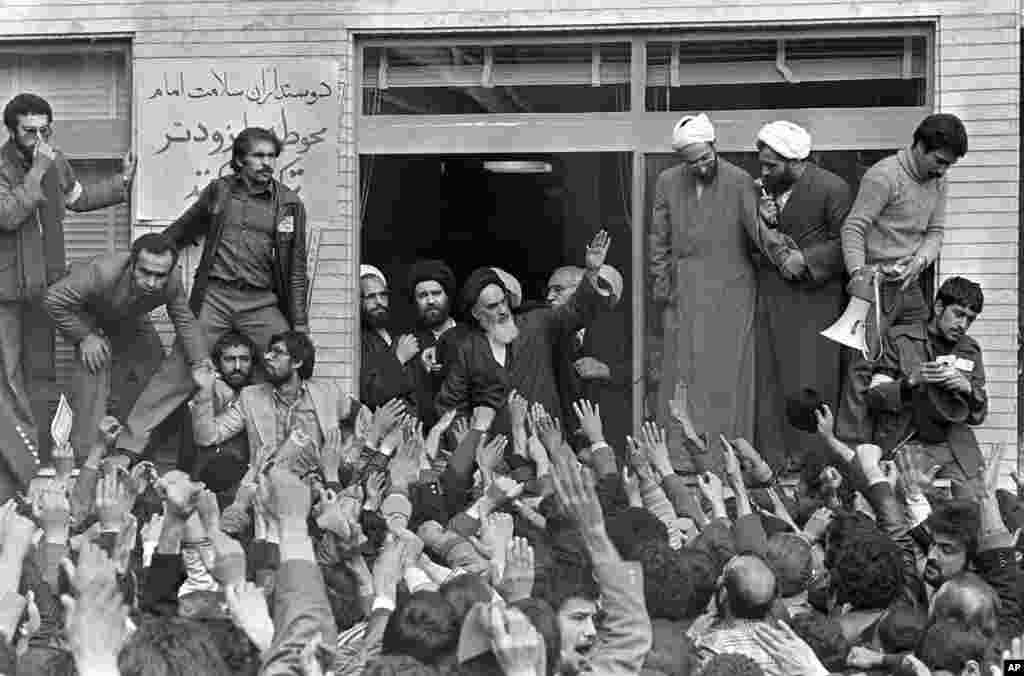
“who will be in charge of Iran two months from now?” There are many possibilities ranging from the mullahs staying in charge, to the son of the Shah (Rezi Pahlavi) being installed in the future. Prior to the 1979 Islamic Revolution that installed the Ruhollah Khomeini. The current regime has been the largest state sponsor of terror and has been the greatest source of regional destabilization. They’ve funded Hamas, Hezbollah, Islamic Jihad, the Houthis, and various other Shi’ite militia groups in Iraq, Syria, and elsewhere.

The ABC video here is a good “need to know” primer for March 4, 2026…but the details will fade in time.

The news of the next few month will shape the coming decades and the possibilities are still wide open. The Caspian Report has produced good geopolitical analysis over the years, so this is their latest video (below)

TAGS: Middle East, Iran, political, war.
Middle East Podcasts

I love the podcast “Everything Everywhere Daily” Podcast. As the title implies it’s an omnivorous exploration of fascinating topics, often focusing on interesting places or pivotal moments in history. Most are approximately 10-minute summaries and for exploring more about the middle East, these podcasts would be a great place to explore further. The links are to Apple Podcasts, but you can listen/search for it on any podcast platform. As you explore topics in the Middle East, the list below is an excellent place to start. Choose one! See where it takes you.

Adding arable land in Egypt

When the Dutch wanted to expand their territories, they turned to the North Sea to create more arable land for Dutch farmers. Likewise, Singapore has reclaimed land to expand their territories. Over 95% of Egypt’s population live along the Nile River and its fertile delta, and the population (over 110 million people) continues to grow and is seeking new options. While this isn’t expanding into the sea, it is a type of land reclamation project as they environment is modified to make the desert bloom. Both of these embedded videos are helpful introductions to the political, economic, demographic, and environmental aspects of these projects in the Middle East.

Why didn’t the Ottomans Colonize the Americas?

Why didn’t the Ottoman Empire colonize the Americas? Mostly, it was geography and a confidence that it wouldn’t change the balance of power.” SOURCE: History Matters on YouTube

I do enjoy counterfactual history questions and to imagine how the world would be different is something did (or didn’t) happen.  These “what ifs” are usually a thought exercise in imaginary worlds that often hinge on a single point that might be lead to a pivotal shift in the unfolding of events. For example, “What if Hitler was assassinated before WWII?” or “What if Columbus never crossed the Atlantic?” The question about the Ottoman Empire is different because in the 21st century, it seems apparent that colonization would be the answer for every power seeking to maintain their power in the 16th-18th centuries. This question is getting us to understand the geographic realities and political factors in a new historical context. The Ottoman Empire, because of its distinct geographic context, had a great set of land options available to them, and a more constrained set of maritime resources for the open seas.

This question helps us explore the geographic factors that led to powerful empires over the centuries.  Geographically and historically, the importance of certain resources might have been incredibly important, but not so in a different era or in a different regional context (e.g.-naval power, overland networks, gold, oil, or iron deposits). So what are the three most important reasons why the Ottoman Empire didn’t colonize in the Americas?

TAGS: empire, Turkey, historical.

Divorce Turkish Style

Divorce—though originally sanctioned more than 1,400 years ago by Islamic law—is still widely viewed in Muslim societies as a subversive act that breaks up the family. Women who seek divorce can often find themselves ostracized and treated as immoral. Despite such taboos and restrictions, however, divorce rates are rising across Islamic countries, even in ultra-conservative places like Afghanistan.” SOURCE: NY Book Review

This is a difficult subject to discuss in the classroom, but it hits as many of the important cultural norms that surround social interactions that are gender-based. Cultural norms explore more than just the legal rights that people many have, but they also look at the cultural expectations, and the communal/family responsibilities that they are seen to have in their society. Divorce is legal in Turkey, but because it was heavily stigmatized, it was quite rare. Today, modern cultural influences from outside the region, (i.e.-the cultural affects of globalization) are promoting and changing traditional cultural norms of the region. This is a very insightful look into the lived-experience of divorce in the Middle East that gives a sense of the cultural impacts of gendered norms.

GeoEd Tags: culture, cultural norms, gender, Turkey, MiddleEast.

How to Recapture the Muslim World’s Lost Hope

1979
Understanding the events of 1979 is crucial for those trying to figure out a better future for today’s Middle East.

What happened to us? The question haunts us in the Arab and Muslim world. We repeat it like a mantra. You will hear it from Iran to Syria, from Saudi Arabia to Pakistan, and in my own country, Lebanon. For us, the past is a different country, one not mired in the horrors of sectarian killings. It is a more vibrant place, without the crushing intolerance of religious zealots and seemingly endless, amorphous wars. Though the past had coups and wars too, they were contained in time and space, and the future still held much promise. What happened to us? The question may not occur to those too young to remember a different world, whose parents did not tell them of a youth spent reciting poetry in Peshawar, debating Marxism in the bars of Beirut, or riding bicycles on the banks of the Tigris in Baghdad. The question may surprise those in the West who assume that the extremism and bloodletting of today have always been the norm.” SOURCE: The Atlantic

This opinion piece is a somewhat controversial, but that is part of its value.  The core of the author’s thesis is that to understand the modern Middle East, especially if one is searching for a way to create a more democratic Middle East, we must look to the past to see how we got there.  1979 is seen here as the pivotal year that changed the trajectory of the Middle East, in large part because of the Islamic Revolution in Iran, but for many other region-wide changes.  A nice pairing would be to also read this discussion from the NY Times about the rise of MBS as the key prince in Saudi Arabia, looking to reform society and reform movements in Saudi Arabia while crushing his opponents.  Both are articles are book excerpts.

Questions to Ponder: What were the big shifts that occurred in 1979?  What are things that you think that the author gets correct about their historical analysis of the Middle East? What are some positions where you disagree with the author?

GeoEd Tags: Middle East, political, Iran, Saudi Arabia.

Trump: Time to recognise Golan Heights as Israeli territory

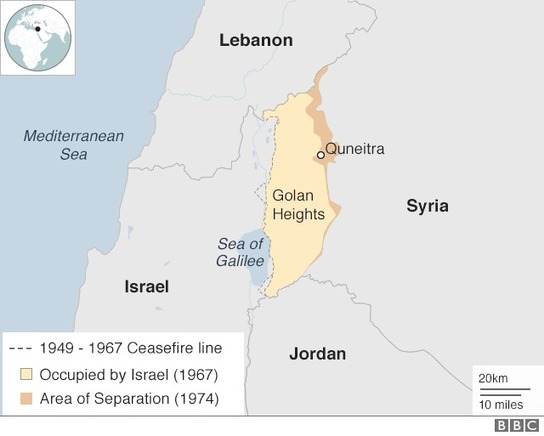
“Israel has occupied the strategic plateau since capturing it from Syria in the 1967 Middle East war. There are more than 30 Jewish settlements on the heights, with an estimated 20,000 settlers.

There are some 20,000 Syrians in the area, most of them members of the Druze sect.”

Source: www.bbc.com

I had my class all ready to go, and then this happened. The Golan Heights is a small chunk of land, 3 times larger than Rhode Island, is far more important geopolitically than its size would indicate. This land is Israeli controlled, but internationally still considered a part of Syria, much like Russia controls Crimea, but it is still internationally recognized as a part of Ukraine.   Not surprisingly, Syria has condemned these statements from the President of the United States as have many members of the international community

GeoEd Tags: Syria, Israel, political, MiddleEast, geopolitics.

Scoop.it TagsSyria, Israel, political, Middle East, geopolitics.

Gender and Mobility in the Middle East

"The adult daughter of Dubai’s ruler tried to escape a life of stultifying restrictions. She was captured at sea, forcibly taken back, and has not been heard from since. For all its megamalls, haute cuisine and dizzying skyscrapers, Dubai can flip at speed from international playground to repressive police state."

Source: www.nytimes.com

Both of these particular case studies are incredibly interesting but I want to talk about how this is connected to a larger cultural and political issue: that of female mobility in Persian Gulf countries.  The ability to move freely without familial supervision or approval is something that adults in most countries take for granted, but that is not the case in some countries in the Middle East.  How we experience place is dependent of our mobility—this is why there is no one singular geography or story of any given place, but there are many geographies that help to explain a place.  The story of the ‘vanished princess’ of Dubai and the woman seeking a divorce but trapped by her family cast a different light on the glamorous and glitzy reputation of the United Arab Emirates.    


GeoEd Tags: culture, cultural norms, gender, mobility, UAE, MiddleEast, political.

Scoop.it Tagsculture, cultural norms, gender, mobility, UAE, MiddleEast, political.

How to tell when criticism of Israel is actually anti-Semitism

Calling out human rights violations shouldn’t stray into bias against Jews.

Source: www.washingtonpost.com

This is a very partisan article, but some of the ideas brought up in it are worth discussion in non-partisan settings as well.  The author takes a very liberal perspective critiquing Israeli policies, while loving Judaism, Jewish history, and the right of the Israeli state to exist.  Blanket "good guys" and "bad guys" narratives are always sloppy, but in the Israeli-Palestinian conflict it may be even more pernicious.  


Tagsop-ed, Israel Judaism conflict, political, Middle East.

Blog at WordPress.com.

Up ↑