Search

GEOGRAPHY EDUCATION

Supporting geography educators everywhere with current digital resources.

Tag

migration

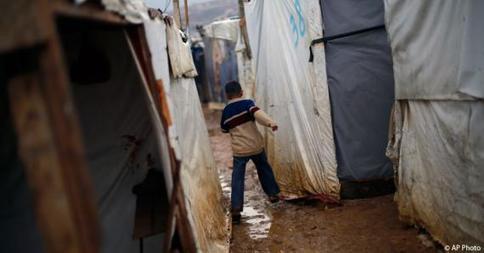
Refugee Camp for Syrians in Jordan Evolves as a Do-It-Yourself City

As the sprawling Zaatari camp evolves into an informal city — with an economy and even gentrification — aid workers say camps can be potential urban incubators that benefit host countries like Jordan.

Source: www.nytimes.com

This is an intriguing article that explores the difficulties of forced migrations that arise from civil war, but it also looks at city planning as refugee camps are established to make homes for the displaced.  These camps have become into de-facto cities. The maps, videos and photographs embedded in the article show the rapid development of these insta-cities which organically have evolved to fit the needs of incoming refugees.  Size not investing in permanent infrastructure has some serious social, sanitation and financial cost, there are some efforts to add structure to the chaos, to formalize the informal.  Truly this is a fascinating case study of in urban geography as we are increasingly living on what Mike Davis refers to as a “Planet of Slums.”  


Tags: refugees, migration, conflict, political, warsquatter, urban, planning, density, urbanism, unit 7 cities. 
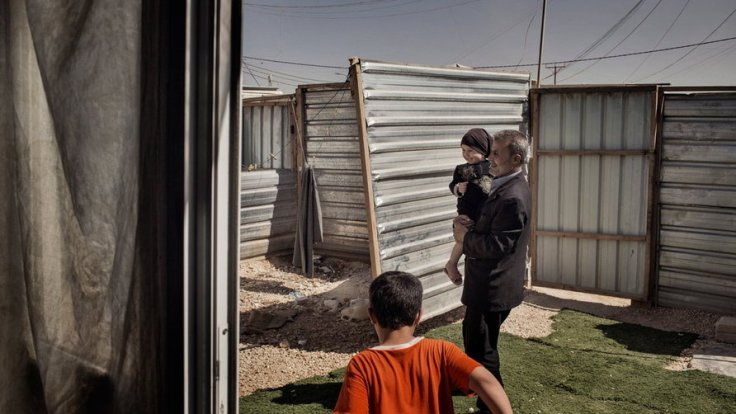
Five Things To Know on World Refugee Day

“There are more people displaced by violence and conflict on the planet right now than at any time since World War II.  The United Nations Refugee Agency (UNHCR) says the number of people forcibly displaced, including refugees, asylum-seekers, and internally displaced persons has now reached over 51 million.” 

Source: blogs.state.gov

From the difference between refugees and internally displaced people, to the gendered impact of refugees, this shines some light on the problems confronting refugees as well as on some of the solutions. 


Tags: refugees, migration, conflict, political, war.

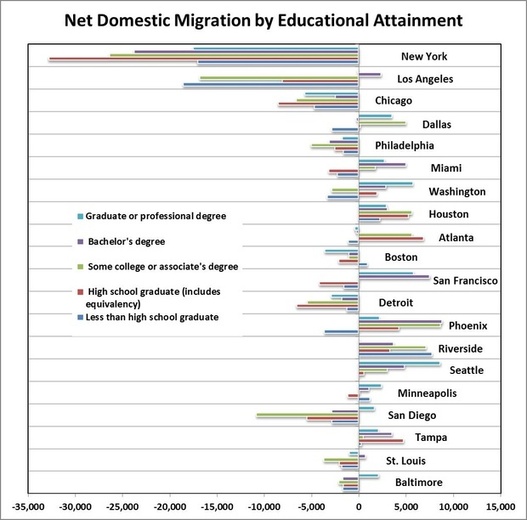
High-School Dropouts and College Grads Are Moving to Very Different Places

Cities like Washington and San Francisco are gaining the highly skilled but losing their less-educated workforce.

Source: www.citylab.com

This article, with its charts and interactive maps, is worth exploring to show some of the important spatial patterns of internal migration.  It’s not hard to realize that larger, cosmopolitan metro areas will have an advantage in attracting and keeping prospective college graduates; the question that we should be asking our students is how will this impact neighborhoods, cities and regions?    

Tags: migration, USA, mappingcensus, education.

The Importance of Place

Using the vocabulary of this course, please describe in detail the geographic context of a town like this (real or imaginary).  What is the town like?  How did it get that way?  What type of meaning does ‘place’ have for those that live there?

America Is Stealing the World’s Doctors

Via Scoop.itGeography Education
Who wants to practice medicine in a country where they use power tools in surgery? The dilemma of doctors in the developing world.  
This article’s title is inflammatory, but it touches on some very real interconnected geographic issues.  Economic development in the many parts of the world is complicated by the migration issue of ‘brain drain.’  The individual choices that doctors from the less developed world face often lead the best and brightest workers to leave their home country.  If you could make a very good living as in the United States(the median salary of a surgeon in New Jersey is $216,000) or go back to your home country where your skills are more desperately needed (in Lusaka, Zambia a surgeon makes about $24,000 a year), which would you choose?  This is not a hypothetical example (nor one with only one right answer) but one rooted in a globalized economy, where the places that offer the greatest opportunities for individual advancement get the top talent–excellent for the individual and family economies but problematic at the national scale.
Via www.nytimes.com

Kiribati and Climate Change

Via Scoop.itGeography Education
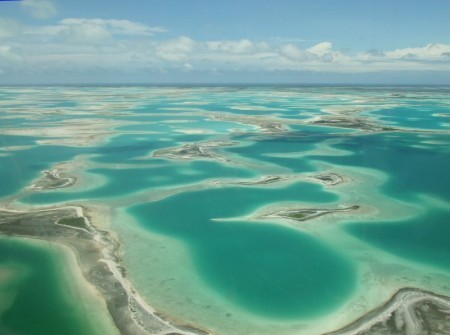
Fearing that climate change could wipe out their Pacific archipelago, the leaders of Kiribati are considering an unusual backup plan: moving the population to Fiji.  

How urgent is the issue of climate change?  That question is not only geographic in content, but the response might also be somewhat contingent on geography as well.  If your country literally has no higher ground to retreat to, the thought of even minimal sea level change would be totally devastating.
Via www.mercurynews.com

Blog at WordPress.com.

Up ↑