Search

GEOGRAPHY EDUCATION

Supporting geography educators everywhere with current digital resources.

Tag

physical

Senegal’s Great Green Wall combats desertification

“A 7,000 km barrier is being built along the footsteps of the Sahara to stop the desert expanding. The Great Green Wall project started in 2007 in Senegal, along with 10 countries in Africa to combat the effects of climate change. Al Jazeera’s Nicolas Haque reports from Widou, deep in the Sahel.”

Source: www.youtube.com

The Great Green Wall initiative is composed of 11 countries that are cooperating together to combat the physical and human geographic characteristics that make the Sahel one of the more vulnerable ecosystems in the world.  This swath running through Africa is the transition zone where tropical Africa meets the Sahara.  The Sahel is susceptible to drought, overgrazing, land degradation and desertification.  These issues of resource management and land use transcend international borders so this “Green Wall” was created with the intent to protect the environment, landscapes and people of the Sahel from desert encroachment (the shorter, social media friendly version of this video is available here).


Tags: Africa, Senegal, development, environment, waterbiogeography, ecology, environment depend, physical, weather and climate, supranationalism, political ecology.
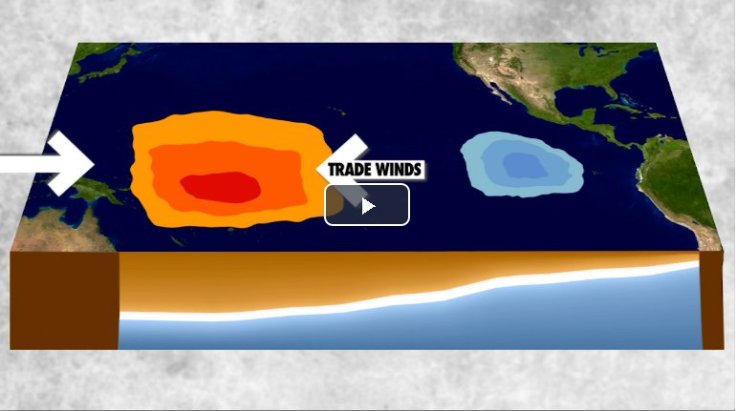
What are El Niño and La Niña?

“El Niño and La Niña are complex weather patterns resulting from variations in ocean temperatures in the Equatorial Pacific–officially known as the El Niño-Southern Oscillation (ENSO) cycle. These deviations from normal surface temperatures can have large-scale impacts not only on ocean processes, but also on global weather and climate.”

Source: oceanservice.noaa.gov

This short video from NOAA is an excellent summary that explains the ENSO cycle.  The video has a particular emphasis on how changing patterns in the Pacific Ocean currents can impact weather patterns in various regions of the United States.  


Tagsphysical, weather and climateregions, USA.

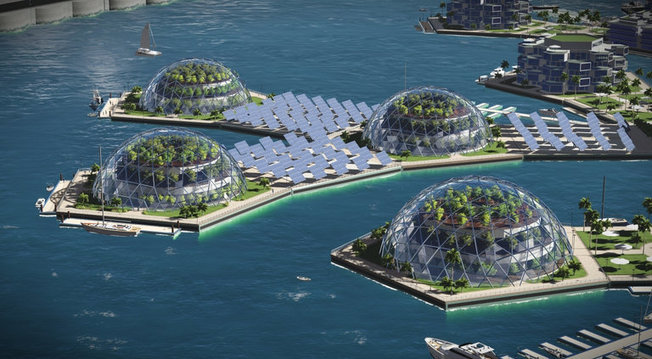
As Climate Change Accelerates, Floating Cities Look Like Less of a Pipe Dream

A costly plan to build floating islands shows how climate change is pushing the search for innovative solutions, but some critics ask who will ultimately benefit.

Source: www.nytimes.com

As coastal communities are considering what the tangible impacts of climate change might be, things that were once considered science fiction could be a part of how people adapt to the modifications we’ve collectively made to our global environment that we depend on to sustain life.  


Tags: physicaltechnologysustainability, climate change, environment, resources, watercoastal, environment dependenvironment adapt, environment modify.

The Sargasso Sea

“The Sargasso Sea occupies almost two thirds of the North Atlantic Ocean. Within this sea, circling ocean currents accumulate mats of Sargassum seaweed that shelter a surprising variety of fishes, snails, crabs, and other small animals. The animal community today is much less diverse than it was in the early 1970s, when the last detailed studies were completed in this region. This study shows that animal communities in the Sargasso Sea are definitely changing. The next step is to find out why.”

Source: www.youtube.com

Often, we define oceans and seas based on their borders with land as their defining characteristics (this is one reason why many don’t know about the Southern Ocean as a distinct body of water or consider it an ocean). The Sargasso Sea is defined by ocean currents; it is surrounded by great currents but is itself without a strong current, making it perilous for early seafarers.  These oceanic doldrums became shrouded in superstition as stories of the fabled Bermuda Triangle spread, but the truth is all in the ocean currents.   


Tags: water, biogeography, environment, physical.

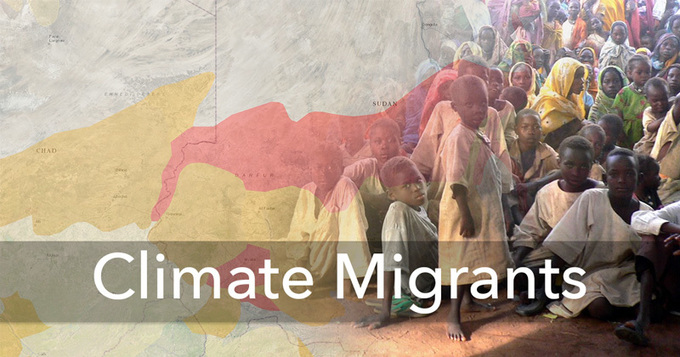
Climate Migrants

Climate change has already displaced tens of thousands of people. If it continues unabated, it could lead to one of the largest mass human migrations in history.

Source: storymaps.esri.com

This StoryMap shows some key regions where migrants are fleeing some of the negative impacts of climate change, a trend that appears very likely to increase in the future.  It is also an excellent example of the ESRI’s new Cascade template for creating a web app. 


Tags: physical, weather and climate, climate change, environment, resources, watercoastalmappingESRIStoryMap, visualization, environment depend, political ecology.

The World’s Newest (Official) Ocean

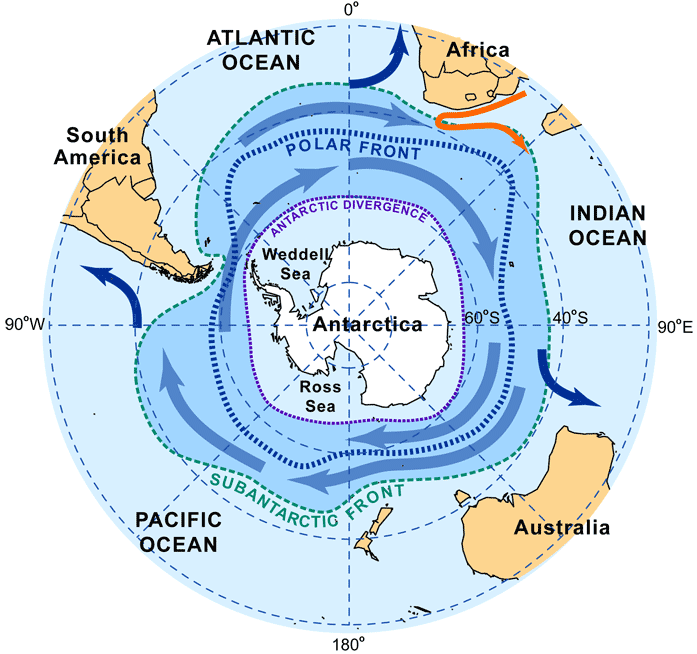
“The Southern Ocean extends from the coast of Antarctica north to 60 degrees south latitude. The Southern Ocean is now the fourth largest of the world’s five oceans (after the Pacific Ocean, Atlantic Ocean, and Indian Ocean, but larger than the Arctic Ocean). The International Hydrographic Organization (IHO) has  declared, named, and demarcated the Southern Ocean as a fifth, separate ocean.”

Source: geography.about.com

Typically we define oceans and seas based on their borders with land as their most important characteristics.  Also, we rarely look at the bottom of the globe as the center of our global perspective.  Those are a few of the reasons why American students usually have never heard of the Southern Ocean, but Australian students see it as one of the world’s main oceans.  


TagsOceaniaAntarctica, water, environment, physical.

Tsunami Stones: Ancient Japanese Markers Warn Builders of High Water

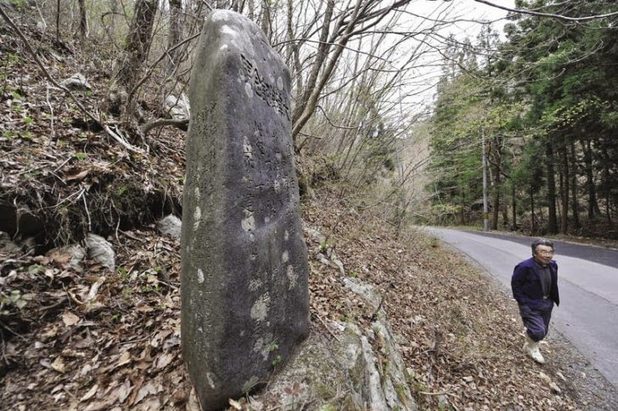
“Residents of Aneyoshi, Japan, heeded the warnings of their ancestors. They obeyed directions and wisdom found on a local stone monument: ‘Do not build any homes below this point,’ it reads. ‘High dwellings are the peace and harmony of our descendants. Remember the calamity of the great tsunamis.’ When the 2011 Tōhoku earthquake and tsunami devastated Japan, this village.”

Source: 99percentinvisible.org

Beachfront property is beautiful real estate with enormous economic potential, but when it is in an area with a history of tsunamis, the impending threat of an earthquake looms over the coastal lowlands and limits the land use plans for the region. 


Tags: physical, tsunami, water, tectonics, disasters.

Skokomish River salmon cross the road

“Watch salmon race across the road on their way to spawn; for more footage, watch this extended version.”

Source: www.youtube.com

We often see examples of how human modifications to ecosystems or watersheds have devastatingly negative impacts.  This is a remarkable example from Washington’s Olympic Peninsula that shows the resiliency of natural systems to overcome human modifications to the physical landscape.  If you study the world, you will always have something to both amaze and surprise you.   


Tagsfluvial, biogeography, environment, geomorphology, physicalwater, environment adapt, environment modify.

New Zealand quake lifted seabed by 2m

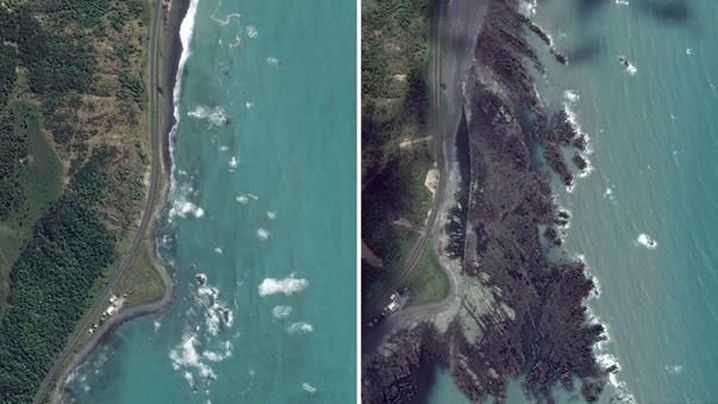
The 7.8 magnitude earthquake that hit New Zealand’s South Island lifted up the seabed by two metres, pushing it above the ocean’s surface.

Source: www.9news.com.au

Plates on the Earth’s crust typically move forward at very slowly (about the same speed as the fingernail growth).  While that is the usual, plates snag along the edges and pressure can build over the years, only to lead to explosive, quick changes like happened recently in New Zealand.  This complex series of tremors has people disconnected as much of the physical infrastructure has be damaged


Tags: New Zealandphysical, tectonicstransportation, geology, geomorphology.

Create a free website or blog at WordPress.com.

Up ↑