President Mugabe’s economic mismanagement of Zimbabwe has brought the country poverty and malnutrition. After 36 years in charge, he’s looking to extend his rule by 5 more years.
Poverty at the national level is usually not a function of limited resources, but more often it is a sign of weak institutions. This is but one example of how governmental mismanagement can put a country’s developmental progress back decades.
It’s hard to discuss this topic in detail without a partisan political views. Underneath all of those opinions are geographic perspective about how the world works as well as geographical imaginations on how things should operate.
This computer programmer (code word in the newspapers for geographers using GIS) has created a way to take the human element out of the redistricting process. Dividing places into separate, formal regions is an important task, one that often times requires an intimate knowledge of the place, it’s cultural, economic and physical characteristics. That’s how I would want things to been done in a perfect world, but partisan chicanery has led to so many gerrymandered districts that the human touch is what many of us fear more than a cold, impersonal division that does not take place, history, and community into account.
Questions to Ponder: Do you trust the politicians that are in charge of your state to create better districts than computer-generated districts that are optimized for compactness? What are some of the potential limitations of compact districts? Would an independent committee/bipartisan group do a better job? How does the Voting Rights Act complicate the redistricting process?
A Democratic state senator in South Carolina wants to end the practice of lawmakers choosing who votes for them. The senator introduced a bill Wednesday that would create an independent commission to draw the state’s political districts. Lawmakers in the GOP-controlled Legislature now control that process. South Carolina voters would approve or reject the boundaries of new political districts in a statewide referendum if the bill becomes law. The state redraws its political boundaries for South Carolina House, state Senate and U.S. House seats after each 10-year U.S. Census [the next Census is in 2020].”
This week, soldiers from Germany and Belgium are settling into a new posting in Lithuania as part of the latest NATO troop deployment. Will their hosts—and the region—feel more secure as a result of their presence?
This video from the Economist shows how shifting political situations in one country can create some powerful ripples elsewhere. It also shows how fluid geopolitical alliances can either embolden a waxing power, or create anxiety among states that might be waning in regional influence. Supranational allegiances can weigh heavily on smaller states.
More than 430 African migrants have arrived in Winnipeg since April, up from 70 three years ago. Most come by way of Minneapolis, sometimes after grueling treks across Latin America and stints in U.S. immigration detention.
A tangle of factors is fueling the surge: brisker traffic along an immigrant smuggling route out of East Africa, stepped-up deportations under the Obama administration and the lure of Canada’s gentler welcome. Advocates expect the Trump administration’s harder line on immigration will spur even more illegal crossings into Canada, where some nonprofits serving asylum seekers are already overwhelmed. Now Canadians worry smugglers are making fresh profits from asylum seekers and migrants take more risks to make the crossing.
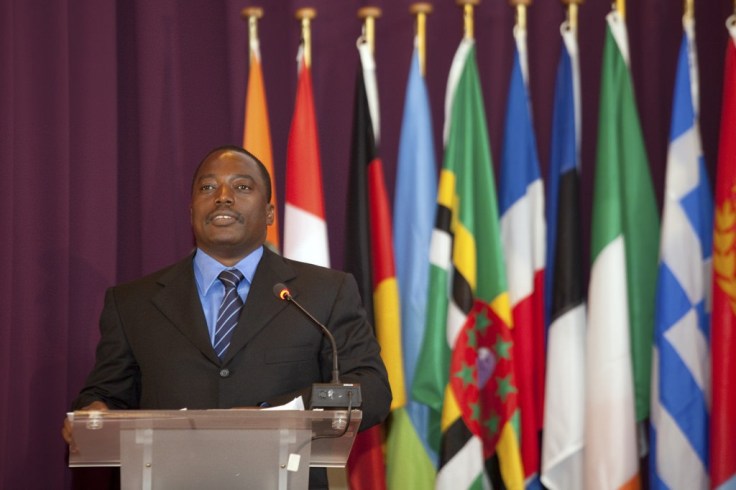
“On December 20, the Democratic Republic of Congo, which had been a democracy for the past decade (flawed though it was), lost that distinction. The backsliding of democracy in the country was preventable; it unfolded slowly and under the watch of the international community. DRC President Joseph Kabila, faced with the end of his constitutional mandate, had two options: call elections or resort to repression to stay in power. He chose the latter. Kabila’s ultimate decision is not that surprising. He faces deep levels of unpopularity. A Congo Research Group poll of 7,545 Congolese showed that he would have only received 7.8 percent of the vote if elections had been held this year. Furthermore, the presidency guarantees his safety. As Brian Klaas of the London School of Economics has noted, 43 percent of African leaders have been jailed, exiled, or killed after losing power since 1960.”
“Both sides claim the West Bank as legitimately belonging to them. Over time, and especially as Israeli politics has shifted rightward, the settler movement has become an institutionalized part of Israeli society. Support comes in the form of building permits, public investment, and even incentives for Israelis to move into the West Bank. While peace talks remain frozen, the settlements continue to grow, making any possibility of a Palestinian state in the West Bank faint.”
These settlements are considered by most of the international community to be illegal, but since the U.S. has always vetoed sanctions in the UN security council, Israel had never been formally reprimanded. Just last week, a UN resolution that passed 14-0 (with only the U.S. abstaining) says that Israel’s settlements on Palestinian territory occupied since 1967, including East Jerusalem, have “no legal validity” and demands a halt to “all Israeli settlement activities,” saying this “is essential for salvaging the two-state solution.”
Questions to Ponder: What is the two-state solution? Who favors this plan? What are some reasons why the two-state solution is so difficult to achieve?
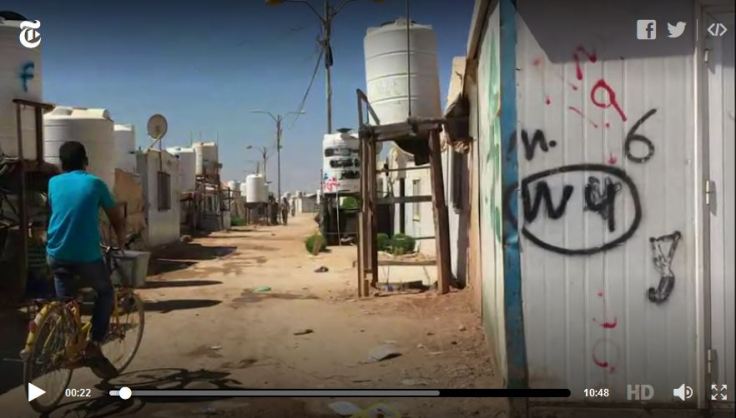
The Zaatari refugee camp in Jordan is one of the largest Syrian camps in the world. In the fall, we visited the camp live with our audience. Here’s what we heard from the refugees and from you.
If you want to humanize the massive refugee crisis, and have lives and stories to connect to statistics, this 11 minute video shows what life is like in a refugee camp, and goes into the hopes, dreams, and life stories of the refugees.





 GEOGRAPHY EDUCATION