Search

GEOGRAPHY EDUCATION

Supporting geography educators everywhere with current digital resources.

Tag

South Asia

Fertility Rates-Differences Within Countries

pastedImage3593-467x550

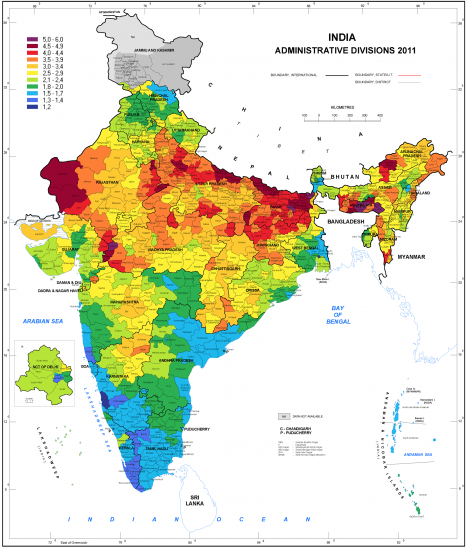
“An important aspect about country level data of fertility to keep in mind is that there can be considerable heterogeneity within countries, which are hidden in the mean fertility which were discussed in this entry. The mean Total Fertility Rate for India in 2010 was 2.8 (UN Data): But this average hides the fact that the fertility in many Southern Indian regions was below 1.5 (which is similar to the mean fertility in many European countries), while the fertility in Northern India was still higher than 5 children per woman (which is as high as the mean of the African countries with the highest fertility).”

Source: ourworldindata.org

This is a stunning example of uneven development and regional differences within countries.  Too often we discuss countries as if the situation inside the borders of one country is the same throughout it, even if the geographic contexts can be wildly different. 

Questions to Ponder: Why are the fertility rates in so different in northern and southern India?  How does this regional imbalance impact the country?  What are other examples of major differences within a country? 

Tags: regions, population, demographic transition model, declining populationmodelsunit 2 population, India, South Asia. 
Bangladesh’s Hazardous Geography

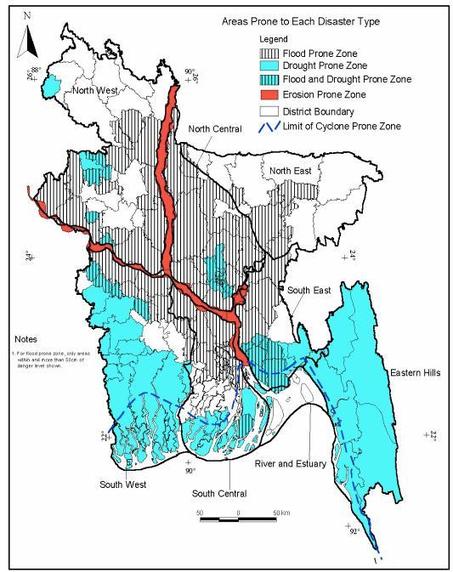
Bangladesh is exposed to threat of hazards resulting from a number of natural disasters and remains classified as one the most vulnerable countries. Majority of the country is affected by cyclone, drought and floods.

Source: www.saarc-sadkn.org

Bangladesh is regularly hit with different types of natural disasters. The impact of these natural disasters costs the country millions making it dependent on foreign aid.  Disaster clean-up and relief aid after major floods, droughts, and hurricanes.  


Tagsdisasters, environmentBangladeshSouth Asia, development.

This Is the Traffic Capital of the World

There are only 650 major intersections here—but somehow only 60 traffic lights.

Source: www.newrepublic.com

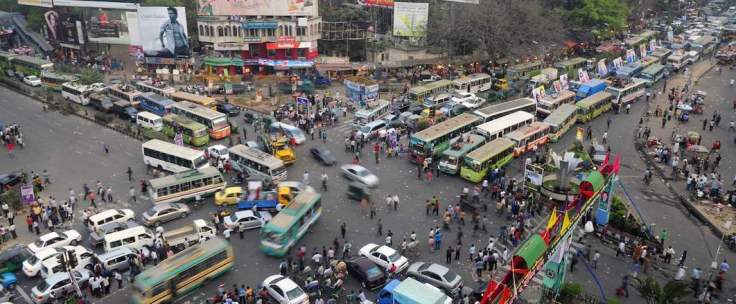
Dhaka is the capital of Bangladesh and (as I often tell my students) it is the biggest city that nobody has ever heard of.  The infrastructure is so incredibly limited that traffic jams cost the city an estimated $3.8 billion in delays and air pollution.  This is an excellent article to explore some of the problems confronting megacities. 

Tags: Bangladeshtransportation, planning, density, South Asia, development, economic, megacities.

Blog at WordPress.com.

Up ↑