Search

GEOGRAPHY EDUCATION

Supporting geography educators everywhere with current digital resources.

Tag

urban

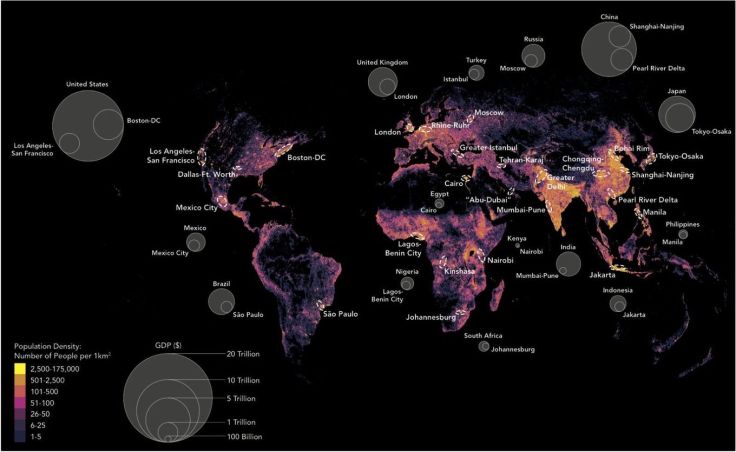
Megacities, not nations, are the world’s dominant, enduring social structures

“Cities are mankind’s most enduring and stable mode of social organization, outlasting all empires and nations over which they have presided. Today cities have become the world’s dominant demographic and economic clusters.”

Source: qz.com

This map is a sneak peek preview from the new book Connectography by Parag Khanna.  This main point of the book and article is that economic and social connectivity is the new driving force is of geopolitics, not just global economics.  Supply chains matter more than borders and the largest cities are the controlling nodes of those supply chains.  


Tags: political, globalization, urbaneconomic.

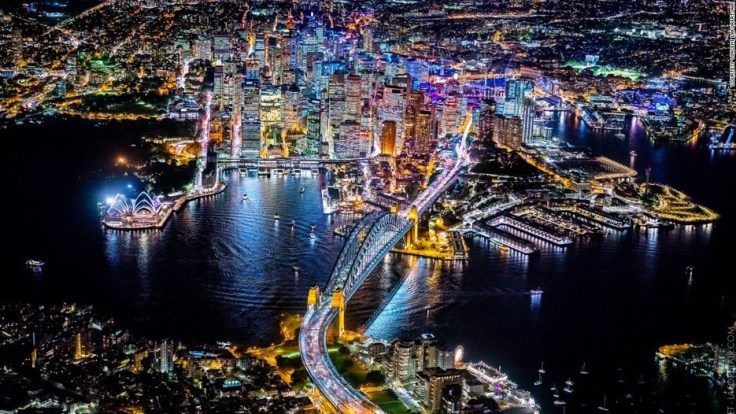
Photographing mega-cities from 12,000 feet

Photographer Vincent Laforet spent the early stages of 2015 photographing the likes of New York, Las Vegas, London, Sydney and Barcelona from a helicopter.


Tags: urban, megacities, unit 7 cities, images.

Source: www.cnn.com

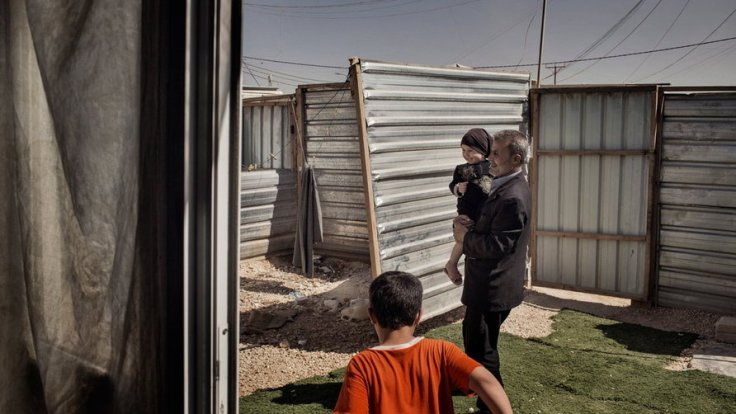
Refugee Camp for Syrians in Jordan Evolves as a Do-It-Yourself City

As the sprawling Zaatari camp evolves into an informal city — with an economy and even gentrification — aid workers say camps can be potential urban incubators that benefit host countries like Jordan.

Source: www.nytimes.com

This is an intriguing article that explores the difficulties of forced migrations that arise from civil war, but it also looks at city planning as refugee camps are established to make homes for the displaced.  These camps have become into de-facto cities. The maps, videos and photographs embedded in the article show the rapid development of these insta-cities which organically have evolved to fit the needs of incoming refugees.  Size not investing in permanent infrastructure has some serious social, sanitation and financial cost, there are some efforts to add structure to the chaos, to formalize the informal.  Truly this is a fascinating case study of in urban geography as we are increasingly living on what Mike Davis refers to as a “Planet of Slums.”  


Tags: refugees, migration, conflict, political, warsquatter, urban, planning, density, urbanism, unit 7 cities. 

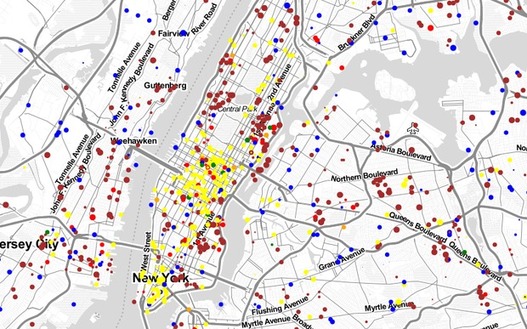
An Intriguingly Detailed Animation of How People Move Around a City

Watch the commuting patterns of New York, San Francisco and Los Angeles.

Source: www.citylab.com

This CityLab article and the embedded maps show the rhythms and patterns that make city life so beautifully complex.  The Center for Advances Spatial Analysis has compiled numerous maps, time-lapse videos and other animations to show flows of urban life.  These are great resources to visualize the ‘spaces of flows.’  

Tags: mobility, mapping, visualization, urban, planning, unit 7 cities, transportation.

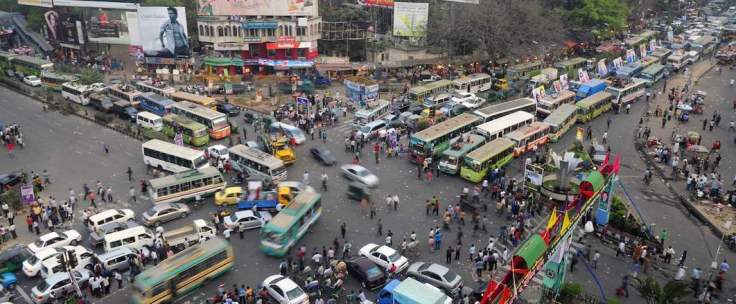
This Is the Traffic Capital of the World

There are only 650 major intersections here—but somehow only 60 traffic lights.

Source: www.newrepublic.com

Dhaka is the capital of Bangladesh and (as I often tell my students) it is the biggest city that nobody has ever heard of.  The infrastructure is so incredibly limited that traffic jams cost the city an estimated $3.8 billion in delays and air pollution.  This is an excellent article to explore some of the problems confronting megacities. 

Tags: Bangladeshtransportation, planning, density, South Asia, development, economic, megacities.

Beijing’s Facelift

“A government-initiated redevelopment plan will transform one of the oldest neighborhoods in Beijing into a polished tourist attraction.”

Source: www.youtube.com

This 2010 video (and related article) showcases one of China’s urban transformation projects.  Urban revitalization plans are not without critics, especially those who see the cultural transformation of a neighborhood they deem worthy of historical preservation.  This process is occurring all over the world (we’ve recently seen this in Brazil as they were preparing for the World Cup).  This is one of the videos that I’ve put into my interactive map with over 65 geography videos to share in the classroom.
 

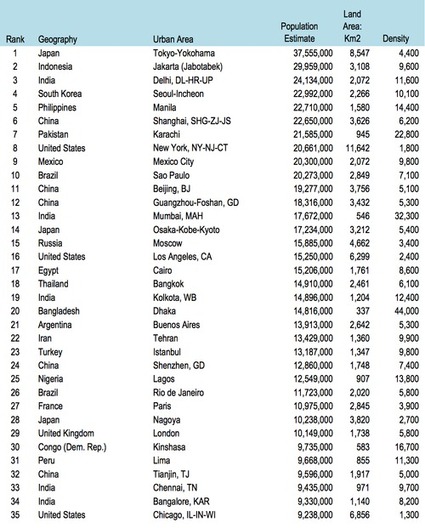
Developing World Cities and Population Density

Without a question, we are living in an urban era. More people now live in cities than anywhere else on the planet and I’ve repeatedly argued that cities are our most important economic engine. As a result of these shifts, we’re seeing megacities at a scale the world has never seen before.

Source: sustainablecitiescollective.com

As our cities have massively expanded in the last 70 years, so has the ecological footprint of these metropolitan areas.  This article discusses some of the challenges confronting megacities and their functions within the global urban network. 

Tags: sustainabilitydensity, megacities, housing, urban, planning, unit 7 cities. 

The Rise of Innovative Districts

“Today, innovation is taking place where people can come together, not in isolated spaces. Innovation districts are this century’s productive geography, they are both competitive places and ‘cool spaces’ and they will transform your city and metropolis.”

As described by the Brookings Institution in their exploration regarding innovation districts, they are geographic areas where leading-edge companies, research institutions, start-ups, and business incubators are located in dense proximity. These districts are created to facilitate new connections and ideas, speed up the commercialization of those ideas, and support urban economies by growing jobs in ways that leverage their distinct economic position.

Tags: density, sustainability, housing, urban, planning, unit 7 cities, labor.

innovation_districts002_16x9

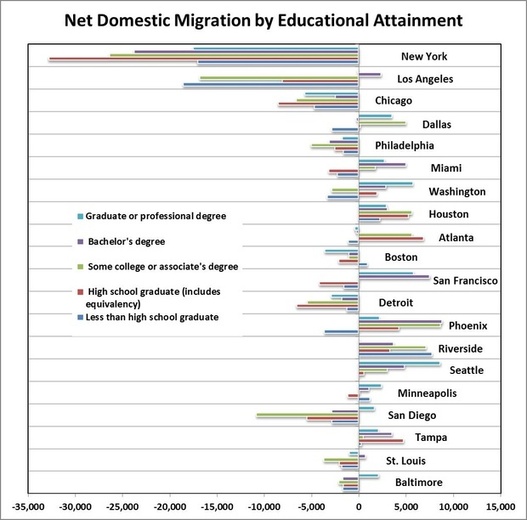
High-School Dropouts and College Grads Are Moving to Very Different Places

Cities like Washington and San Francisco are gaining the highly skilled but losing their less-educated workforce.

Source: www.citylab.com

This article, with its charts and interactive maps, is worth exploring to show some of the important spatial patterns of internal migration.  It’s not hard to realize that larger, cosmopolitan metro areas will have an advantage in attracting and keeping prospective college graduates; the question that we should be asking our students is how will this impact neighborhoods, cities and regions?    

Tags: migration, USA, mappingcensus, education.

Blog at WordPress.com.

Up ↑