Search

GEOGRAPHY EDUCATION

Supporting geography educators everywhere with current digital resources.

Tag

video

Globalization, Trade, and Poverty

What is globalization? Is globalization a good thing or not. Well, I have an answer that may not surprise you: It’s complicated. This week, Jacob and Adriene will argue that globalization is, in aggregate, good. Free trade and globalization tend to provide an overall benefit, and raises average incomes across the globe. The downside is that it isn’t good for every individual in the system. In some countries, manufacturing jobs move to places where labor costs are lower. And some countries that receive the influx of jobs aren’t prepared to deal with it, from a regulatory standpoint.

Source: www.youtube.com

There are many of the 35 videos in the Economics crash course set that touch on geographic issues, but I’d like to highlight episodes 16 and 17 especially.  Many see globalization as the path to economic growth and others see the process of globalization as what has created poverty.  In many ways both have a point as demonstrated in the 16th episode of this crash course.  In a follow-up video, they explain the difference between wealthy inequality and income inequality.  This video also has a nice layman’s explanation of the GINI coefficient and how it measures inequality.   


Tagsdevelopment, laborglobalization, economicindustry, poverty, crash course


Divided island: How Haiti and the DR became two worlds

Haiti and the Dominican Republic share a border, and an island. But the two countries are very different today: the Dominican Republic enjoys higher quality of life for many factors than Haiti. I went to this island and visited both countries, to try and understand when and how their paths diverged.

Source: www.youtube.com

This video is an exciting debut for the new series “Vox borders.”  By just about every development metric available, the Dominican Republic is doing better than Haiti, the only bordering country on the Caribbean island of Hispaniola with the DR.   


Questions to Ponder: How does the border impact both countries?  How has sharing one island with different colonial legacies shaped migrational push and pull factors?


Tags: Haiti, Dominican Republic, video, poverty, development, economic, labor, migration, political, borders.

How Does it Grow? Garlic

How Does it Grow? Garlic from How Does it Grow? on Vimeo.

Telling the stories of our food from field to fork.
Episode Two: Peeling back the layers of nature’s most powerful superfood.

Source: vimeo.com

This 5-minute video is a good introduction to garlic, it’s production, environmental requirements, nutritional profile and diffusion.  Historically, garlic was far more important than I ever imagined.  The geography of food goes far beyond the kitchen and there are many more episodes in the “How Does it Grow?” series to show that.

Tags: foodeconomicfood production, agribusiness, industryvideo, agriculture.

The walkable city

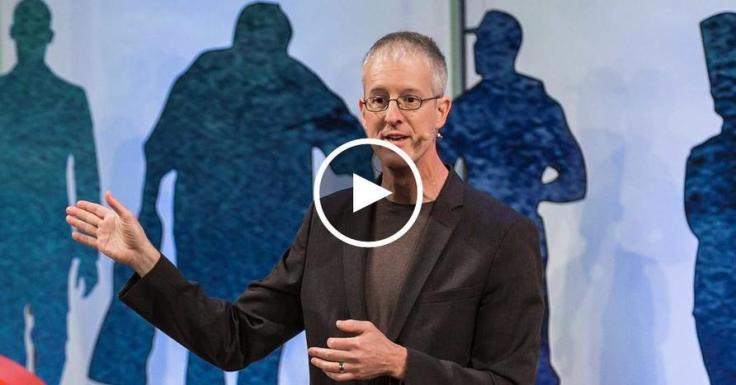
How do we solve the problem of the suburbs? Urbanist Jeff Speck shows how we can free ourselves from dependence on the car — which he calls “a gas-belching, time-wasting, life-threatening prosthetic device” — by making our cities more walkable and more pleasant for more people.

Source: www.ted.com

In the 2017 APHG exam, there was a question that dealt with new urbanism and walkability.  This TED talk from Jeff Speck gives a good sense of what planners believe in new urbanism are trying to do (you can also watch his earlier TED talk, 4 ways to make a city more walkable). Here also is information on New Urbanism (dot org) from it’s practicioners, such as the Congress on New Urbanism.  Lastly, here is an academic article reviewing the critiques of new urbanism with rebuttals.    


Tagsplace, neighborhood, urban, planningtransportation, urbanism, scale, TED, video.

How Does it Grow? Avocados

How Does it Grow? Avocados from How Does it Grow? on Vimeo.

Avocados have become a super trendy food, but few of us know how they’re even grown or harvested. We visit a California farm to uncover the amazing story of the avocado — and share the secrets to choosing, ripening and cutting the fruit.

Source: vimeo.com

My childhood house in the Los Angeles area had an avocado tree in the backyard; I now realize that the climatic demands of avocado production means this is a rarity in the United States, but as a kid I thought guacamole was as ubiquitous as peanut butter.  This 5-minute video is a good introduction to the avocado, it’s production, environmental requirements, nutritional profile and diffusion.  The geography of food goes far beyond the kitchen and there are more episodes in the “How Does it Grow?” series to show that. WARNING: the video does mention the Nahuatl origin of the word (‘testicle-fruit’) in the video so as you manage your own classroom…just so you know. 

Tags: foodeconomic, agribusiness, video, agriculture.

4 ways to make a city more walkable

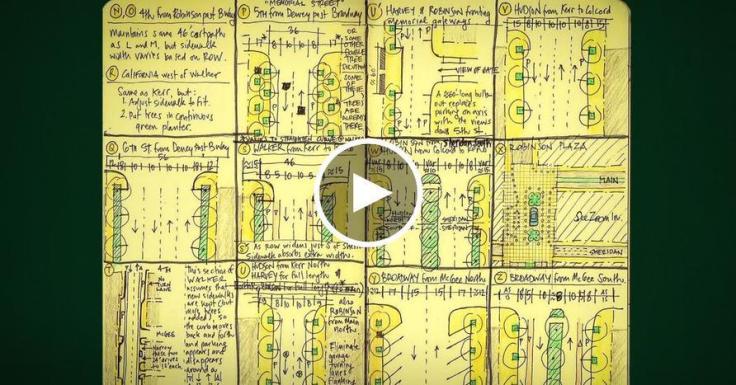
Freedom from cars, freedom from sprawl, freedom to walk your city! City planner Jeff Speck shares his “general theory of walkability” — four planning principles to transform sprawling cities of six-lane highways and 600-foot blocks into safe, walkable oases full of bike lanes and tree-lined streets.

Source: www.ted.com

As the 2017 APHG exam has ended, some people have asked for more resources on new urbanism.  This TED talk from Jeff Speck gives a good sense of what planners believe in new urbanism are trying to do (you can also watch his earlier TED talk, The Walkable City).  Here is information from New Urbanism (dot org) from it’s practioners, including the Congress on New Urbanism.  Lastly, here is an academic article reviewing the critiques of new urbanism with rebuttals.  

Tagsplace, neighborhood, urban, planningtransportation, urbanism, scaleTED, video.

Human Settlement Predictive Model

“Simulating climate conditions over the last 125,000 years and predicting how those changes would have allowed humans to spread around the globe, this video models human migration patterns.” Read more: http://ow.ly/lWIp304qZEo

Source: www.youtube.com

The World Economic Forum noted that some spatial research that was originally published in Nature, shows how geneticists took DNA samples from people of different cultures in different parts of the world to track their dispersal throughout the globe.  The video uses climatic data, combined with the genetic data, to create a model showing how the human race spread across the globe over a 125,000 year period.


Tagsdiffusiondemographicsmappingmigration, populationhistorical, video, visualization.

How the first city got started 12,000 years ago

“In this animated video, Jonathan F. P. Rose explains how the first city was started in Turkey, 12,000 years ago.”

Source: www.youtube.com

What led to the first urban settlements? We know that the beginnings of agriculture are closely connected to the first forays into agriculture and the domestication of animals.  This brief video puts some archeological specificity on the though exercise, “what would you need to start the first city in a world without cities?” 


Tags: urban, placehistorical.

Why do people and nations trade?

//cdn.embedly.com/widgets/media.html?src=https%3A%2F%2Fplayer.vimeo.com%2Fvideo%2F164108675&wmode=opaque&url=https%3A%2F%2Fvimeo.com%2F164108675&image=https%3A%2F%2Fi.vimeocdn.com%2Fvideo%2F587047534_1280.jpg&key=359ed8ab27db4f02a128049b1f89d6a1&type=text%2Fhtml&schema=vimeo

“Mark Blyth of Brown University explains international trade.” 

Source: vimeo.com

To understand international trade, you need to understand how the factors of production vary from place to place, resulting in different locations having a comparative advantage on a global market.  This video nicely explains that with the example of Scotland’s comparative advantage raising sheep with southern Europe’s comparative advantage in producing wine.   Does the size of a country matter in trade?  You betcha.


Tags: regions, economic, diffusion, industry

Create a free website or blog at WordPress.com.

Up ↑