Search

GEOGRAPHY EDUCATION

Supporting geography educators everywhere with current digital resources.

Tag

war

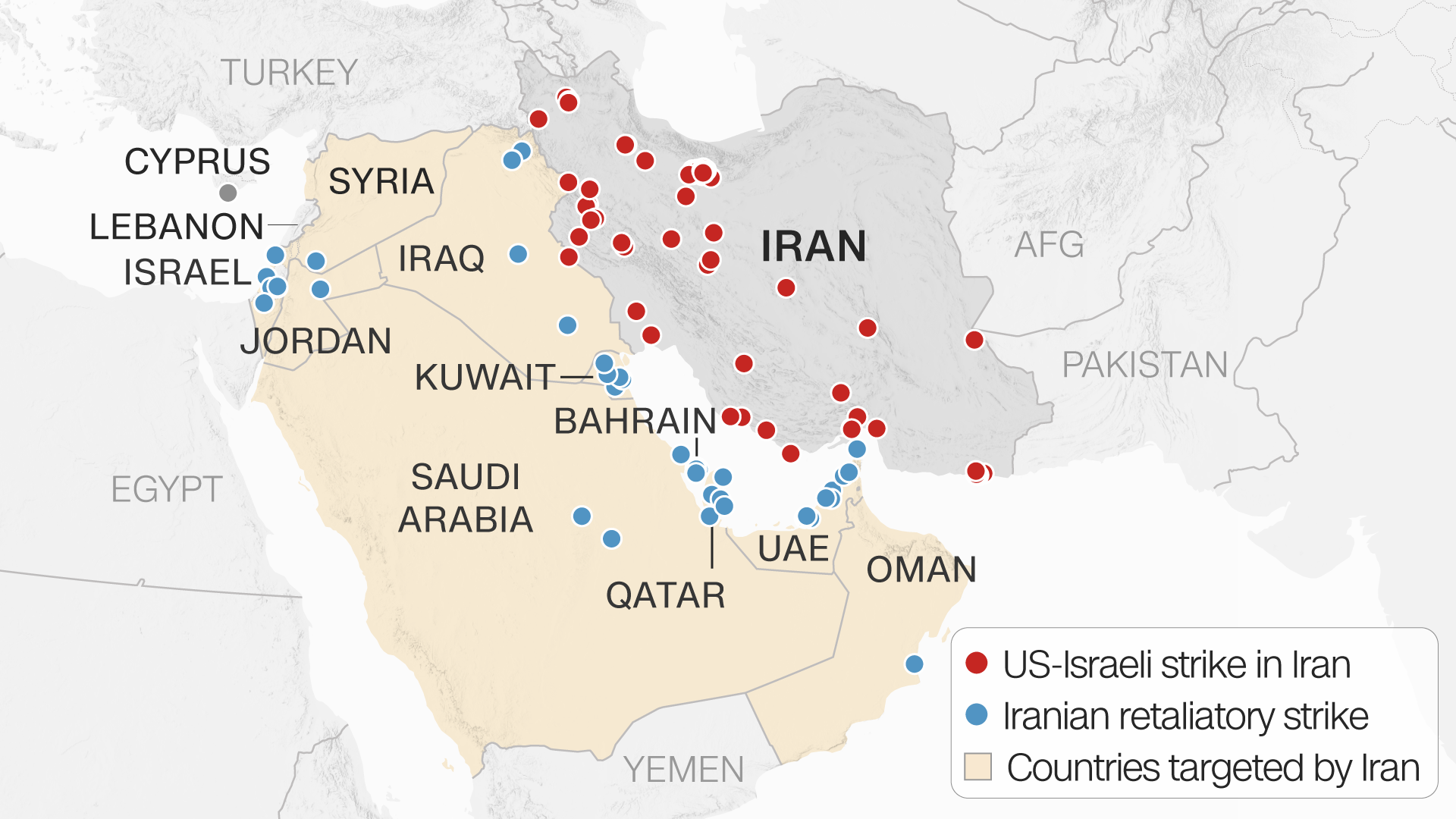
Changes in Iran

Map showing the countries bombed by Iran in the days after the death of Khamenei. SOURCE: CNN

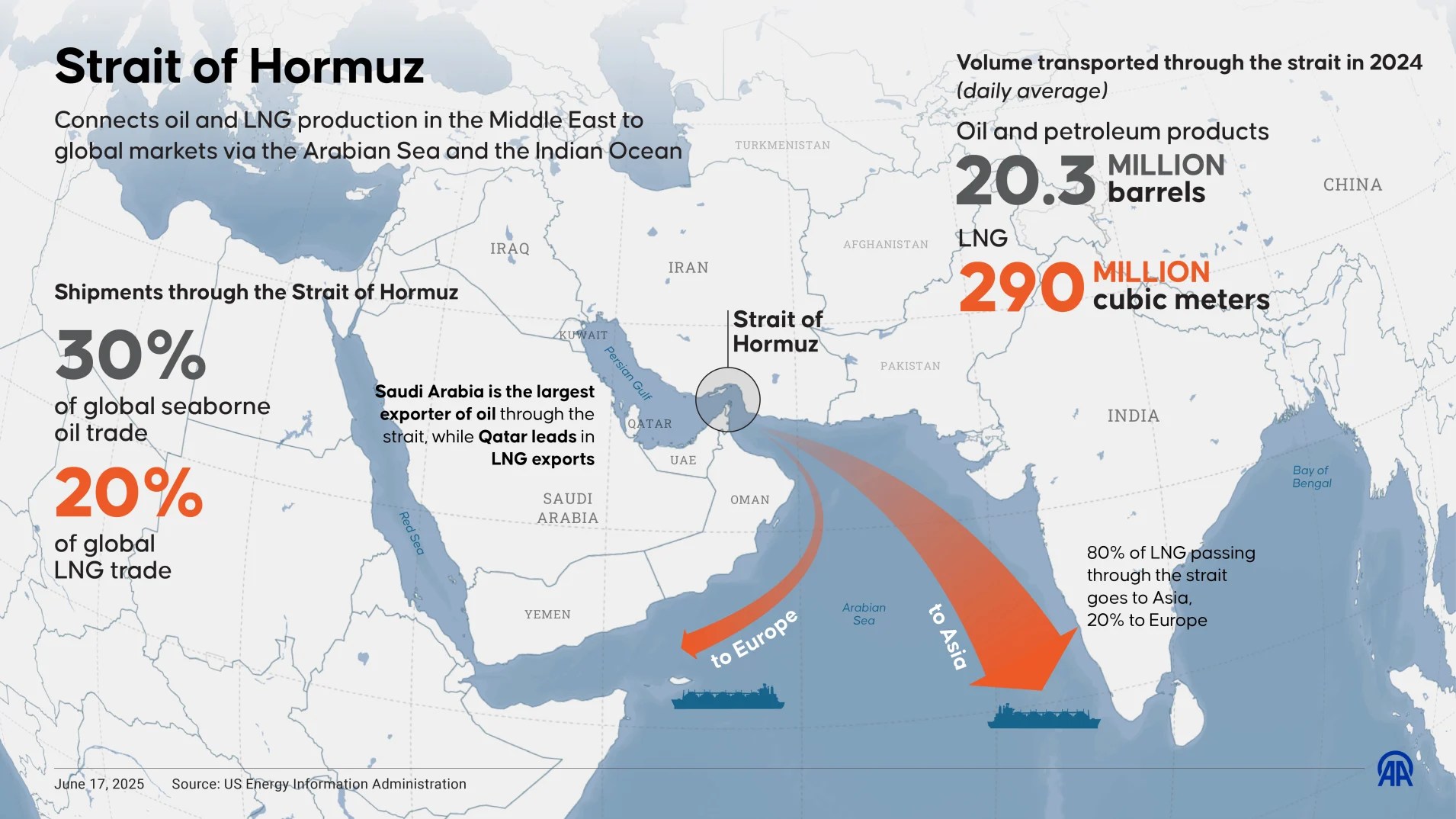
In writing this with the assumption that you’ve all seen the headlines about the US/Israeli strikes on Iran that led to the death of Iran’s Supreme Leader, Ayatollah Khamenei. Post of my students are currently asking “now what?” Things are still murky as I’m writing this, but the news often will make no sense without the regional geographic context. Understanding the Sunni/Shia divide is vital to understanding why Iran, after being attacked, bombed at least a dozen countries including many other Muslim countries. They are expending their weapons without an ability to replenish their supplies and facing. They’ve threatened to attack any ship going through the Straits of Hormuz, and which doesn’t mean much if we don’t understand what a choke point is, and why their are economic vital, and geopolitically strategic. Fellow Gulf countries like Kuwait, Bahrain, Qatar, and Saudi Arabia are seeing this as a closure as a maritime crisis that will profoundly economically damage them.

The economic and political importance of a choke point is highlighted in a crisis that closes it. SOURCE: CNBC

Nine U.S. bases in the Middle East have been bombed in drone attacks and while it is hard to assess in “the fog of war,” satellite imagery shows us the extent of the damage. Of course this has many domestic ramifications in the United States that are significant, but as a geographic analysis of this situation pulls the focus more to Middle Eastern impacts, starting with the question,
“who will be in charge of Iran two months from now?” There are many possibilities ranging from the mullahs staying in charge, to the son of the Shah (Rezi Pahlavi) being installed in the future. Prior to the 1979 Islamic Revolution that installed the Ruhollah Khomeini. The current regime has been the largest state sponsor of terror and has been the greatest source of regional destabilization. They’ve funded Hamas, Hezbollah, Islamic Jihad, the Houthis, and various other Shi’ite militia groups in Iraq, Syria, and elsewhere.

The ABC video here is a good “need to know” primer for March 4, 2026…but the details will fade in time.

The news of the next few month will shape the coming decades and the possibilities are still wide open. The Caspian Report has produced good geopolitical analysis over the years, so this is their latest video (below)

TAGS: Middle East, Iran, political, war.
The Geography of Military Operations

Geography is the stage on which the play of History unfolds.  As a kid, I loved studying the great wards of history and—not surprisingly—I was drawn to the maps that showed flanking maneuvers, bottlenecks, marching around mountains, getting lured into marshlands, etc.  I especially was intrigued when a local force used superior knowledge of the local terrain to defeat a superior, invading force. 

This video shows the geography of the Crimean Peninsula through of the Russian occupation of the peninsula.  Before 2014, the land was controlled by Ukraine and Russia has controlled and annexed the land.  The 2022 Russian invasion of Ukraine was a continued expansion of these territorial ambitions, and if Ukraine’s full goals are to be achieved, reclaiming the Crimean Peninsula would be an final step.  The naval stronghold of Sevastapol, the tiny narrow neck of land, the swampy lagoons, and the Black Sea are all discussed in this video looking at the Russian advantages in maintaining control and Ukraine’s difficulties in trying to recapture this territory.   

Tags: Russia, Ukraine, geopoliticspolitical.

Ukraine gets the upper hand

In February of 2022, I could not imagine a scenario where Ukraine, without any other military allies, would be able to repel a Russian invasion, much less start winning back some territory that they lost. True, many got it wrong, but what did we not see? I overestimated the competency of the Russian military and assumed greater demographic resources would be sufficient to explain the result of the conflict. More importantly though, I underestimated the galvanizing force that nationalism would have on a country under attack. If Ukraine wasn’t the most cohesive ethnic group with a cohesive national identity, this Russian invasion strengthened the cultural cohesion and the political identity to successfully fight back. The video below is a good explanation of the changes in the war from 2021 to Sept. 2022.

SOURCE: Vox on Youtube

Donbas: The heart of the Russian/Ukranian war

This map can go a long way towards explaining what the Donbas region is, and why it is seen as strategically important to both Russia and Ukraine. This BBC article makes a strong argument that capturing all of the Donbas region would now be Putin’s primary objective. What “winning” this war has meant for Russia has changed; especially now given that a quick takeover of the entire country of Ukraine is impossible. I see 4 reasons why Ukraine has done better in the first month of this war than some expected: 1) the government did not collapse under pressure, 2) the Ukrainian people took up the cause with patriotic fervor, 3) the Russian military was not the power that many expected, and 4) the international sanctions were more impactful in an integrated, global 21st century economy than they would have been just 50 years ago. At the start of the war Russia had (IMHO) much grander ambitions on what would have constituted a victory, but now, control of the entire Donbas region is still the prize that they’ve coveted and would represent an new idea victory. SOURCE: BBC

Tags: Ukraine, Russia, conflict.

Conflict in Armenia and Azerbaijan

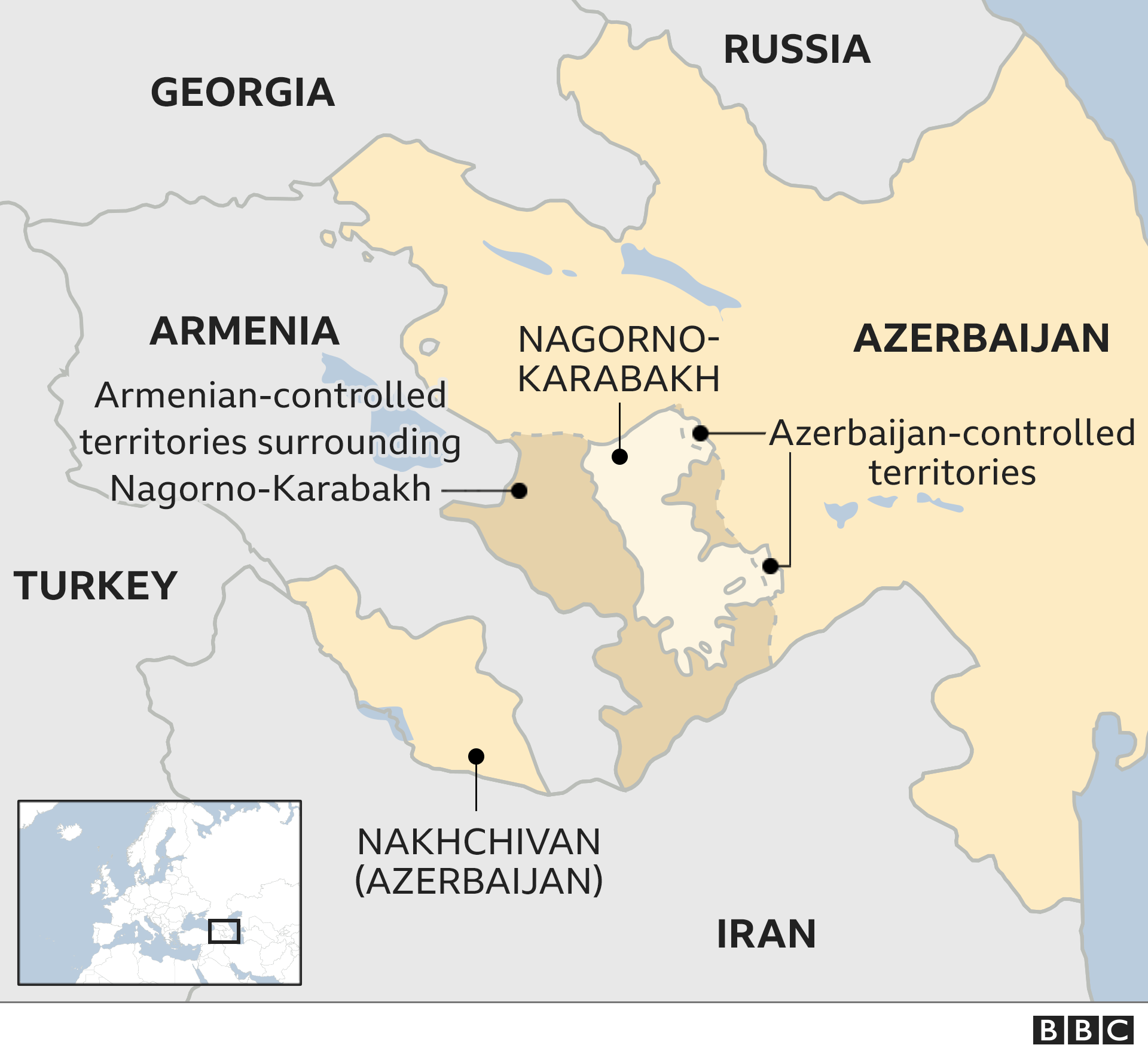
Armenia’s defence ministry said Azeri forces had launched an attack five minutes after the truce had been due to come into effect, with ethnic Armenian forces responding. Azeri forces were also bombarding a town, the defence ministry said.” SOURCE: BBC

There are many simmering conflicts around the world that are not fully resolved but that can intensify very quickly because the underlying issues remain tense even in periods of relative calm. The Armenia/Azerbaijan conflict centers around the ethnic Armenian enclave (Nargorno Karabakh) inside Azerbaijan. To make things more complicated, there is an exclave of Azerbaijan (Nakhchivan) to the west of Armenia.

There have been ethnic/political tensions is this region for generations, but the collapse of the Soviet Union changed the status quo, and there was a cease-fire called in 1994, but that has dissolved in the last few weeks. Now, Turkey and Russia are both seeking to resolve the dispute (or carry out their regional ambitions if you like to approach this more cynically). This shows how a border conflict between two countries can quickly become a broader that can polarize the international community as countries “pick sides” in the conflict. While this is a distressing bit of news for global security and peace, this is a excellent case study to explore many political geographic topics; enclaves, exclaves, borders, sovereignty, devolution, international conflict, etc..

Al Jazeera (10/14)-Updates: Turkey denies accusations, Russia calls for truce

*BBC-Reports of fresh shelling dent ceasefire hopes

*VOX-The conflict between Armenia and Azerbaijan, explained

*The Sunday Times-Azerbaijan and Armenia accuse each other of breaking ceasefire

*The Jacobin Magazine-What’s Really Driving the Azerbaijan-Armenia Conflict

GeoEd Tags: Armenia, Azerbaijan, war, borders, political.

A History Of Sudan’s Civil Wars & Conflict

This is the story of how Sudan became two nations, and of an ongoing conflict in the Nuba Mountains that has changed the lives of millions of people. In parts 2–5 of our VR series, We Who Remain, follow the lives of four people living through the war: http://ajplus.co/nuba360. Produced in partnership with Nuba Reports and Emblematic Group.

Source: www.youtube.com

The first video in this 5-part video is a bit slow, but provides the historical and geographic context needed to understand the developmental, ethnic, and political issues that remain so difficult to resolve.  The Subsequent four videos provide a more human, personal glimpse into facets of the conflict. 


Tags: Sudan, politicalethnicity, Africa, war.

Syria’s war: Who is fighting and why [Updated]

“After four-plus years of fighting, Syria’s war has killed at least hundreds of thousands of people and displaced millions. And, though it started as a civil war, it’s become much more than that. It’s a proxy war that has divided much of the Middle East, and has drawn in both Russia and the United States. To understand how Syria got to this place, it helps to start at the beginning and watch it unfold.”

Source: www.youtube.com

Over a year ago I posted a previous version of this video highlighting the complexities behind the Syrian war.  Much has happened since then and this updated version adds more detail and includes a very helpful timeline to show how more internal and external forces became involved in the fighting.  This is an incredibly complicated geopolitical situation because of all the regional and international players involved.  


TagsSyria, war, conflict, political, geopolitics.

Revised executive order bans travelers from six Muslim-majority countries from getting new visas

The president is expected to sign his new, more limited rule Monday.

Source: www.washingtonpost.com

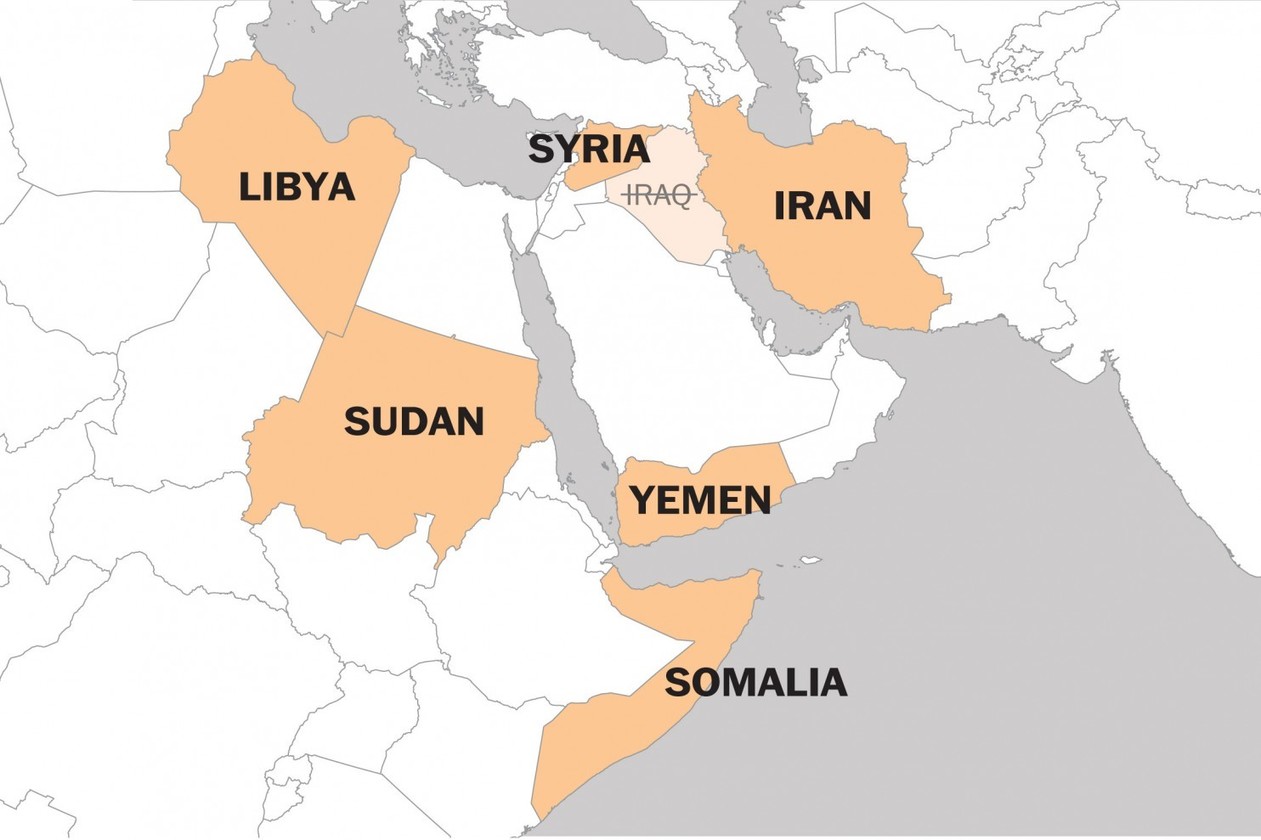
It’s hard to discuss this topic in detail without a partisan political views.  Underneath all of those opinions are geographic perspective about how the world works as well as geographical imaginations on how things should operate. 


Tags: migrationrefugees, war, political, terrorism, ISISMiddle East, conflict.

How Pearl Harbor changed Japanese-Americans

“In February 1942, President Franklin Roosevelt issued Executive Order 9066, sending 120,000 people from the US west coast into internment camps because of their ethnic background. Two-thirds of them were born in America. The treatment of Japanese-Americans during the World War Two was denounced by President Ronald Reagan in 1988 as ‘a policy motivated by racial prejudice, wartime hysteria, and a failure of political leadership.’ He signed the Civil Liberties Act to compensate more than 100,000 people of Japanese descent who were incarcerated in internment camps.


Tags: historicalethnicity, war.

Source: www.bbc.com

Blog at WordPress.com.

Up ↑