Search

GEOGRAPHY EDUCATION

Supporting geography educators everywhere with current digital resources.

Month

February 2013

Sharks, Murals and Globes

Seth Dixon, Ph.D.‘s insight:

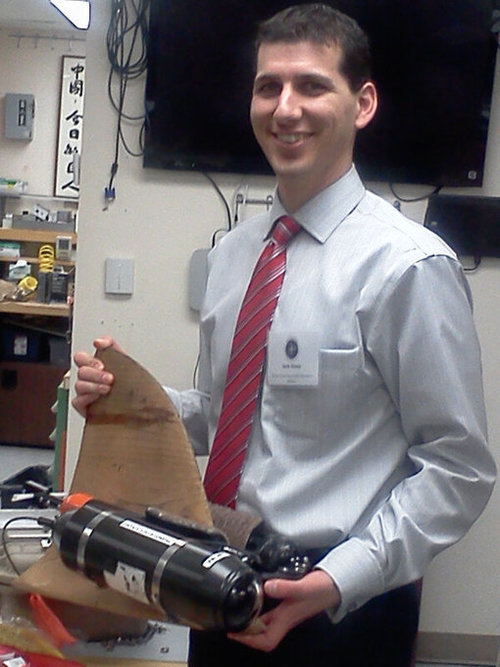
LOVED touring @natgeo headquarters today; this special shark camera helped produce this video. To see videos (and many more pictures) of the National Geographic Society’s headquarters, visit the Rhode Island Geography Education Alliance site.  Especially interesting was National Geographic’s production of a Cuba map.   

See on twitter.com

Human Development Index

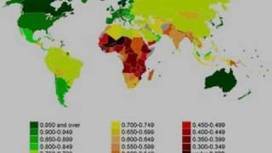
“This video shows the basic concept of HDI (Human Development Index), by using four different examples (Japan, Mexico, India and Angola).”

Seth Dixon, Ph.D.‘s insight:

This video is a primer for those that have never seen HDI data.  This interactive map with HDI data is for those already acquainted with the HDI, showing the HDI number as well as the ranking. 

Tags: development, statistics, worldwide.

See on www.youtube.com

At National Geographic Headquarters

Seth Dixon, Ph.D.‘s insight:

Today I’ve been at the the National Geographic headquarters in Washington D.C. with other Geography Education Alliance coordinators.  They have the coolest toys to capture some amazing footage, including crittercams.

See on twitter.com

Time Zones

Seth Dixon, Ph.D.‘s insight:

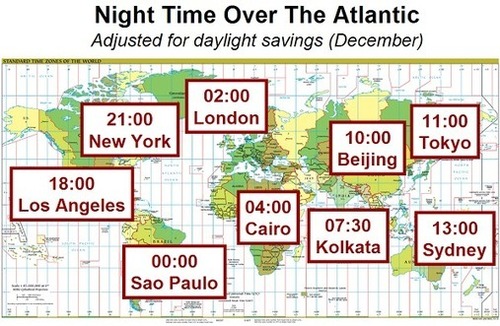
Coordinating a meeting across time zones can be confusion logistical task and one that people rarely can do off the top of their head or consulting some resources.  It is, however, fundamentally a geographic task.  Our friends at the Global Catastrophic Risk Institute put together this collection of 5 maps (and this time zone converter) to help global collaboration.

See on gcrinstitute.org

Fields of Green Spring up in Saudi Arabia

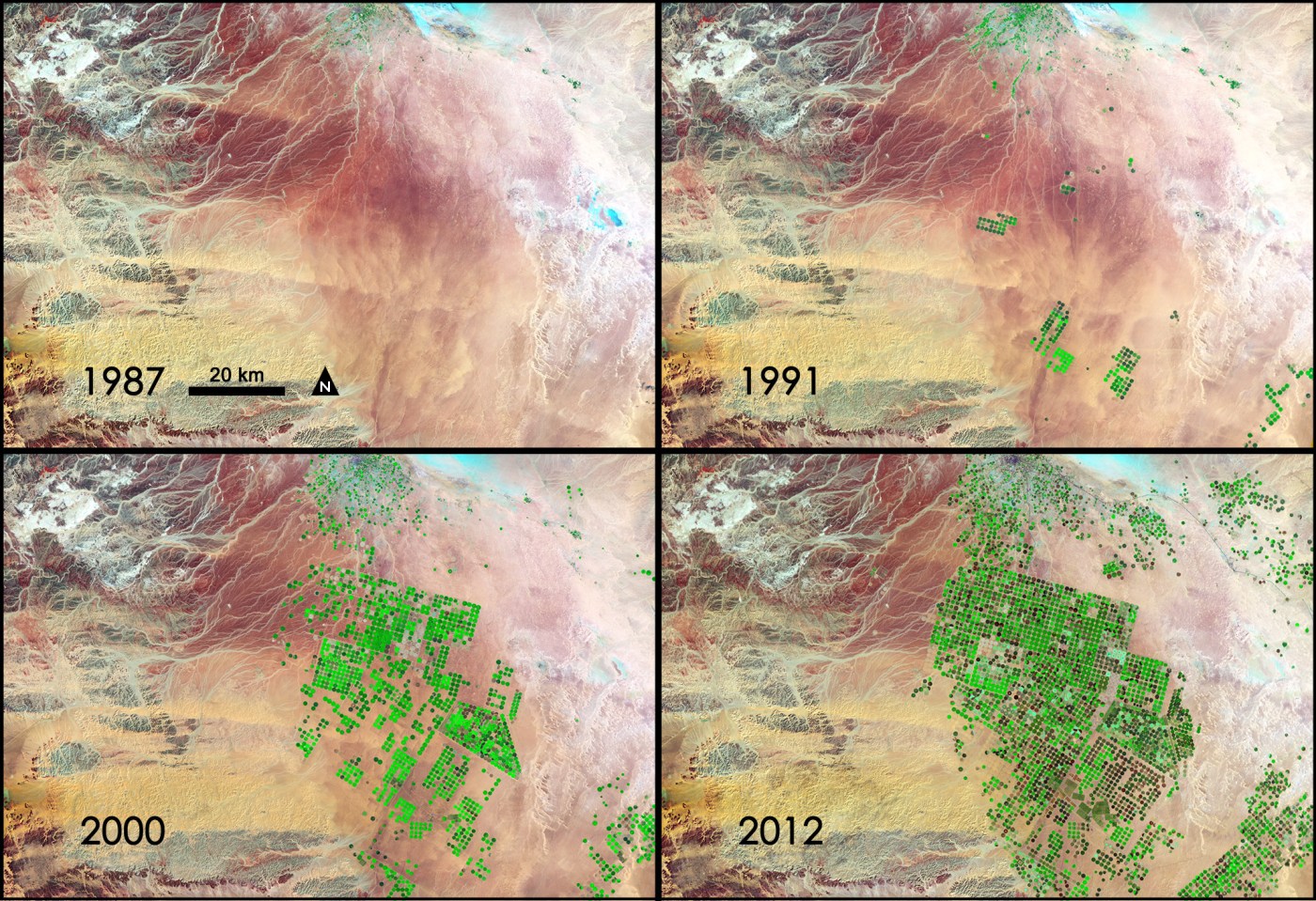
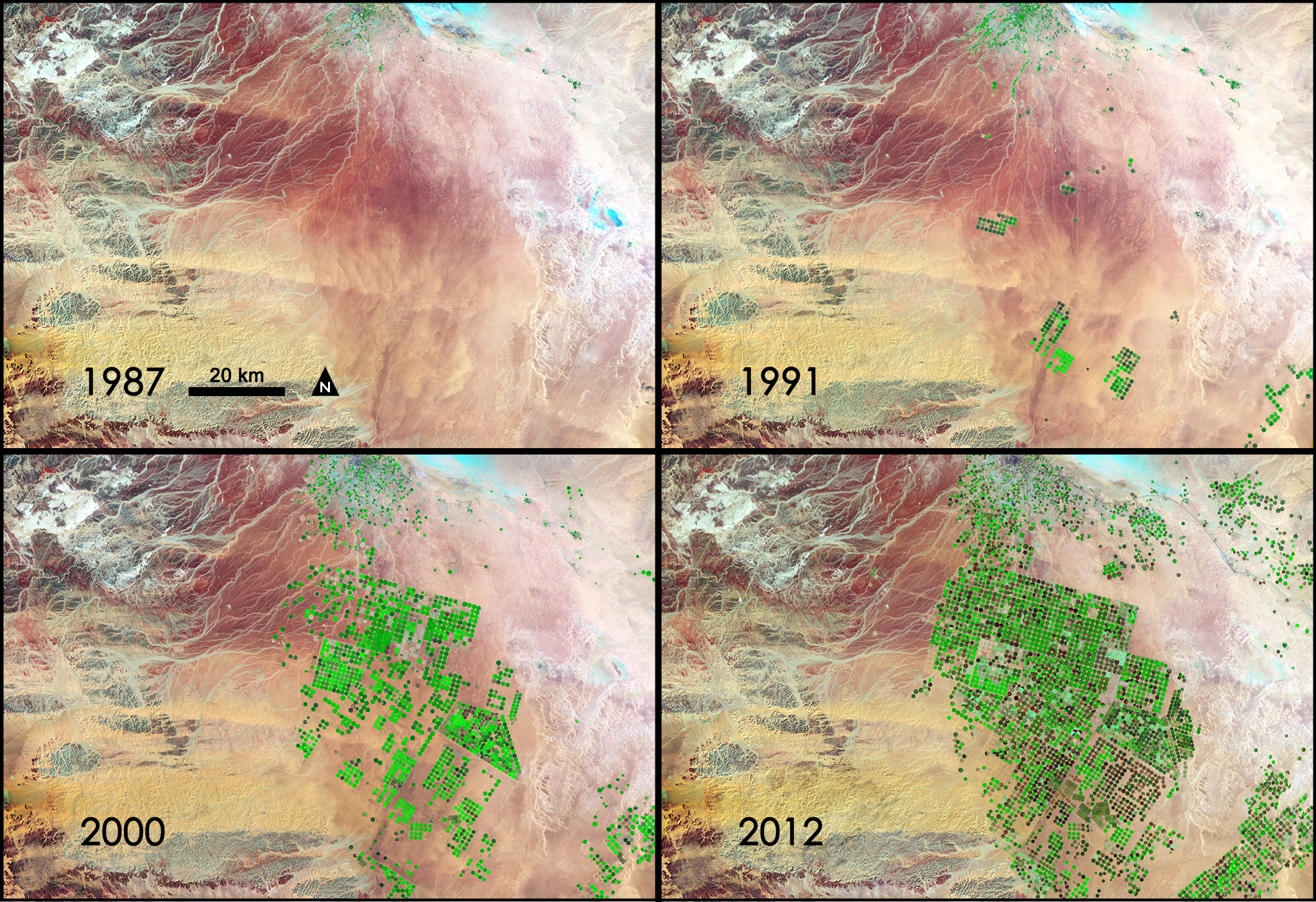
Saudi Arabia is drilling for a resource possibly more precious than oil by tapping hidden reserves of water in the Syrian Desert.

Seth Dixon, Ph.D.‘s insight:

In northern Saudi Arabia, near Jordan, oil resources are sparse and so is surface water.  Water might just be the more important liquid natural resource, especially for sustaining a population.  There are underground water reserves that are stored in aquifers, layers of rock that hold water.  The water that collects in aquifers may take many years to replenish so this practice is sometimes referred to as water mining.  

Question to ponder: If Saudi Arabia is rich enough to buy their own food and they are at a competitive disadvantage for food production, why would they invest so much money on farming marginal lands? 

Tags: food, agriculture, waterMiddle East, Saudi Arabia, unit 5 agriculture.

See on www.nasa.gov

Landsat

Hail Columbia!

The federal government’s relentless expansion has made Washington, D.C., America’s real Second City.

From 1890-1990, Chicago was America’s second largest city.  Since then Los Angeles has been the second largest city, acting as the west coast capital for the United States. Both of these cities have declined in economic and political importance in the recession, and in this article Aaron Renn argues that Washington D.C. (although demographically not in the same category) could be considered an emerging second city and chronicles it’s historic development.  Readers may also be interested in how Renn (“the urbanophile“) argues that all our impressions about Detroit are inaccurate

Tags: Washington DC, urban, historical, unit 7 cities.

See on www.city-journal.org

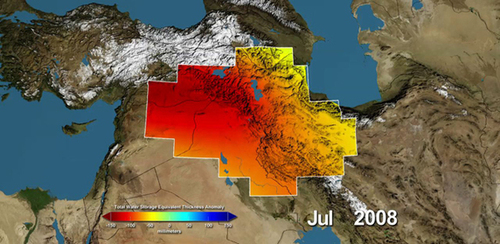
NASA Satellites Find Freshwater Losses in Middle East

A new study using data from a pair of gravity-measuring NASA satellites finds that large parts of the arid Middle East region lost freshwater reserves rapidly during the past decade.

“[This] data show an alarming rate of decrease in total water storage in the Tigris and Euphrates river basins, which currently have the second fastest rate of groundwater storage loss on Earth, after India,” said Jay Famiglietti, principal investigator of the study and a hydrologist and professor at UC Irvine. “The rate was especially striking after the 2007 drought. Meanwhile, demand for freshwater continues to rise, and the region does not coordinate its water management because of different interpretations of international laws.”

Tags: water, environment, consumption, resources, environment depend, Middle East, Iraq.

Seth Dixon, Ph.D.‘s insight:

This is a perfect example of geospatial technologies can lead to a better understanding of how the Earth’s physical systems are changing because of human geography.  Teaching geography is about showing how these systems are interconnected.   

See on www.nasa.gov
Hot Commodities

“77 Photos of the mass production of the Earth’s natural resources.  In the picture above, a Tibetan villager works in a salt field. Salt has been the most common food preservative, especially for meat, for thousands of years.” 

Tags: consumption, agriculture, resources, labor, industry, economic, unit 6 industry.

Seth Dixon, Ph.D.‘s insight:

Coal, steel, gold, iron, copper, aluminum and oil are all incredibly important commodities.  Agricultural products such as rice, cotton, corn, wheat and coffee all travel far beyond their area of origin.   Where do these resources come from?  How are they produced?  This gallery of 77 pictures is a fantastic tour of the resources that are key cogs in the global economy.  

See on photos.msn.com

EU horse meat scandal exposes dangers of globalism

When horse meat was discovered in beef hamburgers in Ireland last month, governments, corporations and regulators assured a panicked public that it was complete

Tags: food, agriculture, consumption, unit 5 agriculture, globalizationagribusiness.

Seth Dixon, Ph.D.‘s insight:

Just what is in our food anyway?  This scandal reveals how removed comsumers are from the production of the foods that they purchase.  As these commodity chains become longer and more complex, food safety appears to take a back seat to profit margins.   

See on www.examiner.com

Create a free website or blog at WordPress.com.

Up ↑