Search

GEOGRAPHY EDUCATION

Supporting geography educators everywhere with current digital resources.

Month

February 2013

Maps and the Geospatial Revolution

“Learn how advances in geospatial technology and analytical methods have changed how we do everything, and discover how to make maps and analyze geographic patterns using the latest tools.”

Seth Dixon, Ph.D.‘s insight:

When I was a graduate student at Penn State, I was introduced to some great people and programs and I’m glad to see that the institution has continued to excel and be a leader.  You have probably heard of MOOCs (Massive Open Online Course) and been interested in seeing how this might change higher education in the future.  This MOOC is a free 5-week course designed to be an introduction to mapping, GIS and geospatial technologies so you don’t need to be a specialists with a mapping background: it’s for beginners.  I know that many geography teachers tell their students about GIS, but are afraid to teach with GIS because they are worried that it will be too hard.  This is an easy on-ramp to 21st century geospatial tools and any geography teacher hoping to modernize their skillset would do well to take this summer course fromthe Program of Online Geospatial Education at Penn State, taught by Dr. Anthony Robinson.

Tags: GIS, teacher training, mapping, cartography, geospatial, edtech, geography education, unit 1 GeoPrinciples.

See on www.coursera.org

Geospatial

2 Cars Swallowed By Sinkhole

A 150-yard-long chunk of State Highway 89 collapsed about 5 a.m. roughly 25 miles south of Page

Seth Dixon, Ph.D.‘s insight:

Just a reminder that the Earth beneath our feet (and roads and buildings) are a part of a dynamic system that changes. 

See on www.azcentral.com

In Norway, TV Program on Firewood Elicits Passions

A TV program about firewood, mostly showing a fireplace in use, has aroused passions in Norway.

Seth Dixon, Ph.D.‘s insight:

In so many countries this would be one of the worst rated TV shows of all time, and yet in Norway, where a rustic, outdoorsman connection to the forest is ingrained in the culture, it’s a hit and one that sparks debates and discussion.  Isn’t it good, Norwegian Wood?  

See on www.nytimes.com

The Trouble With Online College

Education via the Internet has been overrated and could produce more dropouts than degrees.

Seth Dixon, Ph.D.‘s insight:

Some food for thought about changing educational paradigms and technology.  As one commentator stated seeing this article, “MOOC coverage swings back and forth.”   

See on www.nytimes.com

World Cities Quiz

Try out some geography trivia in our World Cities Quiz: a great geography quiz that tests your knowledge of some of the major cities of the word!

See on www.quizfortune.com

Economic Inequality

Seth Dixon, Ph.D.‘s insight:

Make your own conclusions…

See on www.tni.org

East Asia’s maritime disputes

A race for energy resources makes unresolved territorial disputes more dangerous in both North-East and South-East Asia

Tags: borders, political, conflict, warChina, Japan, East Asia.

Seth Dixon, Ph.D.‘s insight:

Many of the geopolitical conflicts in the East Pacific have their roots in the territorial disputes over islands that at first glance seem as if they wouldn’t be worth the trouble.  However, since the the UNCLOS agreement gives countries 200 nautical miles off their coasts to be an Exclusive Economic Zone, that greatly enhanced the strategic value of controlling these islands. 

See on www.economist.com

What You Need to Know About Genetically Engineered Food

Myths and facts about health, corruption, and saving the world

Tags: food, agriculture, agribusinesslocavore, unit 5 agriculture.

Seth Dixon, Ph.D.‘s insight:

So many articles about organic or genetically engineered foods are written with someone with a very defined position on the subject (abortion, gun control or other controversial topics).  This article is an attempt to separate out the good the bad and the ugly regarding genetically engineered foods.   

See on www.theatlantic.com

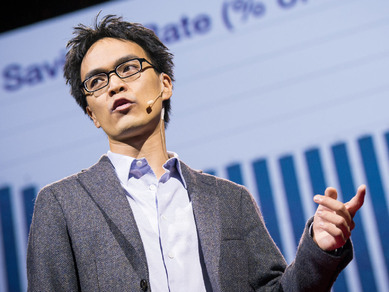
How the languages we speak affects the way we think

What can economists learn from linguists?

Tags: language, culture, economic, TED.

Seth Dixon, Ph.D.‘s insight:

Our thoughts shape the words we speak, but the language we speak (and ways we communicate) help shape the way we think.  In this TED talk, an economist looks at how the grammatical structure that languages use to speak about the future impacts how the speakers of the language are able to save money for future events.  For 5 other examples of how language can impact how we think and perceive the world, see this attached article.

See on www.ted.com

Blog at WordPress.com.

Up ↑