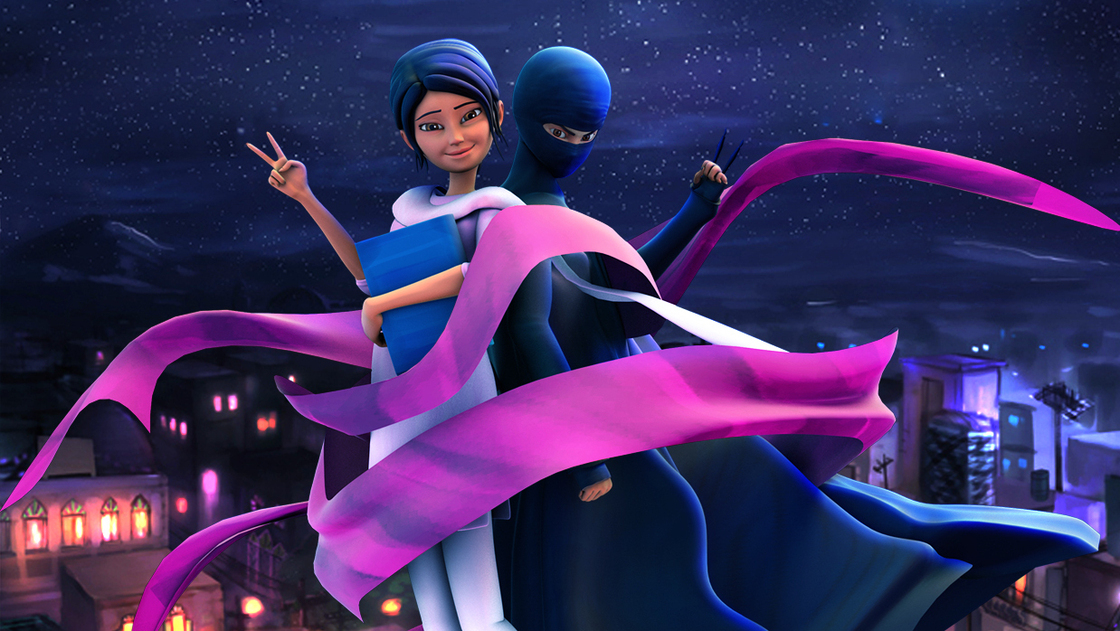
“Burka Avenger is a new Pakistani kids’ show about a mild-mannered teacher who moonlights as a burka-clad superhero.”
I first learned of the Pakistan’s new animated TV series the Burka Avenger last week from an NPR podcast and eagerly wanted to know more. Some are hailing the Burka Avenger to be Pakistan’s answer to Wonder Woman, fighting for the rights of the oppressed. There has also been a lot of criticism concerning the role of the burka juxtaposed with this heroine. For many, they see the burka solely as a symbol of female oppression and feel that a heroine shouldn’t be donning the clothing of the oppressed (my opinion?–C’mon, it’s the logical masked outfit for a female superhero trying to be incognito in the tribal villages of Pakistan). I find this pairing of traditional gender norms and clothing coupled with pop culture’s superhero motifs to be a fantastic demonstration of how cultures mesh together. Globalization doesn’t mean all cultures are the same; we often see highly localized and distinct regional twists on global themes. If this idea intrigues you, see the TED talk below.
Tags: Pakistan, gender, popular culture, SouthAsia, globalization, culture, Islam.
TED Talks At TEDGlobal University, Shereen El Feki shows how some Arab cultures are borrowing trademarks of Western pop culture — music videos, comics, even Barbie — and adding a culturally appropriate twist.
This TED talk cleverly discusses the cultural processes of globalization by examining two examples from the Islamic world. In the examples of the TV station 4Shbab and the comic book series The 99 show that all global cultural interactions don’t have to result in a homogenous “melting pot.” Local cultural forces can tap into the powers of globalized culture that can create dynamic local cultures that are both intensely local and global.
Questions to Ponder: What does the speaker mean when she by refers to cultural interactions as a mesh (as a opposed to a clash or mash) of civilizations? What other examples of cultural meshes can you see that show these processes?
Tags: religion, culture, Islam, globalization, popular culture, unit 3 culture.
See on www.ted.com



 GEOGRAPHY EDUCATION
Leave a comment