
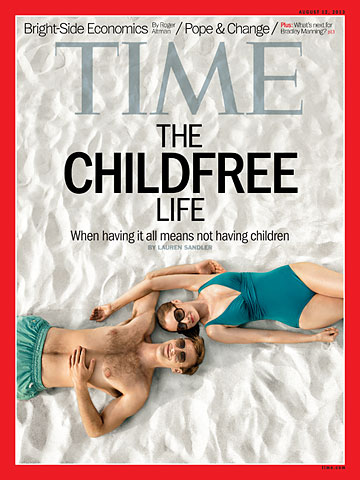
The American birthrate is at a record low. What happens when having it all means not having children?
The demographic transition is an important model in human geography that explains many of the declining birth rates in the more developed parts of the world and the high fertility rates in less developed countries. This is often discussed within a demographic and economic context. This article from TIME Magazine struck quite a nerve recently. While it noted that from 2007 to 2011 the fertility rate dropped 9% in the United States, it wasn’t the statistical analysis that got people talking. What did strike a nerve was the discussion of the cultural shifts that are at the roots of this demographic decline, the cover picture that glamorizes a childfree life and a subtitle (when having it all means not having kids) that idealizes not having children. The demographic transition has what some call a ‘cultural lag’ where a large family size is still culturally preferred even if it no longer makes the same agricultural and economic sense as it did in the past. This piece demonstrates the new secularized ‘post-cultural lag’ values that see children as obstacles to preferable career paths and a limitation on their freedoms. For one commentator that was opposed to this article’s cultural perspective see this article. While these pieces are decidedly not neutral on the subject, that is the point; opinions widely differ on the cultural impact of these demographic shifts.
Tags: USA, declining population, population, demographics, models, popular culture.
See on www.time.com



 GEOGRAPHY EDUCATION
Leave a comment