Search

GEOGRAPHY EDUCATION

Supporting geography educators everywhere with current digital resources.

Month

February 2014

Why the Plan to Dig a Canal Across Nicaragua Could Be a Very Bad Idea

“By the end of this year, digging could begin on a waterway that would stretch roughly 180 miles across Nicaragua to unite the Atlantic and Pacific oceans.”

Seth Dixon‘s insight:

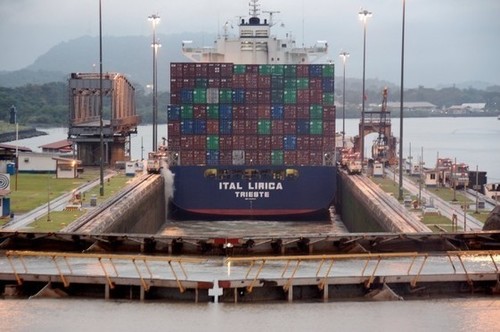
Today, the largest of the massive cargo ships are simply too big to get through the Panama Canal and have to travel down around the tip of South America; China is strategically working on strengthening their geopolitical position in the South China Sea and all international waters.  This is one reason why a Chinese firms are planning to construct a canal to rival Panama’s.  This article highlights the reasons for concern (Maps 101 readers can read more about the geographic implications of Nicaragua’s plans in this article co-authored by myself and Julie Dixon or you can sign up for a free trial subscription to see what else Maps 101 has to offer). 

Tags: transportation, Nicaragua, globalization, diffusion, industry, economic.

See on www.wired.com

West warns Russia amid Crimea threat

“Western nations have called on Russia to ease tensions in Ukraine’s Crimea region after armed men seized the local parliament and raised the Russian flag.”

See on www.bbc.com

Geo-Literacy

Seth Dixon‘s insight:

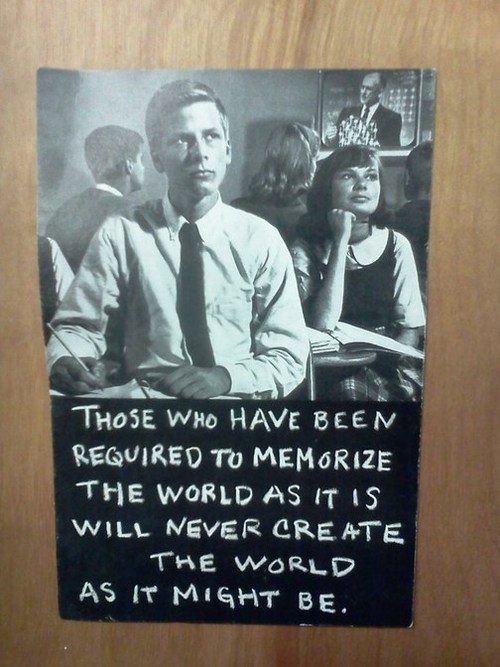
I enjoy the sentiment of this quote; it embraces creative pedagogy while empowering students to be creative agents that can reshape the world.  I love the idea of geography enabling young minds to be inspired to imagine a better world and giving them the tools to so.  While I love the ethos that is embedded in this quote, I feel that it also underestimates our students and their ability to see past some of the limitations of the educational process.  They are not simply passive recipients of learning that is transmitted to them; students can actively shape what they learn.  However, if we can create an environment that promotes and encourages higher-order thinking, we can help our students see their role in shaping a new world–that is our goal in promoting geo-literacy.

See on rigea.org

Walmart Slumber Party

Who wants to spend the night in a Walmart parking lot?

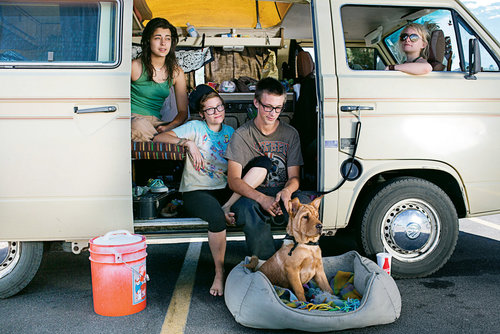
There are a few generally accepted principles when it comes to the etiquette of spending the night in a vehicle in a Walmart parking lot. One night only. No chairs or barbecue grills outside an R.V. Shop at the store for gas, food or supplies, if you can, as a way of saying thanks. Walmart, the country’s largest discount retailer, says you’re welcome: its Web site says that R.V. travelers are “among our best customers.” The photographer Nolan Conway has been taking pictures of Walmart’s resident guests at several stores in central Arizona. Sophia Stauffer, a 20-year-old who travels the country in a van with her boyfriend and their dog, describes their lots, which usually feel quiet and safe, as their best option for most nights. “We really don’t want to work or live in a house,” she says.

Seth Dixon‘s insight:

Mobility studies and movement are key elements within geography.  This photo gallery is an intriguing glimpse into a distinct way of experiencing the United States that highlights a hyper-mobile subculture.  When discussing place we often think of the residents and workers, and think of those that use the place with some degree of permanence.  However, many people’s personal geographies are much more ephemeral, and some places are defined by their impermanence and flows.  Wanderlust can strike those in all socioeconomic sectors, and this is a great preview of those on the road.  Fittingly, the dog in this image is named Kerouc.   

See on www.nytimes.com

A Dictator’s Guide to Urban Design

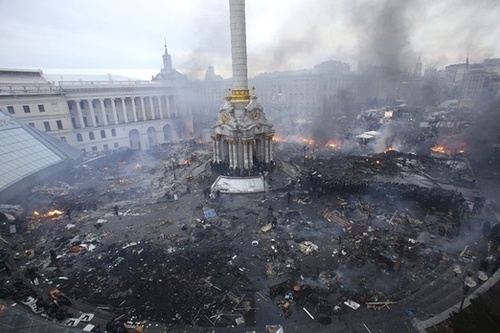
Ukraine’s Independence Square, and the revolutionary dimensions of public spaces.

Seth Dixon‘s insight:

This article gives some background on the political purposes behind urban planning and public squares that carry cultural meaning.  While Ukraine is the reason for delving into the topic, the article explores the politicization of public squares in various regional and historical contexts.  

See on www.theatlantic.com

The Case for Cul-de-Sacs

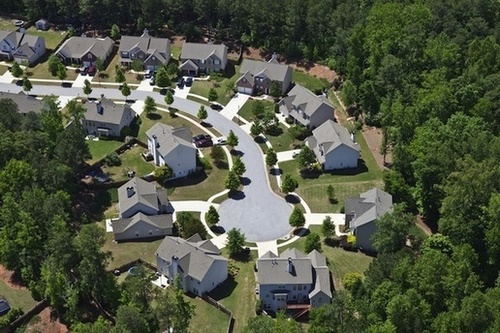
People who live in them actually have greater social cohesion, according to one sociologist.

Thomas R. Hochschild Jr. actually first encountered the social cohesion of cul-de-sacs in his latest research when he wandered into one in Connecticut with his clipboard and polo shirt, and someone called the cops.  That never happened on the other types of streets he was studying, places where it would turn out the neighbors didn’t know each other as well, and it was less clear who “belonged.” Repeatedly, though, he found at the end of cul-de-sacs families who watched each others’ children and took in each others’ mail, who barbequed and orchestrated the removal of snow together, and who considered each other close friends. In cul-de-sacs, these families had a stronger sense of shared social space and territoriality. An outsider stood out.

See on www.theatlanticcities.com

Political Advocacy for Geo-Education

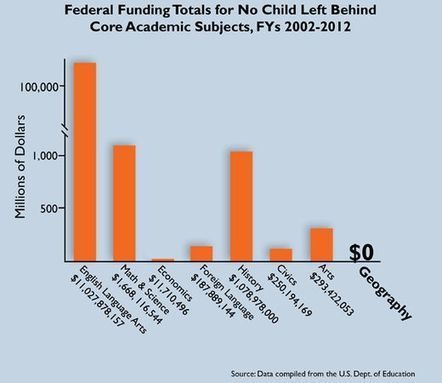
Next week, a delegations from every state alliance will go to Washington D.C. to advocate for geography education and I will represent Rhode Island. On February 26th I will personally meet with Senators Whitehouse and Reed, Congressmen Cicilline and Langevin. I those meetings I will encourage them to become sponsors of the Teaching Geography is Fundamental bill. I would like to encourage you to consider voicing your support for geography education with you representatives. Did you know that Geography is the ONLY required subject that does not receive any dedicated federal funding under No Child Left Behind?

Seth Dixon‘s insight:

If you are a member of your state geographic alliance (and if not, join!) you can help our cause immensely by letting Members of Congress know that there is support for geography education (it helps if they already have heard from constituents about the importance of geography education BEFORE our Feb 26th meetings), and about the existence of the Teaching Geography is Fundamental Act. I urge you to join me in a chorus of support for action by Congress. You don’t have to go to DC to help.


You can go to SpeakUpForGeography.org and send pre-written letters directly to your Senators and Representative…please join me in this effort to strengthen geography education in the United States. 

See on rigea.org

Are container ships getting too big?

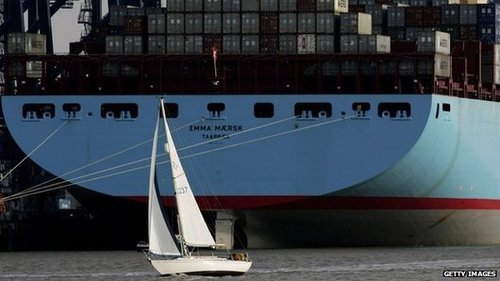
What is blue, a quarter of a mile long, and taller than London’s Olympic stadium?  The answer – this year’s new class of container ship, the Triple E. When it goes into service this June, it will be the largest vessel ploughing the sea.  Each will contain as much steel as eight Eiffel Towers and have a capacity equivalent to 18,000 20-foot containers (TEU).  

Seth Dixon‘s insight:

These containers are symbols of global commerce that enable economies of scale to be profitable and the outsourcing of so many manufacturing jobs to developing countries.  The invention of these containers have changed the geography of global shipping and the vast majority of the world’s largest ports are now in East Asia.  Today though, the biggest container ships are too big to go through the Panama Canal, encouraging China to build a larger canal through Nicaragua.      

Tags: transportation, globalization, diffusion, industry, economic.

See on www.bbc.co.uk

Violence escalates in divided Venezuela

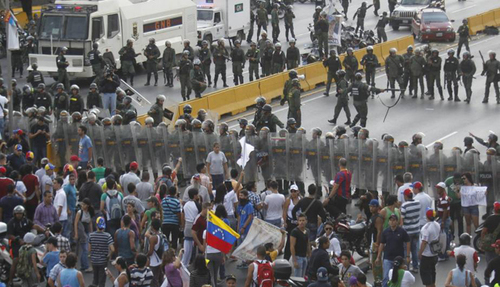
CARACAS (Reuters) – Venezuelan security forces and demonstrators faced off in streets blocked by burning barricades in several cities on Thursday in an escalation of protests against President Nicolas

Seth Dixon‘s insight:

As the protests and political violence in Venezuela escalate, it is important to understand the economic roots of the widespread discontent within this South American country.   As prominent pop culture figures are among the fatalities and the wounded, outrage grows.  Last month, the government overhauled its currency system that ignores many of the real problems of many Venezuelans; food is increasingly hard to come and that desperation feeds into more criminal behavior and social unrest. Many students have taken to the streets to protest the deteriorating economic situation, the government’s economic policies and the social conditions.

Tags: Venezuela, South America, political.

See on www.reuters.com

Blog at WordPress.com.

Up ↑