Search

GEOGRAPHY EDUCATION

Supporting geography educators everywhere with current digital resources.

Month

February 2014

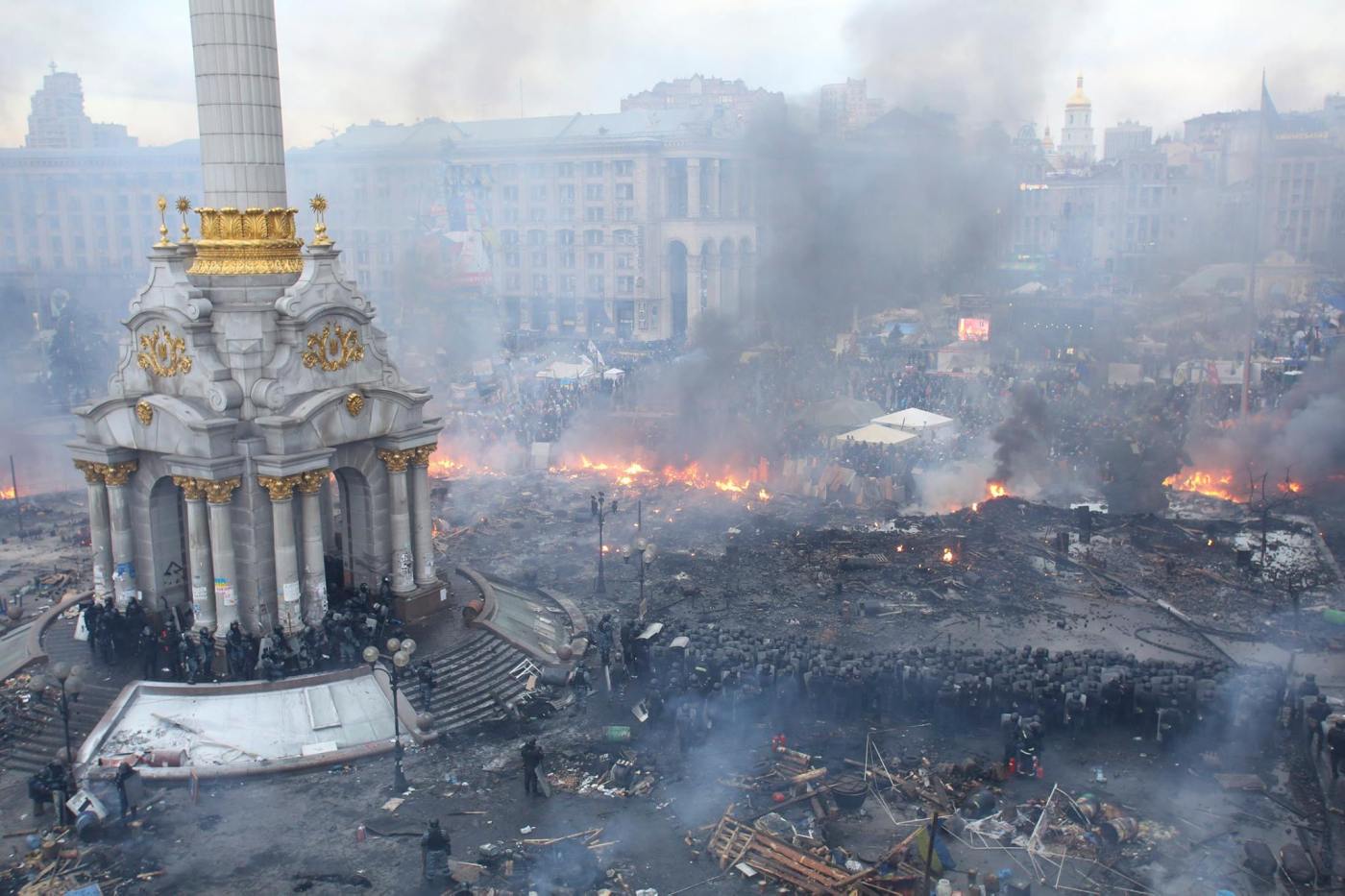
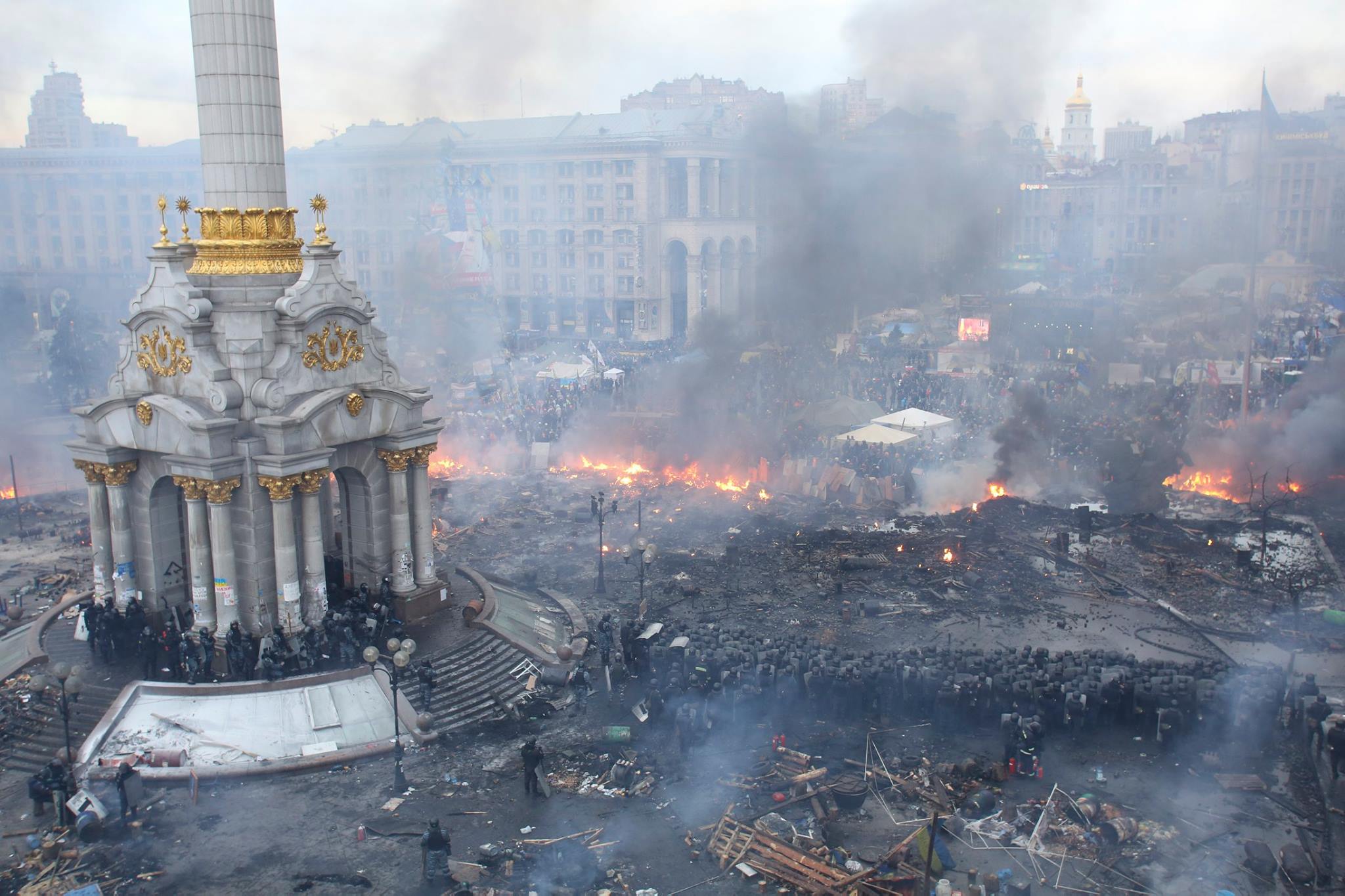
Close-up of Kiev’s Independence Square

“Protests have centered on the capital’s Independence Square, also known as the Maidan, where protesters had set up camp over a number of months. The stand-off turned violent this week as riot police moved in to clear the protest camp.  Security forces had given protesters a deadline of Tuesday 18 February to leave the square, but instead, violence took hold and battles between the demonstrators and police left a number of people dead. Independence Square, which for weeks was the setting for a mostly peaceful protest camp, now more closely resembles a siege, as the remaining protesters attempt to hold their ground.”

See on www.bbc.co.uk

Issues with Ukrainian Nationalism

“Images of toppled statues notwithstanding, ‘revolution’ has never been the right word to describe recent events in Kiev. Ukraine, after all, has been here before. At the heart of the country’s present struggle is its resistance to any ‘strategic partnership’ with Russia and its understanding of Europe as a potential economic and political savior from corrupt government. But the tensions between East and West — both psychological and geographic — are deeply rooted in Ukraine’s national identity. Those Ukrainians most concerned about their country’s future would do well to recognize that identity’s inherent fragility. The original generation of Ukrainian nationalists suffered precisely for their failure to do so.”

Seth Dixon‘s insight:

See on www.foreignaffairs.com

Ukraine

Battling Blight: Detroit Maps Entire City To Find Bad Buildings


The high-tech project would help officials decide which abandoned buildings can be demolished.

Seth Dixon‘s insight:

This crowd-sourced mapping project is an great example of how a community can work together (using geospatial technologies and geographic thinking) to mitigate some of the more pressing issues confronting the local neighborhoods.  Many optimists have argued that Detroit has “good bones” to rebuild the city, but it needs to built on as smaller scale.  This project helps to assess what is being used by residents and should stay, and what needs to go.   

Tagsurban, unit 7 cities, housing, economic, povertyplace, socioeconomic, neighborhoodmapping, GIS, geospatial.

See on www.npr.org

blight6-edit

Muslim Woman Discovers Friendly New World When a Winter Scarf Covers Her Hijab

Chicago’s bitter cold temps led to an impromptu social experiment when Leena Suleiman bundled up in a knit scarf and cap.

See on oaklawn.patch.com

The 20 year history of NAFTA

In the 20 years since it entered into force, the North American Free Trade Agreement has been both lauded and attacked in the United States. But to properly assess NAFTA’s record, it is important to first be clear about what the agreement has actually done. Economically speaking, the answer is a lot.

NAFTA was the first comprehensive free-trade agreement to join developed and developing nations, and it achieved broader and deeper market openings than any trade agreement had before.

NAFTA did that by eliminating tariffs on all industrial goods, guaranteeing unrestricted agricultural trade between the United States and Mexico, opening up a broad range of service sectors, and instituting national treatment for cross-border service providers. It also set high standards of protection for patents, trademarks, copyrights, and trade secrets.

NAFTA ignited an explosion in cross-border economic activity. Today, Canada ranks as the United States’ largest single export market, and it sends 98 percent of its total energy exports to the United States, making Canada the United States’ largest supplier of energy products and services. Mexico is the United States’ second-largest single export market. Over the past two decades, a highly efficient and integrated supply chain has developed among the three North American economies.  Intraregional trade flows have increased by roughly 400 percent.

North Americans not only sell more things to one another; they also make more things together. About half of U.S. trade with Canada and Mexico takes place between related companies, and the resulting specialization has boosted productivity in all three economies. NAFTA has also caused cross-border investment to soar.

In spite of this impressive economic record, NAFTA has its critics. Most of those who attack it on economic grounds focus on Mexico, not Canada, and claim that the partnership is one-sided: that NAFTA is Mexico’s gain and America’s pain. But the economic data prove otherwise.

See on www.foreignaffairs.com

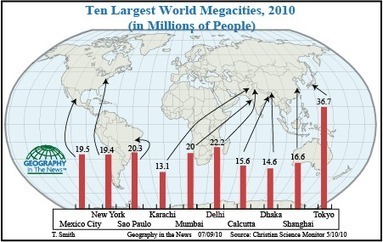
The Growth of Megacities

“For the first time in human history, more of the world’s 6.8 billion people live in cities than in rural areas. That is an incredible demographic and geographic shift since 1950 when only 30 percent of the world’s 2.5 billion inhabitants lived in urban environments.

The world’s largest cities, particularly in developing countries, are growing at phenomenal rates. As a growing landless class is attracted by urban opportunities, meager as they might be, these cities’ populations are ballooning to incredible numbers.

A May 2010 Christian Science Monitor article on “megacities” predicted that by 2050, almost 70 percent of the world’s estimated 10 billion people—more than the number of people living today—will reside in urban areas. The social, economic and environmental problems associated with a predominantly urbanized population are considerably different from those of the mostly rural world population of the past.”

See on newswatch.nationalgeographic.com

Rivers from Above

Get a unique view of these rivers beyond the banks.Photo editing by Lia Pepe

Seth Dixon‘s insight:

This is a fantastic photo gallery, filled with great images to show the processes of fluvial geomorphology. 

Tags: physical, water, geomorphology, erosion, landforms.

See on local.msn.com

Don’t Give Up on a United Ukraine

The current Ukrainian conflict is typically viewed in stark East-West terms: a pro-Russian East versus a pro-European West, with the threat of Ukraine splitting down the middle.

Ukraine’s divisions are indeed pronounced and the forging of a coherent national identity has remained very much a work in progress since independence.

Nonetheless, far from pointing to its unraveling, polling indicates that support for the Ukrainian state has been on the rise over the past decade – even in the Russian-speaking East and South. This is true despite the often polarizing and dysfunctional policies of successive Ukrainian leaders.

See on www.theglobalist.com

Protests in Venezuela

Seth Dixon‘s insight:

This video shows the student activist perspective as to the reasons and causes of behind the political protests in Venezuela in the last few days (as will many YouTube videos, remember that this source isn’t trying to be ‘fair and balanced,’ but to spread the strength of their movement).  The Venezuelan government has expelled U.S. consular officials, accusing them of helping to organize the student movement.  This is an issue worth following in the coming week.   

Tags: Venezuela, South America, political.

See on www.youtube.com

Create a free website or blog at WordPress.com.

Up ↑