“On the 100th anniversary of the Triangle Shirtwaist Factory Fire, little has changed in the global sweatshop economy. Workers are again trapped and burned to death behind locked exit gates.”
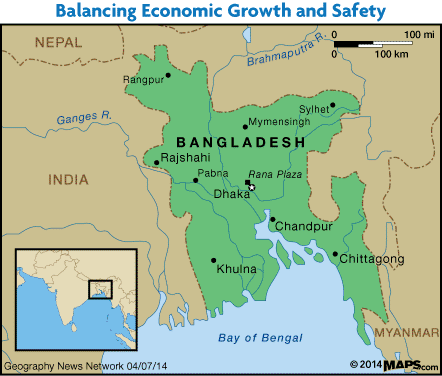
One of the first industries to be impacted by what is today called globalization was the textile industry and the successive waves of globalization continue to alter the geography of the textile industry. This video shows how historical problems in the U.S. textile industry are seen today in countries such as Bangladesh as does this interactive feature. The following paragraph is from a Geography News Network podcast / article that Julie Dixon and I co-authored for Maps101 about the Bangladeshi garment industry:
Many developing countries with the majority of their laborers working in agriculture welcome outsourced labor from the West. This is seen as a way to nurture industrialization, even if it is on the terms of trans-national corporations. Countless workers seek employment in textile factories simply because low pay is still an entry into the cash economy and it is one of the few jobs rural migrants can find when they first enter the big city. In such locations, Western labor, construction, and environmental standards are not priorities because the population’s basic needs haven’t been met, so the responsibility falls to the global companies—but their aim is to cut costs as much as possible to remain competitive. From its emergence in textiles back in the late 1970’s, Bangladesh in 2013 made $19 billion in the export-oriented, ready-made garment industry, employing 4 million workers, most of whom are women.
Listen to more of this Geography News Network podcast or read it here.
Tags: Bangladesh, poverty, development, economic, globalization, industry, labor.
See on www.youtube.com




 GEOGRAPHY EDUCATION
Leave a comment