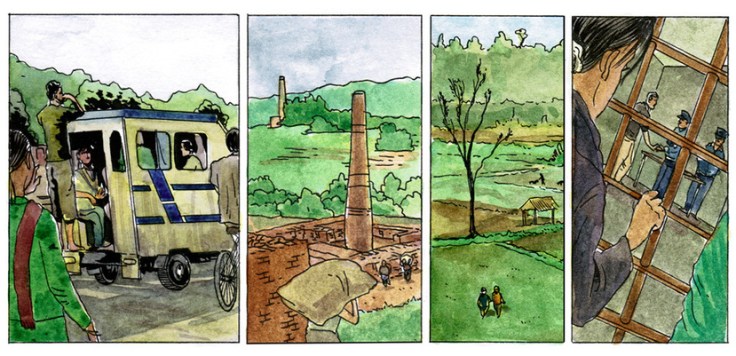
Laxmi’s story of being kidnapped and trafficked in Nepal is not an isolated case but, as this graphical account shows, things are not always what they seem.
Source: www.bbc.co.uk
Teaching about human trafficking and child slavery can be very disconcerting and uncomfortable. How much of the details regarding these horrific situations is age-appropriate and suitable for the classroom? The BBC is reporting on events with sensitive stories to both give a human face to the story, while protecting the identity of under-aged victims (to read about the production of this comic, read Drawing the News.) I encourage you to use your own discretion, but I find this comicbook format an accessible, informative and tasteful way to teach about human trafficking in South Asia to minors. It is a powerful way to teach about some hard (but important) aspects of globalization and economics.
As geographer Shaunna Barnhart says concerning this comic, “It moves from trafficking to child labor to pressures for migration for wage labor and the resulting injustices that occur. There’s differential access to education, gender inequality, land, jobs, and monetary resources that leads to inter- and intra-country trafficking of the vulnerable. In the search for improved quality of life, individuals become part of a global flow of indentured servitude which serves to exploit their vulnerabilities and exacerbate inequalities and injustice. Nepali children ‘paid’ in food and cell phones that play Hindi music in ‘exchange’ for work in textile factories – cell phones that are themselves a nexus of global resource chains and textiles which in turn enter a global market – colliding at the site of child labor which remains largely hidden and ignored by those in the Global North who may benefit from such labor.”
Tags: Nepal, labor, industry, economic, poverty, globalization, India.



 GEOGRAPHY EDUCATION
Leave a comment