Search

GEOGRAPHY EDUCATION

Supporting geography educators everywhere with current digital resources.

Author

sethdixon

I am a geography professor at Rhode Island College.

Living in the Shadow of Industrial Farming

“The world eats cheap bacon at the expense of North Carolina’s rural poor.” 

Source: www.youtube.com

In a recent article by QZ (the video above comes from the same investigation), they explore the negative impacts of the pork industry.  People love their bacon memes, but forget about social and environmental impacts of an increased global trend towards higher pork consumption


Tags: food, agriculture, agribusiness, unit 5 agriculture, agricultural environment, environment, environment modify, pollution. 

America’s most embarrassing statistic — and one effort to change it

Why is the US the only industrialized nation with a rising rate of maternal mortality? Supermodel-turned-maternal health advocate Christy Turlington Burns talks about her latest mission to raise awareness about maternal deaths.

99% of deaths related to pregnancy and childbirth occur in the developing world. The good news is that in most countries the rate of maternal mortality has been going down. The bad news is that in eight countries the rate is going up. The shocking news is that the United States is among them. It is the only industrialized country to have that dubious distinction. The rate has in fact been doubling in recent years.

Tag: mortality, developmentgender, statistics, USA.

Source: www.pri.org

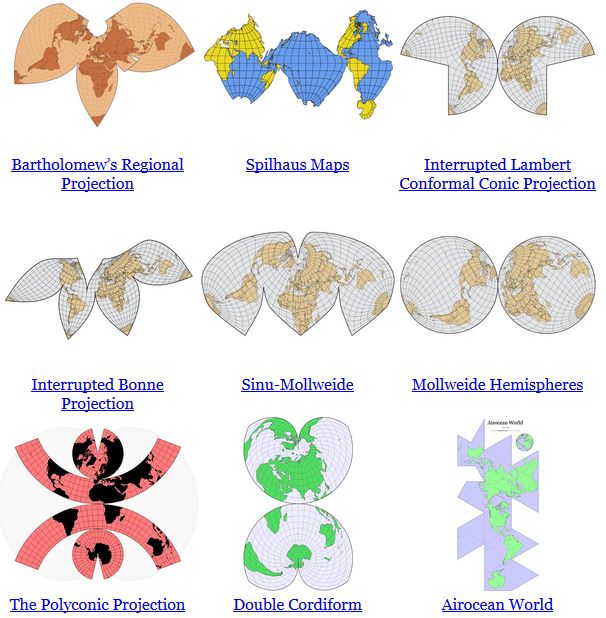
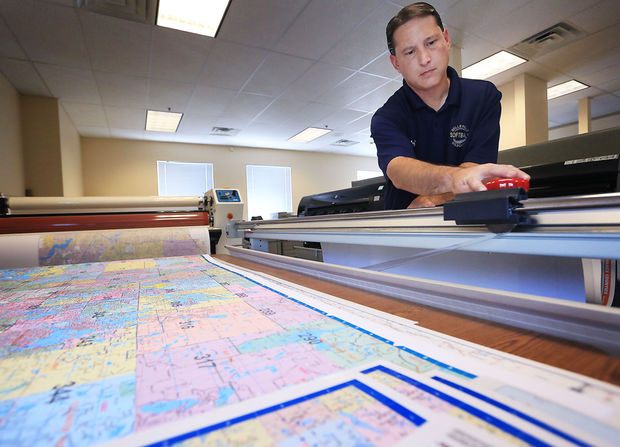
How Maps Are Saving the World

Maps. They’ve been around longer than photographs. They’ve defined empires,guided explorers, told stories, and captured the imagination of many a hopeful traveler for years. While most appreciate the beauty and power of a good map, few recognize the dynamic and vital applications they have today.

Tags mapping, 201, edtech, cartography.

Source: news.nationalgeographic.com

Children and Space

“In just a few generations, we have tightly restricted American kids’ freedom to roam, play, and become self-sufficient. The percentage of children walking and bicycling to school has plummeted from almost 50 percent in 1969 to about 13 percent today. Although distance from school is often cited as the main barrier to walking and bicycling, many families still drive when schools are close to home. According to the Safe Routes to School National Partnership, driving accounts for about half of school trips between 1/4- and 1/2-mile long — which in most cases shouldn’t take kids much more than 10 minutes to walk.”

Source: vimeo.com

This is a controversial topic and I certainly don’t have all the answers. The free range parenting is a new to to our cultural conversations about parenting, but the ideas are anything but new. Most free range advocates want their children to have the rights to roam about their neighborhoods that others today would see as parental neglect. Many argue that as automobiles have become more prominent in urban design, it has come at the expense of children’s ability to be in public unsupervised (yes, children used to be encouraged to go out to play in the streets). Children don’t know their own neighborhoods as well anymore and this isn’t just about architecture and design. Culturally our communal notions of proper parenting and child safety have shifted in the United States, but they are also very different around the world.  


Questions to Ponder: How is parenting shaped by cultural norms? What are the spatial implications of changing parenting strategies? What are the factors that shape your opinion about the ‘proper’ range for kids to roam unsupervised?  

Tags: housing, placeneighborhood, perspective, cultural norms, culture, transportation, planningspatial.

Sryrian Migrants On Greek Island Of Kos

A Greek police officer brandished a knife and slapped a migrant while others sprayed fire extinguishers to break up crowds of migrants and asylum seekers on the Greek island of Kos. The UNHCR is calling the migrant crisis a “humanitarian emergency.”

Source: www.youtube.com

Not since the end of World War II have there been so many refugees seeking safety.  There are several regional hot spots of political, ethnic and religious turmoil; many are now asking how the global community should response to the worst refugee crisis in generations.


Tags: migration, political, refugees, Greece, Syria.

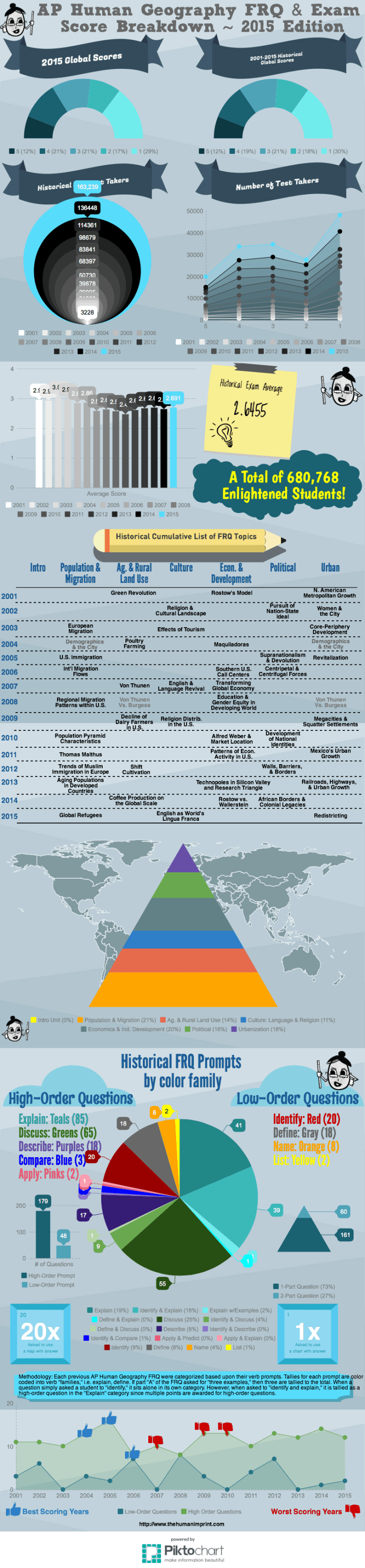
Introduction to Human Geography: A Disciplinary Approach

This website serves as an off-campus host for text, images, data and other web-based resources associated with the free eText, Introduction to Human Geography: A Disciplinary Approach.

Source: sites.google.com

I’m very excited to see a free eText in Human Geography.  I will be looking at this more closely during the next semester and think that geography teachers will see this as a welcome supplemental to their arsenal of resources. This is definitely on the shortlist of best materials on this site.   


Tags: geography educationAPHG, textbook.

Designs That Might Be New Zealand’s Next Flag

It’s not everyday that a nation chooses a new flag by its own volition, with the support of the voters, without any drastic regime changes. New Zealand is doing exactly that. With the Flag Consideration Project, the Kiwis are trying on a new look.

Tags: Flags, New Zealand.

Source: www.citylab.com

What is in a flag?  A flag is intended to represent a people and government while portraying a common heritage and a sense on timelessness.  This may seem like a small decision, but symbols can be incredibly potent political and cultural forces; New Zealand better get this right.     

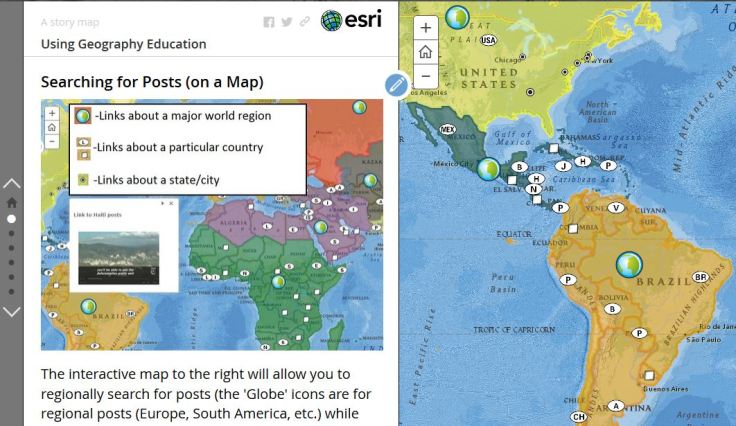
Teaching APHG with Live Web Maps

Lyn Malone and Seth Dixon combined to present at NCGE 2015 on Saturday August 8th; the topic was Teaching AP Human Geography with Live Web Maps.

Tags: APHG, NCGEtraining, edtech, GIS, ESRI, mapping, cartography, geospatial.

Source: geographyeducation.org

I was glad to present in Washington D.C., and for any who could not attend, it was designed as a “first foray” into using ArcGIS online and chance to discover great web maps for every unit of APHG. 

27 Facts About Maps

A weekly show where knowledge junkies get their fix of trivia-tastic information. This week, John shares 27 facts about maps.

Source: www.youtube.com

This Mental Floss video is an entertaining rapid-fire hodgepodge of map trivia with some important educational content nicely nestled in there.  This 99 Percent Invisible podcast is another ‘ode to maps,’ but this one is more poetic about the value of cartography and personal in how it explores the qualities they possess.  Enjoy them both!  

Tags mapping, edtechtrivia, cartography.

Create a free website or blog at WordPress.com.

Up ↑