Search

GEOGRAPHY EDUCATION

Supporting geography educators everywhere with current digital resources.

Author

sethdixon

I am a geography professor at Rhode Island College.

An Atlas of Upward Mobility Shows Paths Out of Poverty

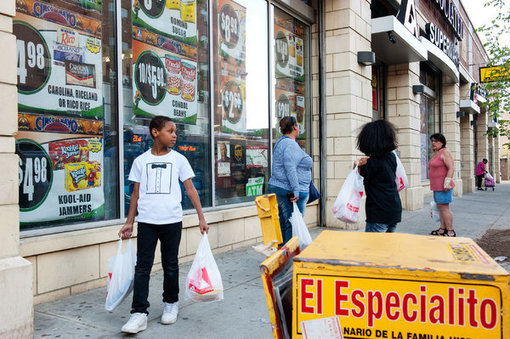
“A decades-old effort found that moving poor families to better neighborhoods did little to help them.  A large new study is about to overturn the findings of Moving to Opportunity. Based on the earnings records of millions of families that moved with children, it finds that poor children who grow up in some cities and towns have sharply better odds of escaping poverty than similar poor children elsewhere.”

Tags: housing, economic, povertyplace, socioeconomic, neighborhood.

Source: www.nytimes.com

AP Human Geography Review Material

Source: prezi.com

Over 166,000 students are preparing to take the AP Human Geography test on May 15th.  With that in mind, I went looking for resources so here’s what I found.

  • I just discovered this Prezi which is a systemic, unit-by-unit review of major ideas.

Best of luck on the exam!  Have something to add to the list?  Let me know. 

Tags: APHG.

Behind the Dateline: ‘Kathmandu’ Becomes Times Style

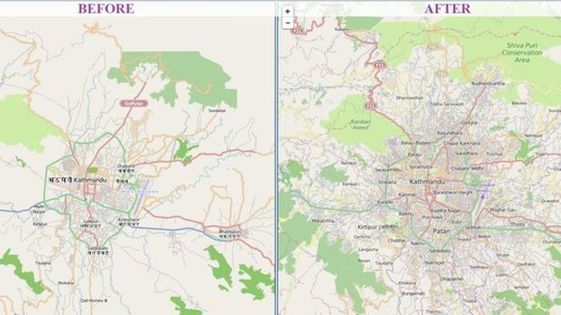
“When a terrible earthquake hit Nepal on April 25, our correspondents quickly began to report from the battered capital, Katmandu. By the beginning of this week, we were still reporting on the quake’s aftermath, but under a slightly different dateline: Kathmandu.  Why the switch?

There are many examples of foreign place names with more than one English rendering, especially if the local language uses a different alphabet, requiring the name to be transliterated for English. For Nepal’s capital, the ‘Katmandu’ spelling has long been widely used in English-language publications, and may still be more familiar to some American readers. But ‘Kathmandu,’ with an ‘h’ in the middle, has become more widespread in recent years, reflecting the preferred local usage.”

Tags: place, language, toponyms, Nepal.

Source: www.nytimes.com

China (not Mexico) is the top source of new immigrants to the U.S.

“In 2013, China replaced Mexico as the top sending country for immigrants to the United States. This followed a decade where immigration from China and India increased while immigration from Mexico decreased.”

Source: researchmatters.blogs.census.gov

While the Wall Street Journal is declaring this news, it is nothing new to the Census Bureau and those that look at the data rather than listen to the news media.  Some in the media would have you imagine that there is a flood of Mexican migrants entering the United States when the recent history shows that narrative simply doesn’t line up with data.  Would you have guessed that both India and China were sending more migrants to the U.S. than Mexico?  This is one of those examples where our preconceived notions interfere with actually ‘getting it right.’  This is why Hans Rosling started the Ignorance Project.  


Tags: Mexico, migration.

Redesigned Women’s Restroom Sign Breaks Old Stereotypes

The It Was Never a Dress campaign is not only taking social media by storm, it is also changing the way we view the traditional women’s bathroom sign. We see that the men’s figure wears pants and the women’s symbol wears a dress, but what if it was never meant to be a dress in the first place?  Tania Katan launched the popular #ItWasNeverADress campaign at last week’s ‘Girls in Tech‘ conference with the idea that the female figure is instead wearing a cape, asserting that women can be superheroes or anything else they choose to be.”

Source: www.mymodernmet.com

These restroom signs are so ubiquitous that we might fail to realize how they are a part of the gendered landscape in which we live.  This takes that well-known icon that was designed to generically represents women and makes us see the sign (and women maybe?) in a new light.  It’s delightfully playful and yet powerfully subversive; it challenges us to see beyond what we’ve been told to see and what society tells us what we should see.  The designers called this “an invitation to shift perceptions and assumptions about women and the audacious, sensitive, and powerful gestures they make every single day.”


Questions to Ponder: what other elements of the cultural landscape convey gendered messages? What impact do these message have? 

Tags: perspective, cultural norms, culture, gender, popular culture.

Romania’s Geographic Challenge

Stratfor explains Romania’s geographic challenge of remaining united while limiting the influence of larger surrounding powers. For more of these videos, visit http://arcg.is/1IeK3dT

Source: www.youtube.com

Stratfor produced a new video in their “Geographic Challenge” series.  I’ve updated my map which spatially indexes 70+ of their videos that are especially relevant to geography teachers.  These videos are great starting points for students that are researching a particular country.

TagsRomania, mapping, video, geography education, geopoliticspolitical.

Mapping US History with GIS

Source: www.gisetc.com

Get students thinking about patterns and the ‘why’s’ of history with a focus on the geography and movement behind the historical story.  This is the link to some of the digital maps that can help you put history in it’s place.  For more lesson plans, click here


Tags: historical, USA, mappingspatial, GIS,  ESRI, edtech.

iScore5

Source: www.iscore5.com

iScore5, the app for AP Human Geography is now available in the Apple Store for $4.99. With five levels of questions at increasing difficulty, bonus and double bonus rounds and a study mode with extensive vocabulary, APHG students and teachers alike will find this a great test prep resource and a fun and engaging way to help students earn that 5 (open disclosure–I was a part of the team that developed content for the app, but am NOT receiving any money for promoting it.  I’m sharing it because I’m excited about this new resource).  


Tags: APHG, teacher training, edtech.

The bizarre history of cellphone towers disguised as trees

They’re tall. They’re totally absurd. And they’re everywhere.

Source: www.vox.com

While I’ll admit that most of these cell towers aren’t fooling anyone that they are actually blending into the local landscape and ecosystem, there is a reason that we work to conceal elements of modern infrastructure that are considered unsightly. 

Tags: infrastructure, technology, landscape.

Blog at WordPress.com.

Up ↑