Search

GEOGRAPHY EDUCATION

Supporting geography educators everywhere with current digital resources.

Author

sethdixon

I am a geography professor at Rhode Island College.

The Political Geography of Hong Kong’s Protests

The territory’s residents are demanding democracy in city intersections, not central squares.

The significance of the protests, which have brought tens of thousands into the streets, lies not only in what protesters are demanding but also in where they’re demanding it—and where they’re not. Consider that pro-democracy demonstrations in Hong Kong typically happen in Victoria Park, which is about two and a half miles from Central District and which hosts the annual June 4 candlelight vigil commemorating the 1989 Tiananmen Square crackdown in Beijing. This time around, however, few police or protesters have ventured there.

The unpredictable, spontaneous geography of the protests is important precisely because it transcends the status quo. It is a testament to how serious these demonstrations are that they refuse to be contained.

Tags: political, conflictgovernance, China, East Asia.

Source: www.citylab.com

Brazil’s ethanol revolution

“United Nations, June 2008 – The bio-fuel, ethanol, is generating a revolution in renewable energy that could help reduce the world’s thirst for oil. In Brazil, the production of ethanol from sugarcane is booming, but what is not clear is the impact it is having on the industry’s sugarcane cutters.”  Transcript of video available here.

Source: www.youtube.com

Although ethanol is working well for Brazil, there is a growing literature supporting the idea that wide-scale ethanol production is not sustainable or environmentally beneficial.  This is a great example to demonstrate that economic and environmental policies are locally dependent on geographic factors and are not universally transferable.  Click here for a simple explanation of the differences in the economic and environmental differences in the production of sugar and corn-based ethanol.  


Tagsenergy, resourcespolitical ecologyagriculture, food production, land use, Brazil, South America.

Volcanic Landscape Change

“Mount Tavurvur, on Papua New Guinea’s New Britain Island, erupted on August 29, 2014, throwing ash (gray-brown areas of September image) over surrounding areas. Its last major eruption was in 1994. Tavurvur is a stratovolcano, a volcano consisting of alternating layers of lava and ash, and is located along the eastern edge of the Rabaul Volcanic Complex. Simpson Harbor forms part of the much larger (mostly submerged) Rabaul Caldera.”

Tags: disastersremote sensing, Oceania, Papua New Guinea, physical.

Source: climate.nasa.gov

Ebola easier to stop now than later

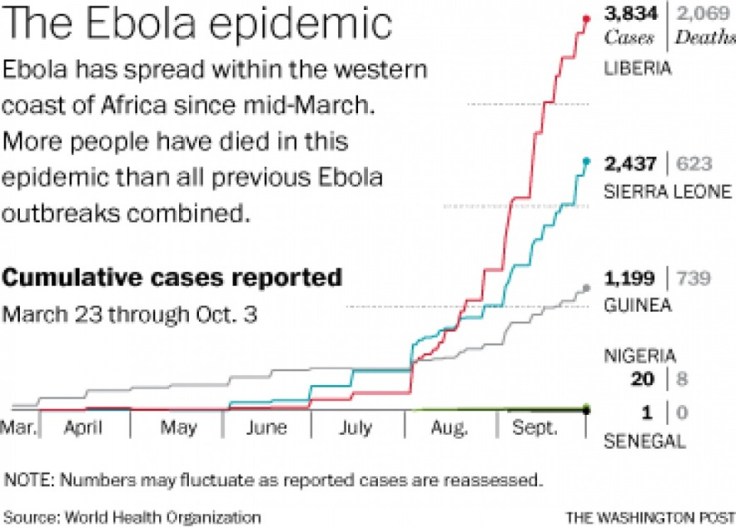
Help must come within weeks, or Ebola will require unimaginable resources. Data sources: http://nej.md/1wS4zeN & http://reliefweb.int/disaster/ep-2014-000041...

Source: www.youtube.com

The Ebola outbreak has been a horrific event and its spread has demonstrated many of the principles of viral diffusion.  Hans Rosling, the face of Gapminder, shows that immediate action now can prevent this from becoming a much worse crisis.  

Tags: medical, development, diffusion, Africa.
Geography Soup

“A great resource full of great links to accompany the Geography Soup channel on Vimeo.”

Source: www.slideshare.net

Geography Soup is a Vimeo channel designed to include interesting videos that are laden with geographic content in them.  This powerpoint slideshow has resources designed to help you get the most flavor and substance out of these (and any other) video resources.  This is especially great for K-12 students, physical and regional geography.

Tags: K12, video.

Cultural commodities and the idea of beauty

“In Venezuela, women are confronted with a culture of increasingly enhanced physiques fueled by beauty pageants and plastic surgery.”

Source: www.youtube.com

Unrealistic mannequins are nothing new…but this happens for some important cultural and economic reasons.  Society produces mannequins and the mannequins are a part of the cultural landscape that has some normative ideals of beauty and gender.  How does the media and society’s images of the ‘ideal body’ influence and shape cultural values and aspirations?  How has this changed over time and space?  

This New York Times article shows some of the connections between cultural norms, mannequin production and plastic surgery.  On the opposite side of the spectrum watch this video about the production of mannequins modeled on people with disabilities.  The tag line for the project was “because who is perfect anyway?”

Tags: Venezuela, South America, gender, popular culture, media, culture.

Protesters defiant amid Hong Kong stand-off

“Tensions escalated on Sunday when the broader Occupy Central protest movement threw its weight behind student-led protests, bringing forward a mass civil disobedience campaign due to start on Wednesday.  China’s leaders must be sitting uncomfortably in Beijing.  As long as the protests continue, there is a chance they will spread to the mainland, where many are unhappy with one-party rule.  But if the protesters hold their ground, how far will Beijing allow events to spiral before getting directly involved?”

Source: www.bbc.com

Hong Kong is probably the only place under the control of the People’s Republic of China (PRC) where protests of this type against the government could have started.  Hong Kong, once administered by the UK, was turned over to the PRC, but with special conditions that grant Hong Kong residents greater freedoms than those available the rest of the citizens of mainland China (One China, two systems).  Hong Kong students are protesting for full universal suffrage and for the right to choose their own candidates–something that Beijing is not willing to concede; some autonomy yes, power to make further breaks with Beijing?  No.  In addition to political control, some students feel economically marginalized by Beijing’s policies.  In 1997, when Hong Kong became a part of the PRC, it represented 18% of the GDP of the country; today it is only 3% of the PRC’s economic output. The Chinese govt. is currently blocking Instagram, trying to prevent the spread of viral images that show discontent. Still have questions?  You are not the only one as the world turns it’s gaze to China wondering about the strength of the Communist Party and the collective will of the protestors.

Tags: political, conflictgovernance, China, East Asia.

Thoughts on Geographic Integration

“This 18-stanza poem by Kit Salter, beautifully captures the importance of geographic thinking in any history/social studies curriculum.  This was shared by Dr. Vernon Domingo and the slides of his keynote address titled, Integrating Geography and History are available here.”  

Source: rigea.org

It was my privilege to hear my good friend and fellow geo-evangelist, Dr. Vernon Domingo share ideas on the importance of integrating geographic analysis in historical inquiry.  He shared a fabulous poem by Kit Salter, one of the pioneers in the Network of Geographic Alliances.  I’ll only share the first stanza here:


    How can there be a separate scene,
    For history without place
    How can there be events in time,
    For which there is no space?

Tags: geo-inspiration, geography educationspatial, historical.

Natural gas leaking from faulty wells, not fracked shale

“A new study adds to growing evidence that the risk of fracking contaminating drinking water wells is to due to problems with the lining of the gas wells, not the high-pressure fracturing of deep shale to release natural gas. In a new study, scientists examined isotopes of helium and two other noble gases to identify the source of methane found in drinking water wells in the Marcellus Shale of Pennsylvania and the Barnett Shale of Texas, areas where a lot of fracking has taken place. The pattern of isotopes suggested that the stray gas had leaked out of the well casing near the surface, rather than escaping from the fracked deep shale, according to a story in The Dallas Morning News. The findings will be published online this week in the Proceedings of the National Academy of Sciences.”

Tagsenergypollution, resources, environment, environment modify, ecology.

Source: news.sciencemag.org

Blog at WordPress.com.

Up ↑