Search

GEOGRAPHY EDUCATION

Supporting geography educators everywhere with current digital resources.

Author

sethdixon

I am a geography professor at Rhode Island College.

Wedding, Gangnam Style: S. Korea attracts affluent Chinese

South Korea’s tourism ministry estimates that more than 2.5 million Chinese visitors spent an average of $2,150 per person in 2012, more than any other nationality. That’s helping companies such as iWedding, which is the largest of the South Korean wedding planners hosting Chinese tourists, to flourish.

Chinese look up to South Korea for its sophisticated urban culture, style and beauty,” said Song Sung-uk, professor of South Korean pop culture studies at the Catholic University of Korea in Seoul. “Rather than visiting traditional palaces or shopping for antiques, they would rather go to Gangnam to experience state-of-the-art shopping malls.”

Seth Dixon‘s insight:

See on www.usatoday.com

Germany Fights Population Drop

As German towns work to hide the emptiness, demographers say a similar fate awaits other European countries, with frightening implications for the economy.

Seth Dixon‘s insight:

I’ve be recently writing about declining populations on my Geography Education page; in the past I saw this as a demographic issue with primarily economic roots.  The more and more I read about this I see it as having profound cultural implications.  Countries such as Germany have shrinking fertility rates, but to continue to strengthen their economy and create jobs they have guest worker programs.  As the country becomes more multicultural, Germany has faced cultural difficulties as ethnic Germans and immigrants (and their descendents) rethink what it means to be German.  

See on www.nytimes.com

Rethinking Agriculture


“Growing Power is a national nonprofit organization and land trust supporting people from diverse backgrounds, and the environments in which they live, by helping to provide equal access to healthy, high-quality, safe and affordable food for people in all communities.”

Seth Dixon‘s insight:

There has been a revitalization in urban gardening as many city dwellers feel disconnected from their food systems; urban gardening is a way for people to actively control what they are ingesting into their systems many fear some of the modern agricultural methods.  Based in Milwaukee, WI, Growing Power has created an interesting combination of vegetable gardening and aquaponics for the urban environment. 

Tags: food, agriculture, unit 5 agriculture.

See on www.youtube.com

This Pulsing Earth

Spring comes, then summer, fall and winter and if you are off the planet with a camera looking down at Earth, the seasons seem like breaths. Speed up the imagery, and the planet seems to pulse, like a living thing.

Seth Dixon‘s insight:

I’m sorry that this site cannot display the animated GIF version, but just follow the link to see how the seasonal rthymns of the climate and biomass pulsate (at a much slower rate than our bodies, but still a system with it’s ebbs and flows).  

Tags: physical, remote sensing, geospatial, biogeography, weather and climate, Arctic.

See on www.npr.org

Declining Fertility Rates

The American birthrate is at a record low. What happens when having it all means not having children?

Seth Dixon‘s insight:

The demographic transition is an important model in human geography that explains many of the declining birth rates in the more developed parts of the world and the high fertility rates in less developed countries.  This is often discussed within a demographic and economic context.  This article from TIME Magazine struck quite a nerve recently. While it noted that from 2007 to 2011 the fertility rate dropped 9% in the United States, it wasn’t the statistical analysis that got people talking.  What did strike a nerve was the discussion of the cultural shifts that are at the roots of this demographic decline, the cover picture that glamorizes a childfree life and a subtitle (when having it all means not having kids) that idealizes not having children.  The demographic transition has what some call a ‘cultural lag’ where a large family size is still culturally preferred even if it no longer makes the same agricultural and economic sense as it did in the past.  This piece demonstrates the new secularized ‘post-cultural lag’ values that see children as obstacles to preferable career paths and a limitation on their freedoms.  For one commentator that was opposed to this article’s cultural perspective see this article.  While these pieces are decidedly not neutral on the subject, that is the point; opinions widely differ on the cultural impact of these demographic shifts.   

Tags: USA, declining population, population, demographicsmodels, popular culture.

See on www.time.com

g9510.20_Childfree.Cover

Jamaica Focuses on Farming

“The country has taken on a bold new strategy in the face of expensive food imports: make farming patriotic and ubiquitous.”

Seth Dixon‘s insight:

Jamaica’s historical agricultural products are cash crops that were connected to the plantation economy and in turn slavery.  Today, Jamaica is restructuring their agricultural production to address local food security issues rather than global market commodities.  This push will increase food security and to do so the government started a campaign with the slogan “grow what we eat, eat what we grow.” Grocery stores in Jamaica now identify local produce with large stickers and prominent displays as school children, backyard gardens and local businesses are all a part of the new agricultural initiative.  


Tags: agriculture, locavore, Jamaica, Middle America.

See on www.nytimes.com

What’s in a Name?

The Pentagon has upset patriots by labeling the body of water between Korea and Japan in an exhibition depicting various battles fought during the 1950-53 Korean War as “Sea of Japan” rather than “East Sea.”

Seth Dixon‘s insight:

Earlier this week I posted on whether a group of islands off the coast of Argentina should be called the Falkland Islands or Las Malvinas.  There is some geopolitical significance to which name you ascribe to particular places.  Does it matter if I call the sea to the east of the Korean Peninsula the “East Sea” and if someone else refers to this same body of water west of Japan the “Sea of Japan?”  For many years the Sea of Japan has been the defacto name internationally and South Korean officials have lobbied (quite successfully) to bolster the legitimacy of the name within the media, publishers and cartographers and other governments.  Last summer, a worker in the South Korean government’s Ministry of Foreign Affairs requested that I share some resources that state South Korea’s position(see also this 10 minute video), showing their commitment to this rebranding effort.    

Questions to Ponder: What other places have multiple names?  What are the political overtones to the name distinctions? What are other tricky places on the map where distinct groups would label/draw things differently?  Is the map an ‘unbiased’ source of information? 


Tags: language, toponyms, South Korea, historical, colonialism, cartography.

See on english.chosun.com

Understanding Global Statistics

“Infographics to explain global statistics.”

Seth Dixon‘s insight:

Understanding global statistics is nearly impossible if you can’t grasp just how large of a quantity 7 billion is.  This set of infographics are a great resource for teaching some of basic global demographics. 

Apparently the latest internet craze is a 40 maps mix-tape.  See the Washington Post’s 40 Maps that explain the World for an interesting, eclectic compilation of maps as well as 40 maps they didn’t teach you in school from Bored Panda and 40 maps that help you make sense of the world from Twisted Sifter.

Tags: statistics, populationinfographic, K12.

See on www.freetech4teachers.com

Maps as a Common Core Reading Tool

“Did you know know that there are some excellent reading opportunities in Story Maps? This map serves as a table of contents for using Story Maps with Common Core Reading Standards.  Reinventing the wheel isn’t necessary with so many great maps and data sources that will help us teaching reading, writing and thinking with engaging content and little effort.”

Seth Dixon‘s insight:

The recently revised Geography for Life standards have been aligned to show how geographic skills can be taught within the Common Core framework.  The National Geographic Society, in cooperation with the National Council for Geographic Education and the Network of Alliances for Geographic Education created Connections to be that link (for grade specific Common Core/Geography resources click here). 

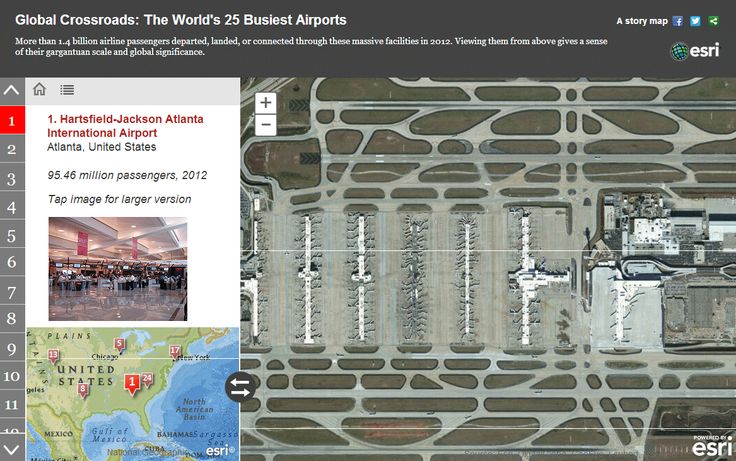
So how is this to be done? This storymap shows ten great examples of maps that can be used as reading documents, one for each of the 10 ELA Reading Standards. 

TagsmappingEnglish, GISESRIgeography education, geospatial, edtech.

See on www.barbareeduke.com

Create a free website or blog at WordPress.com.

Up ↑