Search

GEOGRAPHY EDUCATION

Supporting geography educators everywhere with current digital resources.

Author

sethdixon

I am a geography professor at Rhode Island College.

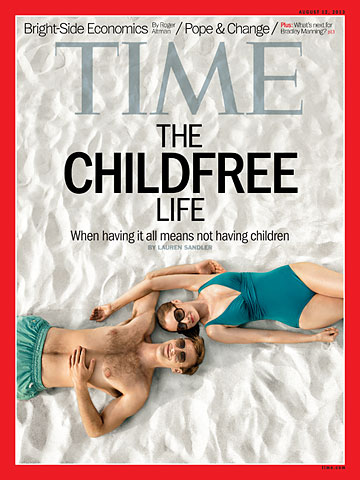
In China, one-child policy compounds loss of child for parents

One-child policy leaves some parents childless, hopeless and facing financial ruin in old age.

Seth Dixon‘s insight:

Population programs can have have diverse unintended consequences.  Many couples in China who have lost a child not only face the heartache of loss, but have also lost their economic future since that one child was supposed to support them in their old age.  Some elderly parents have a child, but one that does not financially support them as the cultural norms of the past would have required of the children.  These ‘orphan grandparents‘ are casualties in the changing cultural, demographic, and economic patterns in China.

See on www.washingtonpost.com

The 7,000 Streams That Feed the Mississippi River

 A new online tool released by the Department of the Interior this week allows users to select any major stream and trace it up to its sources or down to its watershed.

See on www.slate.com

Argentina renews Falklands claims

Argentine President Cristina Fernandez de Kirchner renews her claims for sovereignty of the Falklands at a UN Security Council meeting.

Seth Dixon‘s insight:

Are they the Falklands or Las Malvinas?  It’s not just a simple linguistic translation but also a statement of territoriality and geopolitical recognition.  This article nicely summarizes the current situation. For a great teaching resource on the historical ebbs and flows in this longstanding dispute between Argentina and the UK, see the second slideshow in this series of  AP Human Geography talks that was given at NCGE earlier this month. 

Tags: Argentinaborders, political, territoriality, sovereignty.

See on www.bbc.co.uk

The World Religions Tree

Dynamic infographic on world religions (don’t be intimidated by the page being in Russian… The graphic is not).

Seth Dixon‘s insight:

Religious traditions are interconnected and often share common roots and ancestries.  This stunning infographic is an attempt to visually reconcile these disparate strands of faith into one cohesive whole (the image above is far too small to do it justice, but I tried to show the image at various scales).

Tags: perspectiveculture, religion, culture, infographic, diffusion.

See on funki.com.ua

Is This Land Made For You And Me?

“Lyrics to ‘This Land Is Your Land’ from WoodyGuthrie.org. And if you can’t watch the video for some reason, here’s a transcript.”

Seth Dixon‘s insight:

This video that I originally found on Upworthy shows that even classic songs of Americana that might seem jingoistic may have had a subversive beginning.  I never knew there was a final verse to this Great Depression era song that references iconic cultural landscapes; know that I’ve heard it I see why it isn’t taught to school kids, but I wish it was.   

In the shadow of the steeple I saw my people,
By the relief office I seen my people;
As they stood there hungry, I stood there asking
Is this land made for you and me?
 

Tags:  poverty, place, USA, landscape, culture, music.

See on vimeo.com

Burka Avenger

“Burka Avenger is a new Pakistani kids’ show about a mild-mannered teacher who moonlights as a burka-clad superhero.”

Seth Dixon‘s insight:

I first learned of the Pakistan’s new animated TV series the Burka Avenger last week from an NPR podcast and eagerly wanted to know more.  Some are hailing the Burka Avenger to be Pakistan’s answer to Wonder Woman, fighting for the rights of the oppressed.  There has also been a lot of criticism concerning the role of the burka juxtaposed with this heroine.  For many, they see the burka solely as a symbol of female oppression and feel that a heroine shouldn’t be donning the clothing of the oppressed (my opinion?–C’mon, it’s the logical masked outfit for a female superhero trying to be incognito in the tribal villages of Pakistan).  I find this pairing of traditional gender norms and clothing coupled with pop culture’s superhero motifs to be a fantastic demonstration of how cultures mesh together.  Globalization doesn’t mean all cultures are the same; we often see highly localized and distinct regional twists on global themes.  If this idea intrigues you, see the TED talk below.

 Tags: Pakistangender, popular culture, SouthAsiaglobalization, culture, Islam.

TED Talks At TEDGlobal University, Shereen El Feki shows how some Arab cultures are borrowing trademarks of Western pop culture — music videos, comics, even Barbie — and adding a culturally appropriate twist.

This TED talk cleverly discusses the cultural processes of globalization by examining two examples from the Islamic world.  In the examples of the TV station 4Shbab and the comic book series The 99 show that all global cultural interactions don’t have to result in a homogenous “melting pot.”  Local cultural forces can tap into the powers of globalized culture that can create dynamic local cultures that are both intensely local and global.

Questions to Ponder: What does the speaker mean when she by refers to cultural interactions as a mesh (as a opposed to a clash or mash) of civilizations?  What other examples of cultural meshes can you see that show these processes?

Tags: religion, culture, Islam, globalization, popular culture, unit 3 culture.

See on www.ted.com

burka

Exclaves and Sovereignty

_69117326_gibraltar_artificial_reef_464“Prime Minister David Cameron is ‘seriously concerned’ about the escalation of tensions on the border between Spain and the British territory of Gibraltar.”

Seth Dixon‘s insight:

This video and article briefly show the reasons behind the current tension between Spain, NATO allies and fellow EU members.  The deeper, underlying issues though are all fundamentally rooted in the complex local political geography.  As an exclave of the UK on a peninsula connected to the Spanish mainland that controls access to the Mediterranean Sea, there is naturally going to be friction over this unusual political configuration. Spain, in what the chief Minister of Gibraltar calls “sabre-rattling,” is flexing its muscles and considering using their border and airspace as a political leverage.  Spain is upset that Gibraltar has created an artificial reef in waters that their fishermen use.  Spanish fisherman have recently condemned the escalating political rhetoic.

Questions to Ponder: Why are both parties politically and culturally invested in this piece of territory?  What challenges are there for a small exclave when neighbors aren’t friendly? How does Spanish and British suprantional connections impact this issue?

Tags: borders, political, territoriality, sovereignty, Spain, Europe, autonomy.

See on www.bbc.co.uk

Earth Structural Layer Cake

“One of their lessons [in a series involving geologic sciences] involved teaching the kids about the structure of the Earth. One of her friends came up with the idea of presenting a model of the Earth made out of cake. So my sister asked me if I could make a spherical cake with all the layers of the Earth inside it.”

Seth Dixon‘s insight:

I definitely don’t have the skills to pull off this amazing cake, but I can certainly appreciate the hard work and the amazing teaching tool this cake is (tutorial and recipes for concentrically layered cake here).  Crafts are hardly fluff pieces; my daughter last year had to create a craft representing the inner core, outer core mantle and crust.  She loved working with fruits of various sizes (blueberry was the inner core, followed by strawberry, kiwi and orange with the peel) but the lesson stayed because of the visual and tactile connection that she had with the project.   

Tagsphysical, fun, art, K12.

See on cakecrumbs.me

Population Density

“[This map’s] an unabashedly generalized interactive population density map inspired/stolen from a map by William Bunge entitled Islands of Mankind that I came across on John Krygier‘s blog. I thought Bunge’s map was a novel way to look at population density, and I’ve tried to stay close to the spirit of the original.”

Seth Dixon‘s insight:

At the NCGE this week, I was pleased to hear a presentation from Alexander Murphy, a giant in the academic world.  He shared this interactive map from Derek Watkins, which is the best map I’ve ever seen to teach global population distribution patterns.  It is removed all extraneous information and allows the user to focus on the areas of heavy settlement and limited population.  The map can show regions that are settled at densities from 15 to 500 people per square mile; the changes at various densities are visually staggering and powerfully telling.  I’ve shared some other maps that would work very nicely together with this in a lesson on global population settlement patterns.  

Tags: density, populationvisualization, mapping.

See on www.dwtkns.com

Blog at WordPress.com.

Up ↑