Search

GEOGRAPHY EDUCATION

Supporting geography educators everywhere with current digital resources.

Author

sethdixon

I am a geography professor at Rhode Island College.

How Eratosthenes calculated the Earth’s circumference

“In the mid-20th century we began launching satellites into space that would help us determine the exact circumference of the Earth: 40,030 km. But over 2000 years earlier, a man in Ancient Greece came up with nearly the exact same figure using just a stick and his brain.”

Source: www.youtube.com

Eratosthenes is often referred to as the “father of geography” for creating meridians and parallels on his maps to organize global information, classifying climatic zones, and as shown in the video, calculating the circumference of the Earth. Plus, he coined the terms so he gets the credit. If you have never pondered the meaning of the word “geometry,” the accomplishments of Eratosthenes will certainly show that the mathematical prowess was at the heart of expanding our collective geographic knowledge (additionally, here is a retro Carl Sagan in a video clip from Cosmos that inspired this clip).    


Tagsmapping, math, locationSTEM, historical.

27 stunning satellite images that will change how you see our world – Geoawesomeness

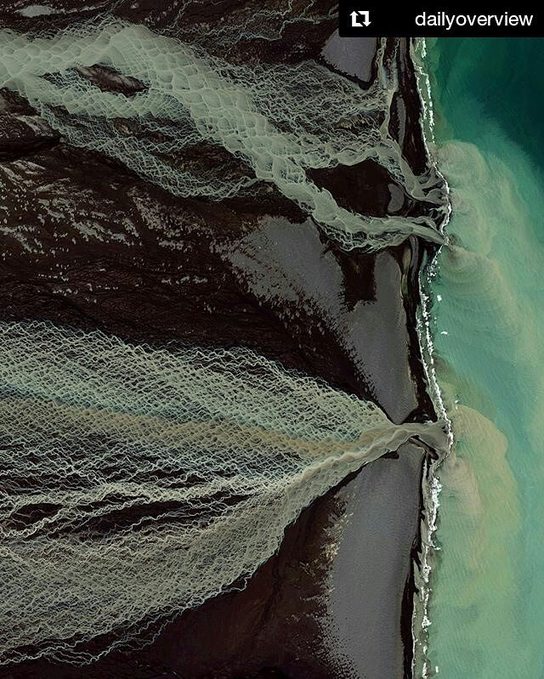
“The images come from the amazing book called “Overview: A New Perspective of Earth”. that just hit the stores around the world. The book is a stunning and unique collection of satellite images of Earth that offer an unexpected look at humanity, derived from the wildly popular Daily Overview Instagram account followed by almost 0.5 million people.”


Hagadera, seen here on the right, is the largest section of the Dadaab Refugee Camp in Northern Kenya and is home to 100,000 refugees. To cope with the growing number of displaced Somalis arriving at Dadaab, the UN has begun moving people into a new area called the LFO extension, seen here on the left. Dadaab is the largest refugee camp in the world with an estimated total population of 400,000.

Source: geoawesomeness.com

Flawed Justice After a Mob Killed an Afghan Woman

At first, the trial and convictions in the death of Farkhunda Malikzada seemed a victory in the long struggle to give Afghan women their due in court. But a deeper look suggests otherwise.

Source: www.nytimes.com

DISCLAIMER: I strongly recommend that the video not be shown in class (I wouldn’t show the embedded video in my college classes, but I would discuss the article).  The video is as horrific as anything I’ve ever seen and yet I feel compelled to share the story because it is important to understand the cultural and institutional problems of Afghanistan to get a handle on the deeply entrenched issues. This also shows parts of Afghanistan are seeking to make the transition into a more modern society, but there are other elements that are firmly rooted in the past where mob rule was once more easily justified.  


Tags: Afghanistan, culture, developmentgender

Earth Science Memes

This link is where you will find funny science pictures, jokes, current events and other miscellaneous things pertaining to science.

Source: lacrossearthscience.weebly.com

Because we all need a laugh sometimes…and if we can teach something at the same time, then even better.   


Tagsphysical, geomorphology, funart.

A Medieval Abbey Trapped by Tides and Time

“Mont Saint-Michel emerges from the tides in Normandy, France, like an ancient village from a fairytale. The coastal town built on a massive granite rock cuts a dramatic silhouette against the sky, rising from disappearing marshes to a Gothic Abbey at its height. With a permanent population of around 50, this popular tourist destination has a history dating back to at least the Roman era. Fancy a tour before the tides roll in?”

Source: www.youtube.com

Coastal physical geography produces some beautiful landforms such as tombolos.  A tombolo is created when sand deposits attach an island to a larger piece of land–think of it as special type of isthmus.  Mont St. Michel is the world’s most famous example because of the iconic walled city with crowned with a striking medieval abbey.  This is one of those fascinating places for both the human and physical geographer.   


Tags: water, physical, coastal, geomorphology, landformsFrance, historical, tourism.

Data USA

The most comprehensive visualization of U.S. public data. Data USA provides an open, easy-to-use platform that turns data into knowledge.

Source: datausa.io

ISIS and the U.S. Presidential Election

The United States is already taking some steps to roll back the Islamic State (ISIS) and restrict its resources and recruits, including airstrikes, armin

Source: www.youtube.com

This is a non-partisan post and a video that is fairly balanced; this video nicely lays out some of the cultural and political factors that the next president of the United States should consider when crafting foreign policy in the especially problematic Middle East.  


Tags: Syria, war, conflict, political, geopolitics, Iraq, devolution, terrorism, ISISMiddle East.

The Dakota Access Pipeline Map

“Thousands of Native Americans and their allies have gathered on unceded Sioux land delimited by the 1851 Treaty of Fort Laramie to try and stand in the way of the “black snake” that could poison the Standing Rock Reservation’s water supply. Many have noted that the pipeline corridor was repositioned from its original route north of Bismarck after white citizens spoke up against the threat a spill would pose to their drinking water ― a threat duly recognized by the U.S. Army Corps of Engineers. Yet the Corps failed its federal mandate for meaningful consultation with the Standing Rock Tribe before signing off on a route that moved the pipeline to their doorstep.”

Source: www.huffingtonpost.com

Maps can tell truths, and maps can be used to obscure other truths. Creating a map, choosing what data to include (and exclude) is an inherently political act.  Maps have the power to convey geographic perspectives that might otherwise be muted.


Tags: industryconflict, economic, energy, resources, environmentindigenous, ecology.

The most detailed 3D world model

“How to create a detailed 3D topographic model of the entire Earth? As you could suspect the only feasible way to do it is using satellites. But a regular satellite scan will not be detailed enough to give you a meter-level accuracy. Instead of using a single satellite they’ve launched to an orbit two satellites orbiting next to each other capturing stereoscopic scans of the surface of the Earth (that scan the same areas from slightly different angles). Now this data has been processed into a seamless 3-dimensional world map of unprecedented accuracy of 1 meter. The data and the press release are publicly available.”


Tags: geospatial, images, remote sensing.

Source: geoawesomeness.com

Blog at WordPress.com.

Up ↑