Search

GEOGRAPHY EDUCATION

Supporting geography educators everywhere with current digital resources.

Category

Scoop.it

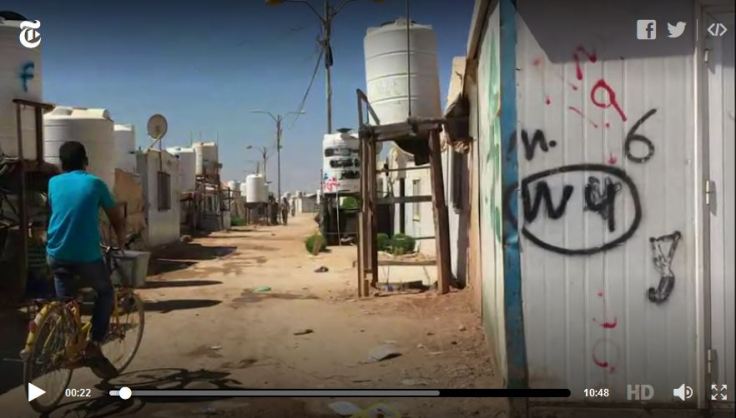
Video: Step Into a Refugee Camp

The Zaatari refugee camp in Jordan is one of the largest Syrian camps in the world. In the fall, we visited the camp live with our audience. Here’s what we heard from the refugees and from you.

Source: www.nytimes.com

If you want to humanize the massive refugee crisis, and have lives and stories to connect to statistics, this 11 minute video shows what life is like in a refugee camp, and goes into the hopes, dreams, and life stories of the refugees. 


TagsMiddleEast, Jordan, Syria, political, refugees.

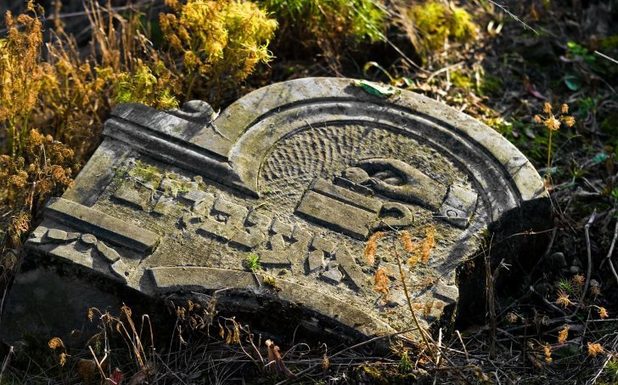
Introductory Field Guide to Decoding Cemetery Symbols

Full of ornate stonework, cemeteries are beautiful places both to mourn the deceased and celebrate the lives of those who have passed. Yet there is more to these places than carvings of skulls, crosses and crossbones. A snapped rose branch, for instance, indicates a life ended too soon. Wheat, meanwhile, signifies a life fully lived, then taken by

Source: 99percentinvisible.org

Cemeteries are great places for students to analyze the cultural landscape, learn about the heritage of the local ethnic and religious groups, and think about spatial relationships in on a smaller scale.  This is a great guide to some of the intentional symbolism embedded in cemeteries–field work for students can start in the local cemetery. 


Tags: cemetery, landscape, place.

Funeral Customs Around the World

“A funeral is a ceremony marking an individual’s death. Funeral customs vary widely between culture, religion, and geographic area. These customs are based on the beliefs and traditions of our ancestors. Although there are a multitude of different rituals, there are also some that are practiced worldwide. These include burials, cremations, and spirit offerings.”

Source: rigea.maps.arcgis.com

This story map was created by one of my students, exploring some of the unusual funerary customs around the world. 


Tag: cemetery, cultureStoryMap, worldwide.

Easiest Languages to Learn

“Learning another language is a good thing, but with only a small percentage of Americans, it seems most of us can never dream of achieving this common goal.”

Source: www.youtube.com

This video’s humor isn’t always classroom appropriate, but it conveys several important ideas about languages.  First, languages that are part of the same language family are easier to learn (leading to more cultural diffusion among speakers).  Second, not all languages are equally important on a global scale even if they are similar (some languages are ‘docked’ on this list). This list is specifically for English speakers: 

  1. Dutch
  2. Frisian
  3. Afrikaans
  4. Esperanto
  5. Norwegian
  6. Swedish
  7. Italian
  8. French
  9. Portuguese
  10. Spanish


Tags: language, culture, diffusion.

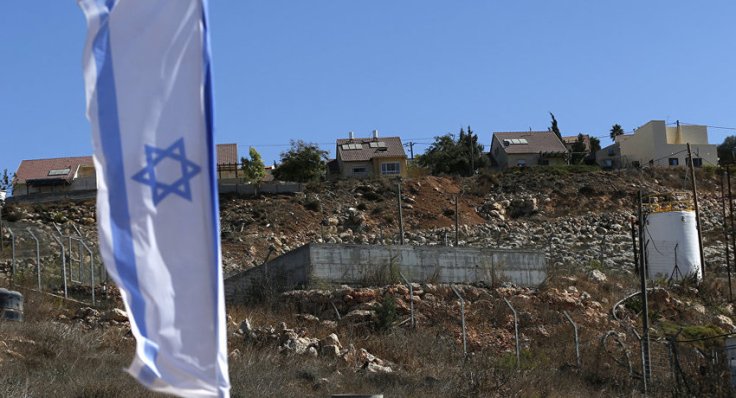
Amid ISIS and Syria, Let’s Not Forget The Quest for Peace In Israel/Palestine

The Israeli-Palestinian conflict has rarely been so far from finding a resolution. Since the cessation of hostilities between Israel and Hamas during the summer of 2014, the desire to seek peace has been diminishing, and instead growing tensions have prevailed, punctuated by stabbings and car-ramming attacks by the Palestinians, and violent acts including arson by the settlers. Yet, the climate has rarely been so favorable to a resolution of the conflict. The chaos that is sweeping the Middle East has been a game-changer in relation to Israel and the Arab countries.

Source: www.huffingtonpost.com

Many Palestinians and Israeli are fearful of a possible breakout of ISIS out of Syria and into Gaza and the West Bank. According to the authors of the op-ed, Europe needs to come together and provide leadership and a plan to enforce so that these issues do not reoccur. The last 17 years have been filled with failed attempts but breaking this cycle of violence is not impossible. 


Tagsop-ed, Israel, Palestine, conflict, political, Middle East.

The Staggering Wealth Of Mexico City

Walk on the streets and you´ll be exposed to its informal economy: people who do what they can to eke out a living including washing windshields, selling food, or even singing, dancing, and performing acrobatics for a tip.

What Americans may not know is that Mexico City is home to the wealthiest people, the poshest neighborhoods, the most exclusive shops, entertainment venues, and cultural centers on the planet.

Source: xpatnation.com

Mexico City has been the economic center of Mexico for a long time and is a true primate city. “Wealth accumulation in Mexico City has historically been concentrated in the hands of a few. In colonial times, the elite was mostly composed of Spanish-born immigrants who held high-ranking offices or worked as business owners or export-oriented merchants. Later, the wealthy were those who owned large estates known as haciendas…It is estimated that around 40 percent of Mexico’s income is owned by just 10 percent of its population, while 52.3 percent of Mexican citizens live in poverty.”


Tags: urban, megacitieseconomic, labor, Mexico.

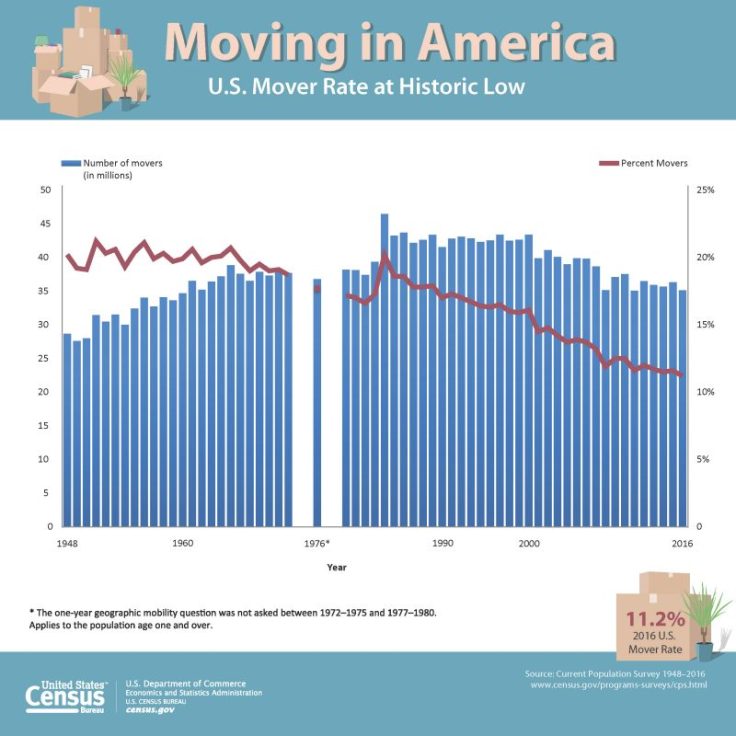
Americans Moving at Historically Low Rates

The percentage of Americans moving over a one-year period fell to an all time low in the United States to 11.2 percent in 2016.

Source: www.census.gov

In the past, when I’ve taught world regional geography, I’ve often discussed a major regional characteristic of North America is the high degree of internal mobility…that appears to be changing and it brings up more questions than answers.  


Questions to Ponder: Are there regions in the United States where people are less likely to move?  How does mobility impact economic, cultural, and political patterns in the United States? Why are less people moving now than before?  


Tags: mobilitymigration, USA, statistics.

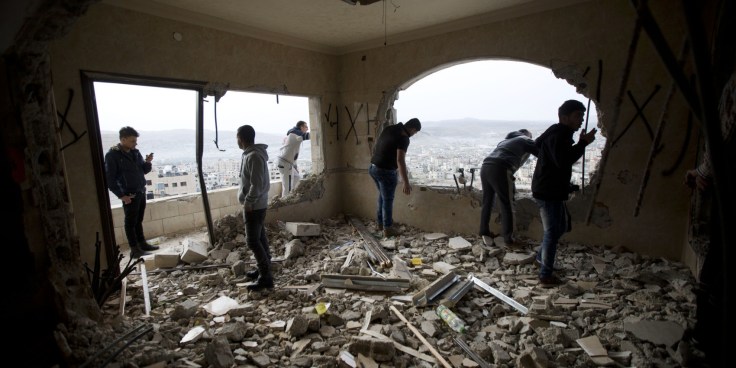
Israeli-Palestinian Conflict updates, 2016

The Israeli-Palestinian conflict is one that powerfully divides the international community.  Of those living within the state of Israel, Pew Research data shows that they are often deeply divided based on religious affiliation. Not surprisingly, those divisions extend into how they view the peace process, West Bank settlements and U.S. support.  Although the conflict is portrayed as a battle between religious groups, it can be more fairly assessed as two nationalistic groups competing for land.  Broadly speaking, the Muslim world has sided with the Palestinians, and the U.S. and its NATO allies have defended Israel.   In the United Nation’s Security Council, the United States’ veto power has been use to strike down resolutions that would condemn Israeli settlement in the militarily occupied lands of the West Bank.  The 2016 UN resolution that passed 14-0 (with only the U.S. abstaining) says that Israel’s settlements on Palestinian territory occupied since 1967, including East Jerusalem, have “no legal validity” and demands a halt to “all Israeli settlement activities,” saying this “is essential for salvaging the two-state solution.”


These settlements are considered by most of the international community to be illegal, and the UN has condemned them, but since the U.S. has always vetoed this, Israel has never been formally reprimanded.  Earlier this week, the U.S. abstained from the vote, and the many see the U.S. position as hypocritical, (Secretary of State John Kerry strongly defended the position).


Some highly partisan supporters of Israel do not see Israel’s actions as the problem, primarily because Israel’s neighbors have traditionally not recognized its right to exist, and attacked it many times.  Therefore, they see Israel’s actions as necessary for the security of Israel, and do not see Israel’s settlements in the West Bank as illegal since Palestine isn’t a state that was ever legally accepted. 


Tags: Israel, Palestine, conflict, borders, political, Middle East.

Source: geographyeducation.org
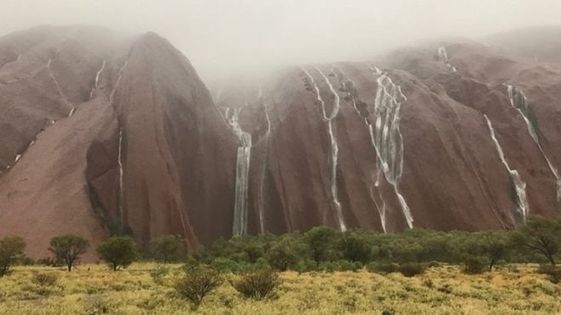
Australia flood: Uluru national park closed after huge rainfall

Record rainfall in central Australia leads to flash floods and the closure of Uluru national park.


Tags: Australia, environmentweather and climate, water.

Source: www.bbc.com

Create a free website or blog at WordPress.com.

Up ↑