Search

GEOGRAPHY EDUCATION

Supporting geography educators everywhere with current digital resources.

Category

Scoop.it

Speaking the “Language” of Spatial Analysis

“Spatial analysis has always been a hallmark of GIS, the ‘numerical recipes’ which set GIS apart from other forms of computerized visualization and information management. With GIS we pose questions and derive results using a wide array of analytical tools to help us understand and compare places, determine how places are related, find the best locations and paths, detect and quantify patterns, and even to make spatial predictions.”

Source: blogs.esri.com

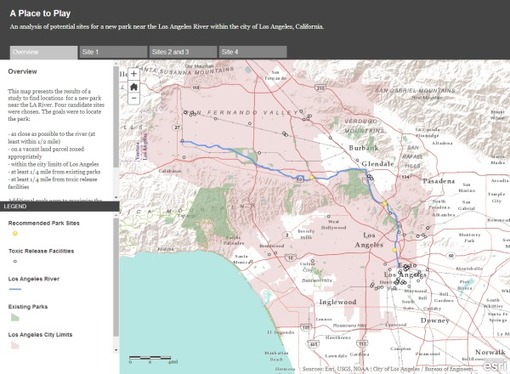
GIS is a key tool in spatial analysis, but it can also be a driving force in using math, science, technology and (yes) geography as interdisciplinary ways of teaching the curriculum.  StoryMaps can be rich with images and videos, but also filled with data at a variety of scales.  ESRI has share a “Maps we love” page with excellent examples of Story Maps and carefully explains WHY these maps work and HOW they were made.  Are you new to using the Analysis tool in ArcGIS Online?  Try this exercise on analyzing flood risk to guide you through some of the steps to learn what is possible for a project of your own.  What stories can you tell in this rich, visual format?  What visual template shown might lend itself best for that sort of project? 


Tagsmapping, GISESRIgeography education, geospatial, edtech.
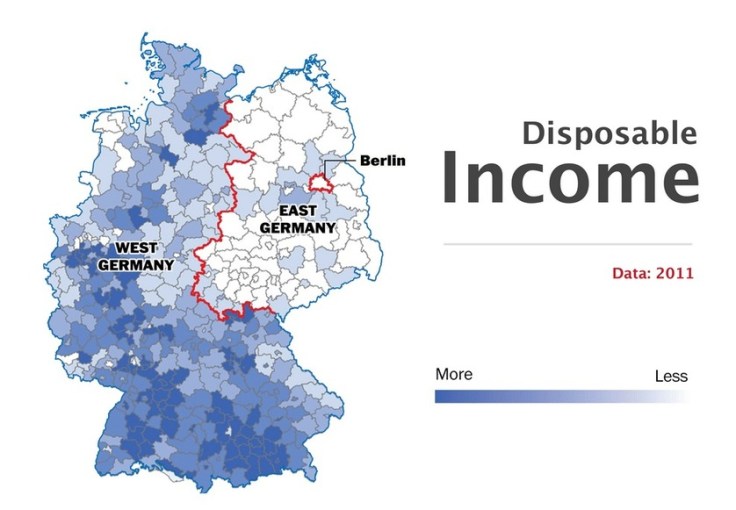
Germany reunified 26 years ago, but some divisions are still strong

“While 75 percent of Germans who live in the east said that they considered their country’s reunification a success, only half of western Germans agreed. With eastern and western Germans blaming each other for past mistakes over the past two years, that frustration has likely increased. Younger citizens, especially — who do not usually identify themselves with their area of origin as strongly anymore — have grown worried about the persistent skepticism on both sides. But where do those divisions come from? And how different are eastern and western Germany today?”

Source: www.washingtonpost.com

This series of 10 maps (and 1 satellite image) highlights many of the cultural and economic divisions between East and West, despite efforts to in the last 26 years to smooth out these discrepancies. The social geographies imposed by the Iron Curtain and the Berlin Wall are still being felt from this relic border and will for years to come. 


Tags: Germany, industry, laboreconomichistorical, politicalborders.

Reading the world in 196 books

“I set myself the challenge of trying to read a book from every country (well, all 195 UN-recognised states plus former UN member Taiwan) in a year to find out what I was missing.

With no idea how to go about this beyond a sneaking suspicion that I was unlikely to find publications from nearly 200 nations on the shelves of my local bookshop, I decided to ask the planet’s readers for help. I created a blog called A Year of Reading the World and put out an appeal for suggestions of titles that I could read in English.”


Tags: languagecultureworldwide, English.

Source: www.bbc.co.uk

Possibilism: Crash Course #2

“Possibilism, while accepting that physical environments have some affect on the outcomes for human social orders, they’re not the only factor by a long shot. Today, we’re talking about human agency, and the Human Geographers who developed the ideas that make up possibilism. Individuals and groups make the decisions that shape their societies, and while the world sometimes shapes these social orders, people also increasingly affect their world in return.”

Source: www.youtube.com

Just like that first Crash Course video on  environmental determinism, this video on environmental possibilism treats complex ideas in a cut-and-dry manner.  All the videos in Crash Course human geography series have an incredibly quick pace and these particular ideas need nuancing and (for most students) time to frame the factors and issues at hand. So if this is someone’s first introduction to environmental possibilism or determinism, they are likely to be both overwhelmed and given a slanted perspective on the topic.  I’m still holding out hope for when this series reaches the thematic content of human geography instead of the theoretical underpinnings of past geographical philosophies.


Tags: crash course, environmental determinism, environmentAPHG, video.    

The Environmental Cost of Consumption

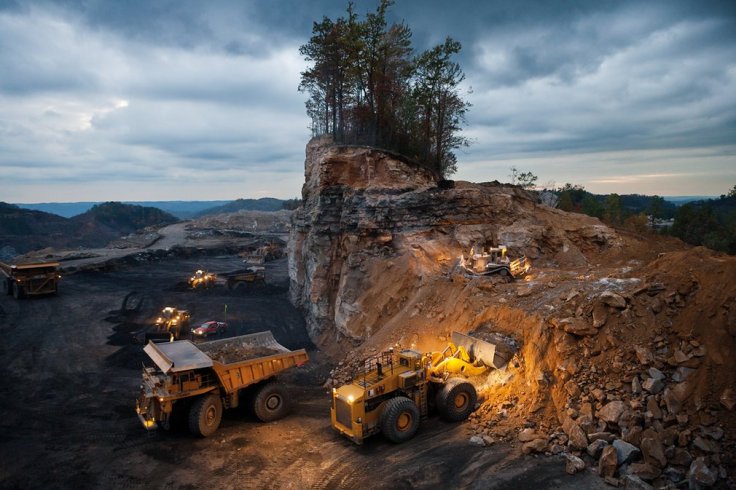
Environmental artist J Henry Fair captures the beauty and destruction of industrial sites to illustrate the hidden impacts of the things we buy – the polluted air, destroyed habitats and the invisible carbon heating the planet

Source: www.theguardian.com

This artistic portrayal shows the extent of the massive modifications we’ve made to the landscape with some striking examples.  Pictured above is one of 17 images in this article that promotes the launch of the new book entitled, Industrial Scars: the Environmental Cost of Consumption.  In the image above we see mountaintop coal mining in West Virginia.  “This lonely stand of trees disappeared in barely a day. The small bulldozer on the upper level pushes loose material down to the loader, which scoops it up into the next earth mover in line, which will in turn dump it into a nearby ‘valley fill’, burying the stream there.” This might be the most beautiful and ugly set of images that you’ll see today. 


Tags: pollution, industry, sustainability, images, art, landscape, unit 6 industry.

Dreadlocks Decision Raises Another Question: What Is Race?

Many experts agree with an appeals court’s decision last month that dreadlocks aren’t a common racial characteristic. But left undecided: What’s a common racial characteristic?

Source: www.npr.org

Race is both an omnipresent part of culture and surprisingly elusive.  “What is race?” might seem like an obvious question with concrete answers, but many see race as a socially constructed concept.  Even if it is socially constructed, how it is thought of has legal ramifications (as shown in the case regarding dreadlocks).  This is a good article that could start students asking the question “What is race?” and realize that it might be a hard question to answer.  


Tags: culture, race.

Who Likes Whom in The Middle East? Key players & Notable relationships

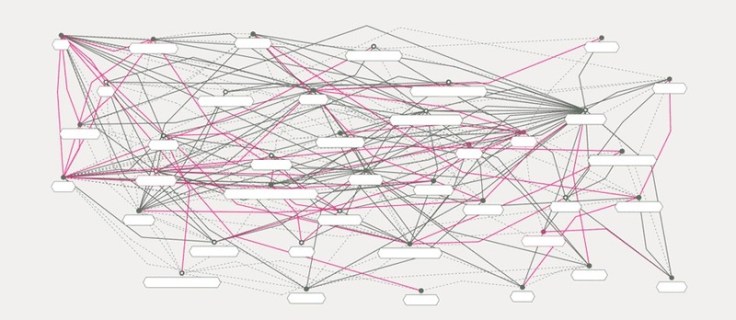
An interactive network visualisation of key players & notable relationships in the Middle East region. Continually updated. Awesome looking.

Source: www.informationisbeautiful.net

News flash:the Middle East is complicated.  In a region where the enemy of an enemy can be your friend, keeping track of local, regional, and global interests can be a staggering proposition.  This flow chart is both incredibly complex, but also aids the user in making sense of the relationships that help to define the region.  


Tags: MiddleEast, conflict, political, geopoliticsregions.

Turkey’s New Maps Are Reclaiming the Ottoman Empire

Erdogan’s aggressive nationalism is now spilling over Turkey’s borders, grabbing land in Greece and Iraq.


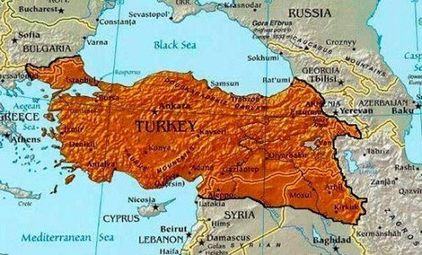
In the past few weeks, a conflict between Ankara and Baghdad over Turkey’s role in the liberation of Mosul has precipitated an alarming burst of Turkish irredentism. President Erdogan criticized the Treaty of Lausanne, which created the borders of modern Turkey, for leaving the country too small. Turkey won’t be annexing part of Iraq anytime soon, but this combination of irredentist cartography and rhetoric nonetheless offers some insight into Turkey’s current foreign and domestic policies and Ankara’s self-image.  The military interventions and confrontational rhetoric this nationalism inspires may worsen Turkey’s security and regional standing.


Tags: political, irredentism, culture, Turkeyhistorical, bordersempire, geopolitics.

Source: www.yahoo.com

Environmental Determinism: Crash Course #1

Today we’re talking about how Human Geography has been practiced in the past, how it hitched its wagon to some really bad ideas, and how that kind of thinking still persists in the world today. Basically, we’re starting with a lesson in how not to Human Geographize. Which I don’t think is a real word.

Source: www.youtube.com

This isn’t exactly what I was hoping for when I heard news of that Crash Course was producing a series of human geography videos, but still has tons of value.  This video on environmental determinism will raise as many questions as it answers.  Personally, I think it is too dismissive of geographers (such as Jared Diamond) than is fair, but there is lot of good in the video and enough in it to feel that this series has some strong potential for the future.  For APHG, it also make be feel optimistic about the future that “we’ve made it to the big leagues” in others eyes and are here to stay.    


Tags: crash course, environmental determinism, unit 1 GeoPrinciples, environmentAPHG, video.    

Create a free website or blog at WordPress.com.

Up ↑