Search

GEOGRAPHY EDUCATION

Supporting geography educators everywhere with current digital resources.

Category

Uncategorized

Get Connected with Global Collaborative Projects

“Join us to learn how you can connect your students with students around the world through global collaborative projects. Register at: http://on.natgeo.com/1ymyZdC

Source: www.youtube.com

The Geo-Educator Community is planning a Google + Hangout on Wednesday, October 1st (7-8pm EST) to help link educators and organizations so you can link your students with classes around the world and learning to think globally.    

Fire and Weather

“This is what a pyrocumulus cloud caused by the burning of over 28,000+ acres of forest looked like as the sun set.  In person as these clouds were changing it wasn’t all that noticeable when the huge plumes of smoke changed shape, but thanks to the magic of a time-lapse we get to behold the violent nature of the smoke cloud, including a storm cloud that emerged behind the main pyrocumulus.”

Source: vimeo.com

Seeing this fire essential create it’s own weather system is riveting.  While this scene can be seen as beautiful on the macro-scale, it is horrific on the ground where the fire ravaged physical and human landscapes alike.


Tagsdisasters,  weather and climateCalifornia, landscape, time lapsevideo.

13 amazing coming of age traditions from around the world

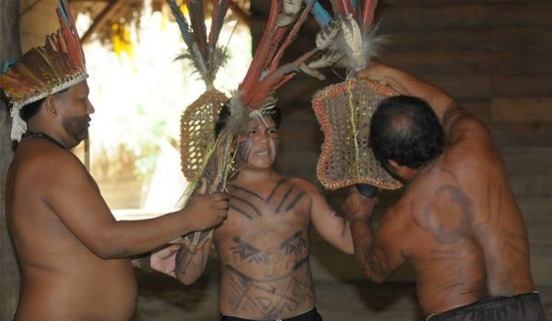
“The transition from childhood to adulthood — the ‘coming of age’ of boys who become young men and girls who become young women — is a significant stepping stone in everyone’s life. But the age at which this happens, and how a child celebrates their rite of passage into adolescence, depends entirely on where they live and what culture they grow up in.  Looking back, we’ll never forget the majesty that was prom, or the excitement of hitting the dance floor at our friends’ co-ed Bar and Bat Mitzvah parties, and why should we? Embarassing or amazing, they were pivotal moments in our lives that deserve remembering. On that note, here are thirteen of it the world’s most diverse coming of age traditions.”

Tags: gender, folk culture, culture, indigenous, worldwide.

Source: www.globalcitizen.org

Why The U.S. Chills Its Eggs And Most Of The World Doesn’t

In many countries, eggs aren’t refrigerated and they’re still considered safe to eat. But in the U.S., we have to chill them, because we’ve washed away the cuticle that protects them from bacteria.

Source: www.npr.org

For many Americans that are traveling abroad for the first time, realizing that eggs aren’t in the refrigerator is a bit of a culture shock (not to mention the moment they find milk in a box that also isn’t being refrigerated).  Agricultural practices dictate storage requirements and some things we might have imagined were universal are actually place-specific or peculiar to our cultural setting.  What we are taught to think of as gross, appropriate, attractive or even sanitary is often steeped in a cultural context.  So is it strange the we refrigerate our eggs in the United States, or that they don’t in other places? 


Tagsfood productiontechnology, industry, food, agriculture, perspective.

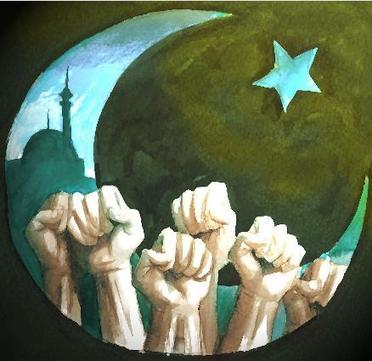
The world as it is: The influence of religion

“Seldom has it been more important for Americans to form a realistic assessment of the world scene. But our current governing, college-­educated class suffers one glaring blind spot.

Modern American culture produces highly individualistic career and identity paths for upper- and middle-class males and females. Power couples abound, often sporting different last names. But deeply held religious identities and military loyalties are less common. Few educated Americans have any direct experience with large groups of men gathered in intense prayer or battle. Like other citizens of the globalized corporate/consumer culture, educated Americans are often widely traveled but not deeply rooted in obligation to a particular physical place, a faith or a kinship.”

Source: www.startribune.com

This is a truly intriguing op-ed that argues that many Americans have a ‘blind spot’ by failing to recognize the power of religion and tribal bonds in global affairs. While many in the west assume that a new world order has emerged, these old communal forces still rule much of the world and they have some profound geopolitical implications (the author explores Russia, Asia and the Middle East in particular). 

Tags: religion, culture, conflict, political, geopolitics.

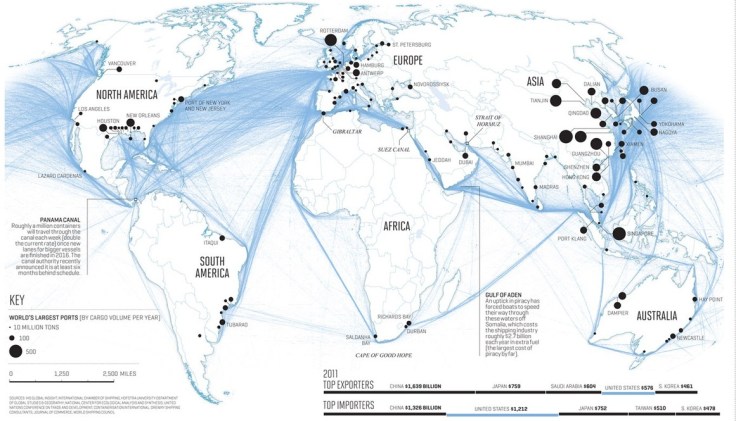
38 maps that explain the global economy

Commerce knits the modern world together in a way that nothing else quite does. Almost anything you own these days is the result of a complicated web of global interactions. And there’s no better way to depict those interactions than some maps.

Source: www.vox.com

Occasionally these lists that say something like “40 maps that…” end up being an odd assortment of trivia that is interesting but not very instructive; but I am of a fan of these list produced by Vox.  Not because they exhaustively explain the topic, but they give a strong visual introduction to a topic, such as this one on on the global economy.  


Tags: development, economic, globalization, industry, labor, unit 6 industry..

Welcome to the Anthropocene

“A 3-minute journey through the last 250 years of our history, from the start of the Industrial Revolution to the Rio+20 Summit. The film charts the growth of humanity into a global force on the equivalent scale to major geological processes.”

Source: www.youtube.com

Many geologists and other scientists now recognize that we are in a new geologic era.  This new era, called the Anthropocene, is distinguished by the fact that one species (homo sapiens), is dramatically modifying the environment. These modifications are impacting geologic processes to such a degree that this time period is geologically distinct (see this remote sensing interactive for examples of environmental change).  Paul Crutzen, a Nobel Prize–winning scientist who champions the term Anthropocene declared, “It’s no longer us against ‘Nature.’ Instead, it’s we who decide what nature is and what it will be.”  This video is a great primer for discussing the nature and extent of human and environmental interactions as related to industrialization, globalization and climate change.  This is definitely one of my favorite resources.


Tags: Anthropocenedevelopment, industryland use, environment, environment modify.  

The Transformation of Burning Man

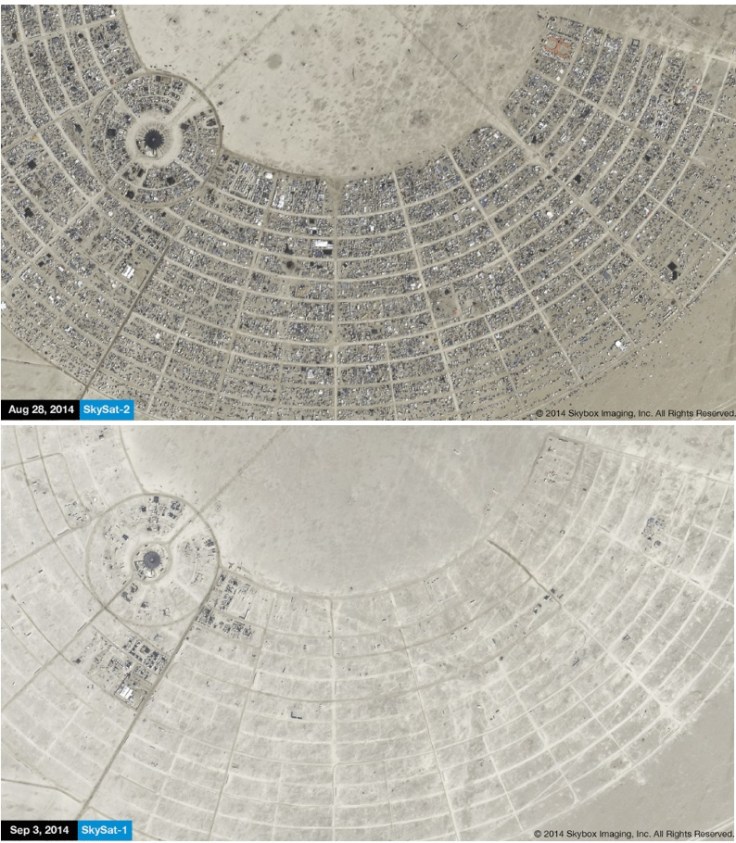
“Burning Man takes place at the end of August every year in the barren and remote Black Rock Desert of Nevada. The weeklong festival is described by its organization as “an experiment in community, art, radical self-expression, and radical self-reliance.” Earth-bound photographers have chronicled the legacy of art, technology, design, and fashion at the event over the years, but we at Skybox wanted to know if we could capture the transformation of the city from space, with our constellation of SkySats. This is the result:

A full-fledged city of population 70,000, “Black Rock City” is built up in a matter of days, experienced for a single week, and disassembled just as quickly, leaving no trace.”

Source: www.skybox.com

Last week I posted about Burning Man, noting that the landscapes in this experimental culture are inherently ephemeral and fleeting.  High resolution satellite imagery has captured the quick rise and fall of the Black Rock City.  Perhaps the term ‘rise and fall’ might not aptly describe the formation and dismantling of a city of 70,000 people; it is more like the ebb and flow of the tide, certain to return again.  

Tags architectureimages, art, landscape, geospatial, remote sensing.
America is rapidly aging in a country built for the young

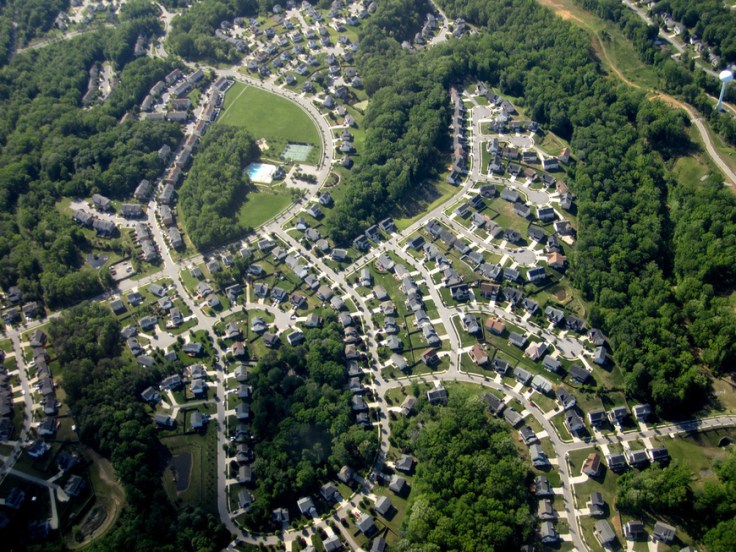
“Although we seldom think about them this way, most American communities as they exist today were built for the spry and mobile. We’ve constructed millions of multi-story, single-family homes where the master bedroom is on the second floor, where the lawn outside requires weekly upkeep, where the mailbox is a stroll away. We’ve designed neighborhoods where everyday errands require a driver’s license. We’ve planned whole cities where, if you don’t have a car, it’s not particularly easy to walk anywhere — especially not if you move gingerly.

This reality has been a fine one for a younger country. Those multi-story, single-family homes with broad lawns were great for Baby Boomers when they had young families. And car-dependent suburbs have been fine for residents with the means and mobility to drive everywhere. But as the Baby Boomers whose preferences drove a lot of these trends continue to age, it’s becoming increasingly clear that the housing and communities we’ve built won’t work very well for the old.”

Source: www.washingtonpost.com

Population change is frequently a concern of city planners at the local level.  This article shows that major demographic shifts are going to mean major changes in our patterns in our cities as we become a ‘greying’ society. 


Tagsurban, unit 7 cities, housing, sprawlneighborhood, planning, densityplanning, declining populations, population, demographic transition model, USA.

Blog at WordPress.com.

Up ↑