Search

GEOGRAPHY EDUCATION

Supporting geography educators everywhere with current digital resources.

Category

Uncategorized

Take Me Home, Mother Russia

10 places that would welcome a Putin landgrab, and 10 parts of Russia that want the hell out.

Seth Dixon‘s insight:

One of the ideological weaknesses in the idea that Russia should annex Crimea because of the large number of ethnic Russians that want to join the Russian Federation, is that there are many places within the Russian Federation without a majority of ethnic Russians that would want out of the Russian Federation.  This list from Foreign Policy is pretty intriguing and they provide insight about the geographic context for each place on the list.

Top 10 looking for a way into Russia (abbreviated)

  1. Transnistria
  2. Donbass
  3. New Russia
  4. Abkhazia
  5. South Ossetia
  6. Belarus
  7. Northern Kazakhstan
  8. Russians in the Baltic
  9. Nagorno Karabakh
  10. Brighton Reach, Brooklyn

Top 10 look for a way out of Russia:

  1. Chechnya
  2. Tatarstan
  3. Idel-Ural
  4. Kalmykia
  5. Kaliningrad
  6. Karelia
  7. Komi Republic
  8. Circassia
  9. Karachay-Balkaria
  10. Birobizhan

See on www.foreignpolicy.com

Not dead yet: The American shopping mall is changing, not going away

J.C. Penny in peril, Sears is sinking. Is this the end of the American shopping mall?

Last Friday sandwich chain Quiznos filed for bankruptcy protection citing high debt loads and heavy completion. Coming just days after a similar filing from pizza chain Sbarro, Quiznos’ bankruptcy was the second half of a one-two gut punch for shopping malls at a time when they’ve never been more vulnerable. A decade ago there were more than 1,100 enclosed shopping malls in the U.S. Since then more than 400 have  either been “re-purposed” or closed outright. No new malls have been completed since at least 2009.

See on finance.yahoo.com

The World’s Most Densely Populated Cities

The growth of these cities will create a host of environmental and health problems.

By 2210, the global population is expected to grow from just more than 7 billion to 11.3 billion — with 87 percent of the population living in urban areas, according to a new working paper by researchers from NYU’s Marron Institute.

Most of these individuals will be in what’s now the developing world — creating a host of environmental and health problems.

If projections are correct, these new urban dwellers will require the world’s existing cities to expand six-fold to accommodate triple the residents, Richard Florida wrote in The Atlantic. Plus, the world will need 500 new “megacities” of 10 million or more, he wrote.

Seth Dixon‘s insight:

See on www.weather.com

Geopolitics and the New World Order

Geography increasingly fuels endless chaos and old-school conflicts in the 21st Century.

Seth Dixon‘s insight:

I know that many academic geographers weren’t pleased with the environmental determinism in Robert Kaplan’s book The Revenge of Geography and the attention that in received in mainstream media outlets like the New York Times (mainly for it’s reduction of geography to physical geography and it’s acceptance of maps as pure truth).   In this article in TIME by Robert Kaplan, he highlights how geographic context is vital to understanding global politics…that is something we all can agree on even if we don’t like the particulars of his analysis. 

See on time.com

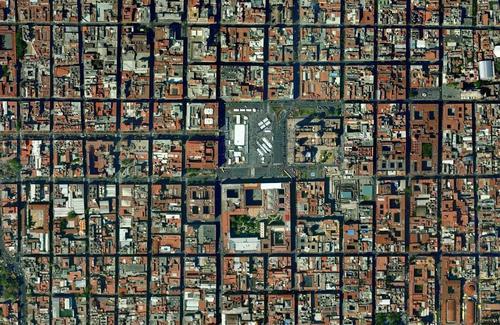
Seeing Landmarks From Far Away Might Shatter Your Perception Of Them

Wow. I guess it’s true when they say not everything is as it appears…

Seth Dixon‘s insight:

A new perspective can change our perception of reality, as demonstrated by this delightful photo gallery. 

See on distractify.com

Geo-Educator Community

“Join Us at http://Geo-Education.org

The Geo-Educator Community will bring together educators and thought-leaders from different disciplines, age groups, and educational settings, who share a commitment to preparing young people to be successful and responsible citizens of an interconnected world.
If you are passionate about helping your students understand our interconnected world, then you are a geo-educator. National Geographic is currently working alongside other geo-educators to create the Geo-Educator Community.

Join the conversation online: The Geo-Educator Community currently lives on Edmodo. Edmodo is a free and secure educator website which hosts over 28 million teachers and students worldwide.

See on www.youtube.com

Trans-Dniester pleads to join Russia

Pro-Russian politicians and activists in Moldova’s breakaway Trans-Dniester region have asked the Russian parliament to draft a law that would allow their territory to join Russia.

Seth Dixon‘s insight:

Transnistria (or the Trans-Dniester region) is one of my favorite examples to use in the classroom when discussing territories that function as a state, but is not internationally recognized.  After the fall of the Soviet Union, ethnic Russians in the former Soviet Republic of Moldova, wanted to remain politically tied to Russia rather than part of an independent Moldova.  Now that Crimea (also an area with many ethnic Russians that were politically separated from Russia after the collapse of the Soviet Union) appears to be reuniting with Russia, many in Transnistria are hopeful that this could be a political opportunity for them to likewise rejoin with Russia.  The Crimean situation has upset the status quo in the region.       

Tags: political, sovereignty, territoriality, states, unit 4 political.

See on www.bbc.com

T-Mobile’s tech chief: I want to decimate Verizon’s map ad campaign

In an interview with CNET, T-Mobile’s Neville Ray talks about the carrier’s plan to fill out its coverage and why it’s picking a fight with Verizon. Read this article by Roger Cheng on CNET News.

Seth Dixon‘s insight:

Maps are not innocent reflections of the truth; and if you do think that they are read some JB Harley.  Maps can be used to cleverly conceal the truth or to accentuate a particular perspective. 

See on news.cnet.com

Equality of Opportunity

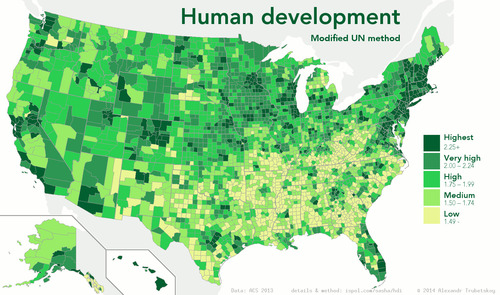
“Is America the “Land of Opportunity”? In two recent studies, we find that: (1) Upward income mobility varies substantially within the U.S. [summary][paper] Areas with greater mobility tend to have five characteristics: less segregation, less income inequality, better schools, greater social capital, and more stable families. (2) Contrary to popular perception, economic mobility has not changed significantly over time; however, it is consistently lower in the U.S. than in most developed countries [summary][paper].

See on www.equality-of-opportunity.org

Create a free website or blog at WordPress.com.

Up ↑