Search

GEOGRAPHY EDUCATION

Supporting geography educators everywhere with current digital resources.

Category

Uncategorized

Economics behind Gangnam Style

The viral hit isn’t a fluke. South Korea has been cultivating a global music business for decades.

You may already know that I’ve been fascinating watching the cultural diffusion of Gangnam Style throughout the world as mentioned previously.  This NPR podcast looks at the economic infrastructure of the South Korean music industry that explains in greater detail how this video went viral.  The distribution of this video is dependent in part on the technological sophistication and economic strategies of South Korea to associate their brands with cultural cachet.  

Tags: popular culture, industry, diffusion, globalization, technology, economic, unit 6 industry.

See on www.npr.org

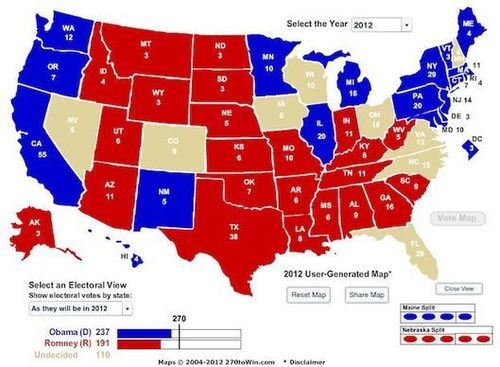
Around the world, perceptions of Obama-Romney contest lag reality

With Obama still popular overseas, many leaders appear unprepared for a possible Romney victory.

The election looks very different at a variety of scales (and in different places).  Deep in the Northeast, it’s hard to imagine Romney winning, while in the Intermountain West you might be confused why this isn’t projected to by a Republican landslide.  Internationally, it’s clear that most of the world favors (and consequently have imagined that their approval is mirrored in the United States) President Obama. 

See on www.washingtonpost.com

OpenStreetMap

An animation showing edits to http://OpenStreetMap.org over the period 2007-2012.

OpenStreetMap recently had it’s “State of the Map” conference (Oct. 13-14) in Portland, Oregon. This video was embedded in a great article entitled “The New Cartographers” that summarizes some of the current issues discussed at the conference as well as concerns that confont the project.  The project has experienced exponential growth and is a major player in the world of online mapping (think Wikipedia for maps).

Questions to Ponder: What are some advantages (and disadvantages) to an open source mapping data set?  What do you imagine is the future for the world largest open-source mapping data?

Tags: mapping, cartography, geospatial, social media.

See on vimeo.com

The Corner Where Afghanistan, Iran and Pakistan Meet

In the dusty triangle where Afghanistan, Iran and Pakistan meet, there is more than one war going on.


Geopolitically, there is a fascinating confluence of competing interests at this border.  This is “the scariest little corner of the world;” a dangerous place that is often beyond the authority of any of state.  It also represents (depending on how you divide the world up) at the intersection of the three major regions in the area: Central Asia, the Middle East and South Asia.


Tags: Afghanistan, political, borders, MiddleEast, SouthAsia, Central Asia, unit 4 political.

See on www.nytimes.com

Archeology from Space

TED Talks In this short talk, TED Fellow Sarah Parcak introduces the field of “space archeology” — using satellite images to search for clues to the lost sites of past civilizations.

The uses of geospatial technologies is NOT limited to studying geography, but it is the bedrock of many research projects that involve spatial thinking (as demonstrated in this TED talk).  Geographic principles and geographers can be very important  members of interdisciplinary teams.

Tags: spatial, remote sensing, geospatial, TED, MiddleEast, historical.

See on www.ted.com

UN High Commissioner for Refugees

The key facts and figures about refugees, IDPs, asylum seekers and stateless people from UNHCR’s annual Global Trends report.

Not all migation is voluntary.  Refugees and other non-voluntary migrants often are in their situation due to complex geographic factors beyond their control at the national scale. 

Tags: migration, population, development, conflict, statistics, war, unit 2 population.

See on www.unhcr.org.uk

Spanish Crisis Revives Calls For Catalan Secession

Spain’s dismal economy has residents of the country’s richest region, Catalonia, wondering if they’d be better off going it alone. With their own language and distinct culture, Catalans have long pushed for independence from Spain.

This podcast merges several geographic strands together as economic turmoil in the southern portion of the Euro Zone has fanned the flames of cultural resentment and put discussions for Catalonian independence on the agenda for local politicians. 

Questions to ponder: Will this internal devolution cause greater disintegration in the European Union or Spain?  Would an independent Catalan be a wise move for the Catalonians?  How would their independence impact Spain?    

Tags: political, autonomy, economic, Europe, devolution, sovereignty, unit 4 political.

See on www.npr.org

The Role of Place in Discovery and Innovation

The Kauffman Foundation’s Samuel Arbesman on his new book, The Half-Life of Facts.

This is an interview, Samuel Arbesman,the author of The Half-Life of Facts explains how population density and place matter in forming a creative economic workforce. Urban centers act as drivers of innovation and advancements and attract the more ambitious and daring workers. Additionally, this map on the expansion of the printing press (discussed in the interview) is also a great map to show how technological innovations can spur cultural diffusion.

Tags: technology, diffusion, urban, labor, migration, book review.

See on www.theatlanticcities.com

United States MapMaker Kit

MapMaker Kit. Download, print, and assemble maps of the United States in a variety of sizes. The mega map occupies a large wall, or can be used on the floor.

Have you every wanted to create a giant map but aren’t sure if you can logistically pull it off?  The National Geographic’s MapMaker kit is just that, a kit for you to create wall maps from a standard printer and tile them together.  The assembly itself is a great spatial thinking and fun exercise for students (and there are large world maps as well). 

Tags: NationalGeographic, cartography, mapping, K12.

See on education.nationalgeographic.com

Blog at WordPress.com.

Up ↑