Search

GEOGRAPHY EDUCATION

Supporting geography educators everywhere with current digital resources.

Category

Uncategorized

Australia to Zimbabwe

The perfect gift for adventurers young and old – this book is a whirlwind exploration of world cultures!

Source: www.kickstarter.com

I’ve received an advance copy of Australia to Zimbabwe and it is a delightful book that appeals to all ages (everyone in my house ate it up). Carefully layered so that readers can customize the experience to fit their interests, time, and goals, this treasure trove just begs the reader to keep exploring as they flip through its pages. Australia to Zimbabwe presents facts in a context that enlivens learning about the people and places of the world and heightens the reader’s curiosity. With the online supplemental materials, this book brings to life the sights, sounds, and smells of far-away places.  Teachers, librarians, and parents alike should all be excited to get their hands on this book when it comes out November 17th.


Tagseducation, K12geography education, book reviews.

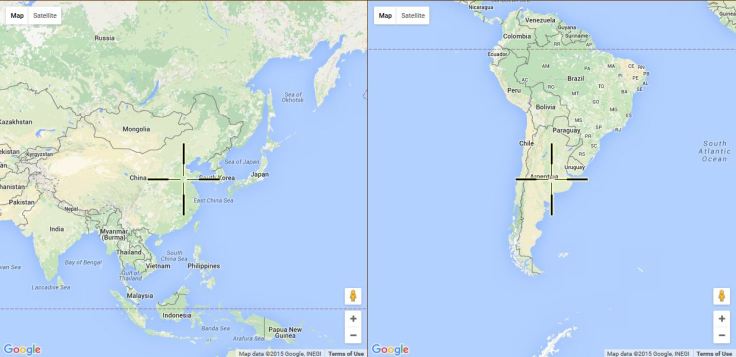
Antipodes Map (AKA Tunnel Map)

“What is on the other side of the Earth?  Find out here.”

Source: www.findlatitudeandlongitude.com

The antipode of any place is the spot of opposite side of Earth; this is like a geographic version of Bizarro Superman (it is also the name of journal for radical geography).  Two points are considered antipodal if they are are on opposite sides of a Great Circle from each other (Check out Great Circle mapper).  I knew I never would be able to dig a hole to China from the United States…I guess I’ll have to go to Argentina with my shovel to dig my tunnel.    

Tags: mapping.

Why Americans should care about the Canadian election

The close race comes after a decade of leadership by Stephen Harper, whose relationship with Barack Obama has suffered. But a victory for Justin Trudeau and the Liberals on Monday could help the US and Canada forge renewed ties

Source: www.theguardian.com

Changes in Three Gorges Dam

NASA’s animation of China’s Three Gorges Dam construction over the years.

Source: www.youtube.com

The world’s largest dam was created to generate more energy for China’s ever-expanding economy and to increase the interior economic development by increasing the navigability of the river.  The dam also can control downstream flooding and protect important industrial centers such as Shanghai.  This ambitious hydroelectric dam produces the same amount of energy as 18 nuclear power plants.  This dam also displaced over 1 million people as the reservoir flooded properties upstream.  The Three Gorges Dam prevents the nutrient-rich sediments from being deposited downstream; this heightens Chinese farmers’ need for fertilizers, this has led to drought downstream and limits residents’ water access. The dam also disrupted the local ecology (part of the reason the Yangtze River Dolphin went extinct), preventing fish to migrate to upstream breeding grounds. 

For good and ill, the dam has profoundly modified the environment and this video animation from NASA is a powerful demonstration of the changes.       

Tags: remote sensing, geospatial, video, land use, environment, environment modify, water, economic, development, China, East Asia, unit 1 GeoPrinciples.

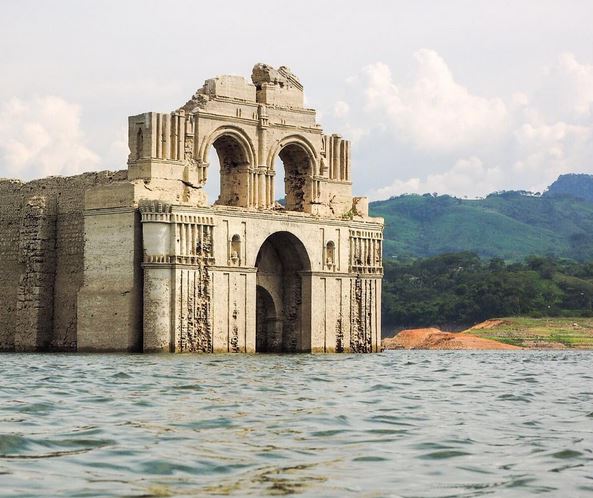
Dropping water levels reveal hidden church

A 16th century church has emerged from the receding waters of the Nezahualcoyotl reservoir in the southern Mexican state of Chiapas. This is the second time water levels have dropped low enough to reveal the church since the reservoir was completed in 1966.

Tags: drought, Mexico, water, environment, religion, culture, Christianity colonialism, architecture, landscape.

Source: fox2now.com

Which NFL Team Are You Stuck Watching Every Sunday?

Like millions of other Americans, I watch the NFL on a regular basis. However, just like millions of other viewers, most Sundays I am not sure which games will be on my television. For years, the strange geographic structures that underpinned league broadcasts were almost entirely obscured from the average consumer. People would turn on their TVs expecting to see one game only to be disappointed by another.

Source: fivethirtyeight.com

The top map is essentially a major market analysis of sports teams and shows to some extent the media hinterlands of America’s major cities.  The second map I find even more interesting; all teams are regional, but a select few have larger national followings (if you are a fan of the Packers, Steelers, 49ers or Cowboys and are not from those areas, maybe I can guess your age).  There are many other maps in this interesting sports geography article.  What patterns do you see?  Explanations? 


Tag: sportspatialmapping, regions.

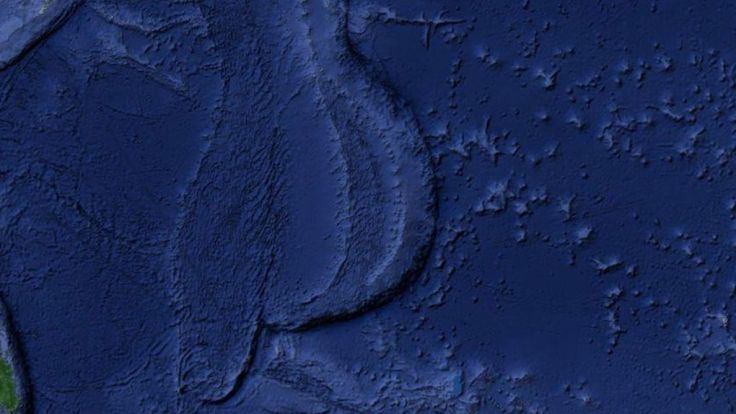
Mariana Trench Once Again Named Worst Place To Raise Child

Parenting magazine released its annual list of the best and worst places to raise a child this week, once again naming the Mariana Trench—an undersea chasm located 36,000 feet beneath the western Pacific Ocean—as the least desirable location for rearing children. The periodical’s staff reportedly selected amongst thousands of locations, weighing a diverse range of criteria such living costs, air quality, and local amenities, categories for which the pitch-black, silt-covered abyss unanimously received an ‘F’ rating.”

Source: www.theonion.com

Now this is funny.  True to form, the Onion is mocking how obsessed our society is about ranking neighborhoods and valuing social prestige.  Underlying this satirical humor are some real, social and spatial issues.  Buying a house or renting a place is in part an analysis of the structure itself, but value is ascribed to the geographic context of the home (as real estate agents say the three most import factors are: location, location, location).  Many parents are especially concerned about choosing the ‘right’ neighborhood and that drives the housing market.  Local amenities, schools, shopping, demographic profiles, income, crime rates, land use mix…a play a role in shaping the context in how people perceive the neighborhood’s desirability.   


Tags: housingneighborhood, cultural norms, culture.

Most 8th Graders Are Not Proficient in Geography

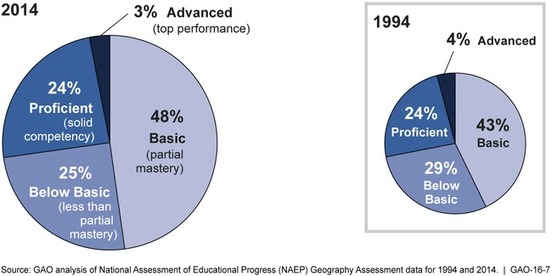
About three-quarters of eighth grade students—the only grade for which trend data are available—were not “proficient” in geography in 2014, according to GAO’s analysis of nationally representative data from the Department of Education (Education). Specifically, these students had not demonstrated solid competence in the subject, and the proficiency levels of eighth grade students have shown no improvement since 1994 (see figure). Geography is generally taught as part of social studies, but data show that more than half of eighth grade teachers reported spending a small portion (10 percent or less) of their social studies instruction time on geography. Further, according to a study by an academic organization, a majority of states do not require geography courses in middle school or high school.

Source: www.gao.gov

A basic understanding of geography is a prerequisite for any informed citizen, and globalization means that is even more important than ever.  This report is not a ‘pick-me-up’ but a sobering reminder of the task that lays before us.  There has been some improvement, but so much more is needed.   


TagseducationK12geography education.

Finding Geographical Oddities…

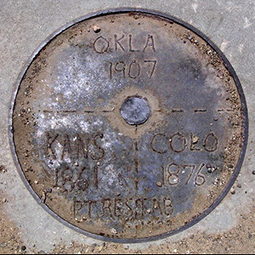
The convergence of three state borders, or tri-points, offers a chance for out-of-the-way exploring.

Source: www.washingtonpost.com

Kentucky and Tennessee is the tri-point hearth of the United States, but they are fairly evenly distributed on the interior otherwise.  Are you close to one of these tri-point geographical oddities?  Go on a field trip!  And if you think I used the phrase ‘geographical oddity’ just so I could reference one of my favorite movies quotes of all time, then you would be absolutely correct. 

Blog at WordPress.com.

Up ↑