Search

GEOGRAPHY EDUCATION

Supporting geography educators everywhere with current digital resources.

Place and Self

//cdn.embedly.com/widgets/media.html?src=https%3A%2F%2Fwww.behance.net%2Fgallery%2F13473489%2FHoliday-Malcolm-Gladwell%3Fiframe%3D1&wmode=opaque&url=https%3A%2F%2Fwww.behance.net%2Fgallery%2F13473489%2FHoliday-Malcolm-Gladwell&image=https%3A%2F%2Fmir-s3-cdn-cf.behance.net%2Fprojects%2F404%2Fb2e25e13473489.5510c13e774f3.jpg&key=359ed8ab27db4f02a128049b1f89d6a1&type=text%2Fhtml&scroll=auto&schema=behance

“We are Dangerdust. We love chalk. We started this project at the beginning of our senior year in college. It all began because we wanted to share a quote that had inspired us, in the hope that it would inspire others. We sneaked into school that weekend to illustrate the quote on an abandoned chalkboard. After that one time we were hooked, and Dangerdust was created.”

Source: www.behance.net

We are sometimes so obsessively focused on the self in our society, that we discount the communal and the spatial impacts in describing who we are.  So much of our ‘selves’ that we prize as so highly individualized and unique are a beautiful product of all the places and people who have influenced and shaped our lives. 

Tagsregions, images, art

The Origin of Krampus, Europe’s Evil Twist on Santa

The mythical holiday beast is once again on the prowl, but beware, he’s making his way across the Atlantic

Source: www.smithsonianmag.com

Questions to Ponder: So what kind of cultural diffusion is this?  Expansion diffusion, contagious diffusion, stimulus diffusion or hierarchical diffusion?  Why so?


Is this more as a pop culture phenomenon or a revitalization of a folk cultural tradition?  How come?


Tags: religion, Europeculture, historical.

The Origin of Krampus, Europe’s Evil Twist on Santa

The mythical holiday beast is once again on the prowl, but beware, he’s making his way across the Atlantic

Source: www.smithsonianmag.com

Questions to Ponder: So what kind of cultural diffusion is this?  Expansion diffusion, contagious diffusion, stimulus diffusion or hierarchical diffusion?  Why so?


Is this more as a pop culture phenomenon or a revitalization of a folk cultural tradition?  How come?


Tags: religion, Europeculture, historical.

The Danger of a Single Story

https://www.youtube.com/v/D9Ihs241zeg?fs=1&hl=fr_FR

Our lives, our cultures, are composed of many overlapping stories. Novelist Chimamanda Adichie tells the story of how she found her authentic cultural voice — and warns that if we hear only a single story about another person or country, we risk a critical misunderstanding.

Source: www.youtube.com

To gain a global perspective inherently requires understanding multiple perspectives.  Africa is frequently portrayed as ‘the other’ but also homogenized within a single narrative that ‘flattens’ truth.  How can we teach and learn about other places in a way that develops geographic empathy and shows the many stories of that can belong to any one place? 

Tags: Africa, perspective, TED.

GeoInquiries for Human Geography

GeoInquiries are designed to be fast and easy-to-use instructional resources that incorporate advanced web mapping technology. Each 15-minute activity in a collection is intended to be presented by the instructor from a single computer/projector classroom arrangement. No installation, fees, or logins are necessary to use these materials and software.

Source: edcommunity.esri.com

ESRI has produced GeoInquires for Earth Science, History and now AP Human Geography.  If you try out an APHG GeoInquiry, please take a moment or two to give the folks at ESRI some feedback. They are especially looking for reviewers for the GeoInquiries for 1) Distance, transportation, and scale 2) USA Demographics and 3) Agricultural Patterns.  If can get a free ESRI book for your time by assisting them in refining these educational resources.

Tags physicalmappinggeospatialESRI, APHG.

GeoInquiries for Human Geography

GeoInquiries are designed to be fast and easy-to-use instructional resources that incorporate advanced web mapping technology. Each 15-minute activity in a collection is intended to be presented by the instructor from a single computer/projector classroom arrangement. No installation, fees, or logins are necessary to use these materials and software.

Source: edcommunity.esri.com

ESRI has produced GeoInquires for Earth Science, History and now AP Human Geography.  If you try out an APHG GeoInquiry, please take a moment or two to give the folks at ESRI some feedback.


Tags physical, mapping, geospatialESRI, APHG.

Power Distribution: Unitary, Confederation, and Federal

an easy, graphical way to learn the three forms of government power distribution.

Source: www.youtube.com

In the unit on the political organization of space, one of the items listed to understand is the various forms of governance, including unitary, federal, and confederations.

Questions to Ponder: What are the advantages and disadvantages of each system?  How do this impact the human geography and how does the human geography help to shape these governance systems?  What real world examples can you think of for these categories? 

Tags: APHG, political, governance, unit 4 political, video

The Marshall Islands Are Disappearing

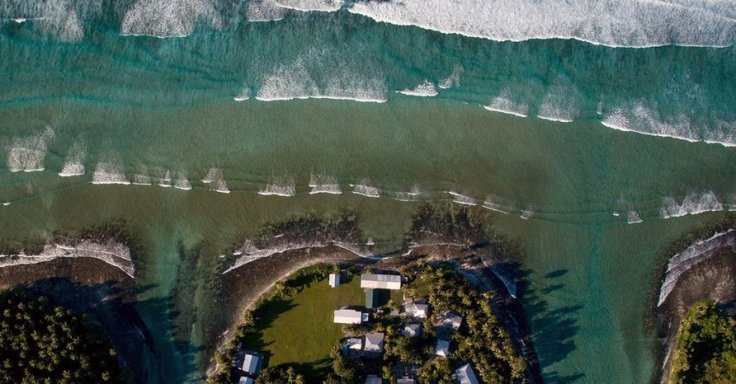
Most of the 1,000 or so Marshall Islands, spread out over 29 narrow coral atolls in the South Pacific, are less than six feet above sea level — and few are more than a mile wide. For the Marshallese, the destructive power of the rising seas is already an inescapable part of daily life. Changing global trade winds have raised sea levels in the South Pacific about a foot over the past 30 years, faster than elsewhere. Scientists are studying whether those changing trade winds have anything to do with climate change.

Source: www.nytimes.com

The impacts of climate change might feel far off or something that will affect other places…not so for those in the Marshall Islands. 

Tags: Oceania, environment, resources, watercoastal, environment depend, climate change, political ecology.

Man of the world

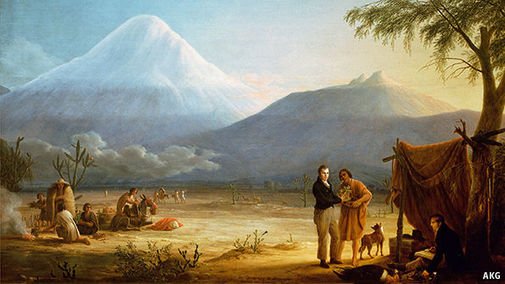
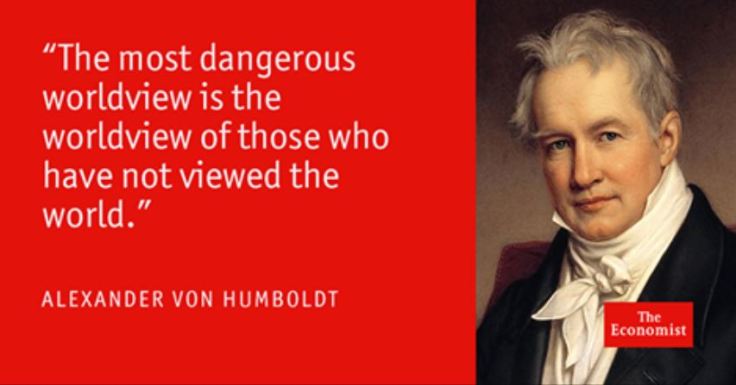
“On why a Prussian scientific visionary should be studied afresh…In a superb biography, Andrea Wulf makes an inspired case for Alexander von Humboldt to be considered the greatest scientist of the 19th century. Certainly he was the last great polymath in a scientific world which, by the time he died in Berlin in 1859, aged 89, was fast hardening into the narrow specializations that typify science to this day. Yet in the English-speaking world, Humboldt is strangely little-known.”

Source: www.economist.com

Alexander von Humboldt has been described as the last great ancient geographer concerned with understanding an eclectic cosmography as well as the first modern geographer. He is honored far and wide throughout Latin America and Europe, but given that intellectually people are confused as how to categorize him and classify his contributions, today he is under-appreciated.  Geographers need to reclaim his memory and call his extensive, globetrotting work on a wide range of subjects ‘geography.’  Here is another article and TED-ED video on the most influential scientist that you might not have heard of (at least until today).

Tags:  historicalbiogeography, unit 1 Geoprinciples, book reviews.

AVH

Blog at WordPress.com.

Up ↑