Search

GEOGRAPHY EDUCATION

Supporting geography educators everywhere with current digital resources.

Teaching APHG with Live Web Maps

Lyn Malone and Seth Dixon combined to present at NCGE 2015 on Saturday August 8th; the topic was Teaching AP Human Geography with Live Web Maps.

Tags: APHG, NCGE, training, edtech, GIS, ESRI, mapping, cartography, geospatial.

Source: geographyeducation.org

I was glad to present in Washington D.C., and for any who could not attend, it was designed as a “first foray” into using ArcGIS online and chance to discover great web maps for every unit of APHG. 

27 Facts About Maps

A weekly show where knowledge junkies get their fix of trivia-tastic information. This week, John shares 27 facts about maps.

Source: www.youtube.com

This Mental Floss video is an entertaining rapid-fire hodgepodge of map trivia with some important educational content nicely nestled in there.  This 99 Percent Invisible podcast is another ‘ode to maps,’ but this one is more poetic about the value of cartography and personal in how it explores the qualities they possess.  Enjoy them both!  

Tags:  mapping, edtech, trivia, cartography.

Why Geography Should Make a Comeback in K-12

Some educators believe that geography is subject that should go hand in hand with the STEM push.

Geography used to be a subject that was taught throughout the nation but somewhere along the line it got put on the back burner. Now, in California, educators are finding ways to bring the subject back and their methods may be of interest to parents and teachers beyond the West Coast.

Tags: education, K12, geography education, STEM.

Source: www.educationworld.com

The GA: A Different View

“This video forms a lively introduction to A Different View and the themes within it.  A Different View is a manifesto from the Geographical Association. It makes a compelling case for geography’s place in the curriculum. But the world changes, and so does the curriculum. A Different View, and the supporting materials on this website, are designed to be used in any context where geography is taught, explained, encouraged or promoted.”

Tags: education, K12, geography education.

Source: animoto.com

Why is EU free movement so important?

Where did the idea of free movement of people come from? The precursor to the EU was formed as European leaders came together in the wake of the Second World War, wanting to prevent another catastrophic war. The idea was that allowing people to move across the continent – from countries where there were no jobs to countries where there were labour shortages – would not only boost European growth, but would help prevent war by getting people to mix more across borders.

“The founding fathers of the European Community wanted it to be a construct that also had a political integration and for that you needed people to move because the minute people crossed boundaries and borders, you had deeper integration… So it was both a social as well as an economic aim.

Tags: Europe, supranationalism, economic, mobility, political, states, migration.

Source: www.bbc.com

GeoGuessr – Let’s explore the world!

GeoGuessr is a geography game which takes you on a journey around the world and challenges your ability to recognize your surroundings.

Source: geoguessr.com

I’ve shared GeoGuessr before but they now have country-specific quizzes (this is for the United States).  When I was a child I used to wonder if woke up somewhere far from home, would I be able to know where I was just by looking at the places around me (I was a geo-geek from way back when).  GeoGuessr is the closest thing to finding yourself lost in the world and needing to figure out where you are without being wisked away.  GeoGuessr will display 5 locations in GoogleMaps “StreetView” and you have to guess where the images are located.  You can pan and zoom in the StreetView to explore the landscape and find more context clues as to where that location is.  It is a fantastic exploration exercise.   

Tags: landscape, place, trivia.

Peru’s Pitmasters Bury Their Meat In The Earth, Inca-Style

What’s the epitome of summer for a lot of Americans? It’s communing around a grill, with friends and family, waiting for a slab of meat to cook to juicy perfection.

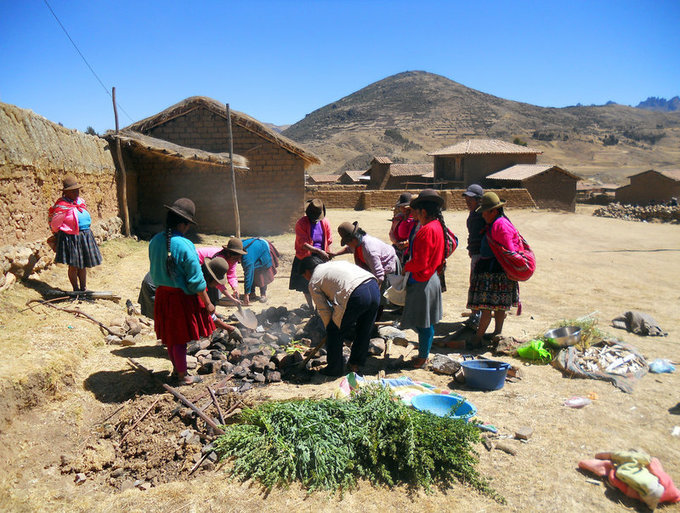
In Peru, people like to gather around heat and meat, too. Except the heat — and the meat — are buried in the ground. It’s called pachamanca, a traditional way of cooking that dates back to the Inca Empire. The pit cooking technique has evolved over time but remains an important part of the Peruvian cuisine and culture, especially in the central Peruvian Andes all year-round for family get-togethers and celebrations.


Tags: food, folk culture, culture, indigenous, South America, Peru.

Source: www.npr.org

What it would look like if the Hiroshima bomb hit your city

“Maps bring the horror of Hiroshima home — literally.  

Alex Wellerstein, a nuclear historian at the Stevens Institute of Technology, created a NukeMap that allows you to visualize what the Hiroshima and Nagasaki explosions would look like in your hometown. Kuang Keng Kuek Ser at Public Radio International has also developed a version, using slightly different estimates.

Here is what Little Boy, the Hiroshima bomb, would look like on Wellerstein’s map if detonated in New York City.”

Source: www.washingtonpost.com

Celebrating 100 years of the NCGE

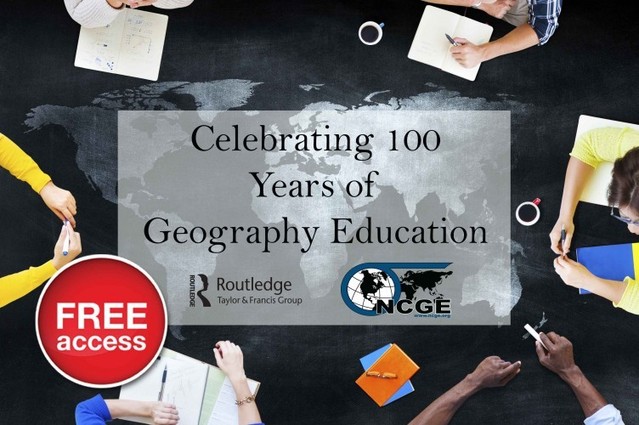
“As the proud publisher of both Journal of Geography and The Geography Teacher, the official publications of the NCGE, we couldn’t be more excited to join the NCGE in Washington, DC for their 100th Anniversary Conference. We will be offering NCGE members and attendees FREE ACCESS to specially selected content which reflects core themes of this special meeting: Korea, Pedagogy, Educational Policy, Spatial Thinking, and Technology – 100 articles for 100 years!” http://bit.ly/celebrate-geoedu 

Source: explore.tandfonline.com

The National Council for Geographic Education is having their 100th conference this week (#NCGE100).  The Journal of Geography has recently TRIPLED its impact factor and The Geography Teacher is growing from 2 issues a year to 4.  These are fabulous resources (and great reasons to become a member of NCGE).  The link above is a collection of great articles over the years linked to the themes of the conference; here are free articles from the Journal of Geography and some free articles/lesson plans from The Geography Teacher.  

Tags: NCGE, geography education, teacher training.

Create a free website or blog at WordPress.com.

Up ↑