Source: blog.education.nationalgeographic.com
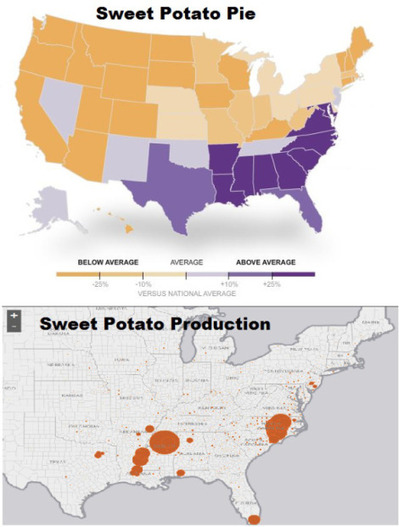
I am very pleased to be blogging for National Geographic Education. Here is the link to my first post on the geography of Thanksgiving.
Source: blog.education.nationalgeographic.com
I am very pleased to be blogging for National Geographic Education. Here is the link to my first post on the geography of Thanksgiving.
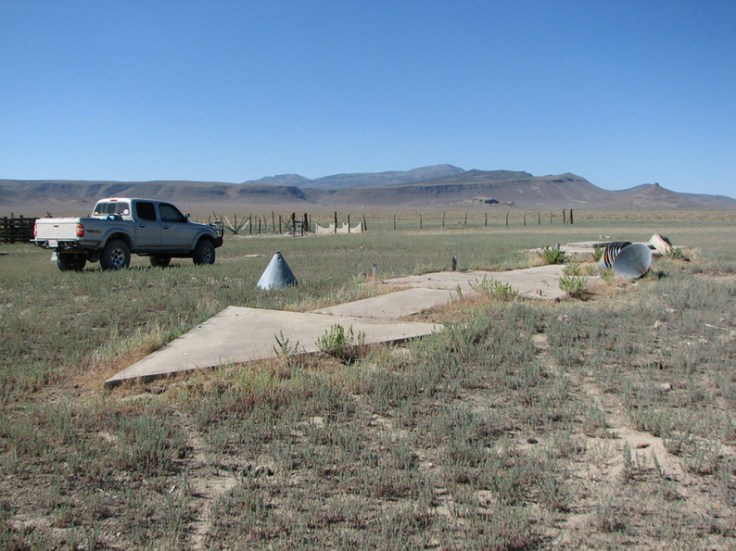
Every so often, a hiker or a backpacker will run across something puzzling: a ginormous concrete arrow, as much as seventy feet in length, just sitting in the middle of scrub-covered America. What are these giant arrows? Jeopardy champ Ken Jennings solves the mystery.
Source: www.cntraveler.com
This is fascinating…just because a technology is old and outdated in modern society doesn’t mean it wasn’t ingenious. The original mathematicians who calculated angles and distances study geometry so they could navigate and ‘measure the Earth.’ Before GPS, these giant arrows helped pilots navigate across the United States; they are part of the genealogical strands of navigational technology. Mathematics can be incredibly spatial as well as geospatial.
Tags: mapping, GPS, math, geospatial, location, historical.

Gathered around the Thanksgiving table, Americans tell stories about colonists and Native Americans coming together. But do Native Americans even celebrate Thanksgiving? And what would Native American heritage food look like? This November, With Good Reason takes a look at the indigenous side of a Thanksgiving table.
Source: withgoodreasonradio.org
This podcast is a great look at the diverse ways in which a national holiday can be celebrated. The cultural connections in the podcast are quite rich.
Tags: Thanksgiving, food, seasonal, folk culture, culture, indigenous.
“While the terms country, state, and nation are often used interchangeably, there is a difference.”
Source: www.youtube.com
These words are messy and this talk seeks to define them more precisely so that we can more fully understand political geographic complexity.
The concept of the nation-state emerged out of particular historical context as this video demonstrates. Additionally, here is another video that is a straightforward explanation of important vocabulary terms for a political geography unit.
Animating the changing shape of the world population pyramid. For more multimedia content from The Economist visit our website: http://econ.st/1xqEZhX.
Source: www.youtube.com
This is an incredibly powerful and remarkably well-done video TED-ED lesson on the importance and value of population pyramids. This video goes nicely with this article from the World Bank entitled “The End of the Population Pyramid” which highlights the demographic changes that will be reshaping global demographics in the next 50-100 years.
Tag: population, declining population, demographic transition model, video, APHG.

For those brief moments that you happen to be in a bike lane, biking in the city is wonderful. But it always seems that bike lanes end before they even begin, just like a summer romance or a slice …
Source: stevepatrickadams.com
It’s just a joke, but good comedy has a nugget of truth that shines a light on the inconsistencies of the human experience. This really highlights the priorities given to various modes of transportation as we allocate public space for them.
Tags: transportation, planning.

What if the Black Plague had killed off almost all Europeans? Then the Reconquista never happens. Spain and Portugal don’t kickstart Europe’s colonization of other continents. And this is what Africa might have looked like.
Tags: Africa, colonialism, borders, historical, map.
Source: bigthink.com

A site in the Old City of Jerusalem, known to Jews as the Temple Mount and to Muslims as the Noble Sanctuary, has been a flash point since the advent of modern Zionism.
Source: www.nytimes.com
There has been turmoil and violence in Jerusalem this month; at it’s core, much of the fighting has been around the political control of sacred spaces that are seen as critical to both groups’ cultural and religious identity. This particular sacred place is intertwined with both Judaism as well as Islam, and understanding the current round of violence demands that we understand some of the historical geography of religion in Jerusalem. To explore more about sacred sites in general as a spatial concept, visit this link.
Tags: religion, culture, Islam, Israel, Palestine, territoriality, political, Middle East.

You’re too smart to share this nonsense
Source: theweek.com
Many students today are digital natives and teachers often assume that students understand how to 1) find, 2) evaluate and 3) vett online resources in a critical manner. To read more about assessing geographic-specific resources online, see this article here.
Tags: social media.