Search

GEOGRAPHY EDUCATION

Supporting geography educators everywhere with current digital resources.

Golden Temple of Amristar

“The Golden Temple is the holiest shrine of the Sikh religion. It is also home to one of the largest free eateries in the world. Read the related article.”

Source: www.youtube.com

This two-minute video clip is an effective portal to alternative religious traditions on the South Asian subcontinent.   While students might not at first relate to the theologies of diverse religious traditions, they connect with the underlying ethics of many world religions.  This video is an effective tool to help them gain greater cultural understanding and to demystify unfamiliar cultural practices. 


Tags: culture, India, South Asia, religion.
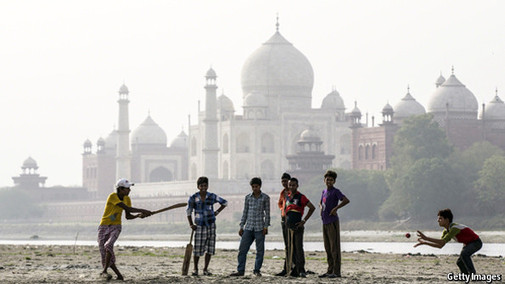
Why Indians love cricket

TO OUTSIDERS, the magnitude of Indians’ love for cricket is as incomprehensible as its feverish intensity. On February 4th India awarded the Bharat Ratna, its highest civilian honour, to Sachin Tendulkar, a recently retired batsman. Millions in India, a country of 1.3 billion people and only one nationally-popular game, celebrated wildly. When India’s national side plays a big game, an estimated 400m watch on television. Yet cricket’s take-off in India is a highly improbable development. The game is demanding to play properly, requiring space, a good turf pitch and expensive equipment—which only a relative handful of Indian cricketers have access to. Most will never strap on pads or bowl with a leather ball. So why do they so love the game?

Tags: sport, popular culture, culture, development, India, South Asiaglobalization, empire.

Source: www.economist.com

A Field Of Medicine That Wants To Know Where You Live

Where do you live? Health specialists think that simple question could make a difference in how doctors prevent and treat diseases for individuals. That’s expanding its storied role in public health.

Source: www.npr.org

This article highlights how spatial thinking and geospatial technologies can solve real world problems–in this case, tracking the spread of diseases is a spatial situation and not all places close to each other are equally connected to the same networks. 


Tagsmedical, diffusion, mapping, GISspatial, geospatial.

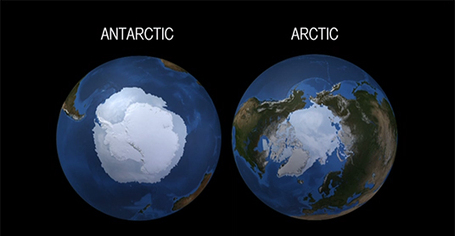
What’s the deal with Antarctica and the Arctic?

“Perhaps the biggest misunderstanding is that the Arctic and Antarctic are similar. One’s in the north and the other is in the south; but other than that, they’re the same, right? No, this couldn’t be more wrong. These polar opposites are literally polar opposites.
For starters, the Arctic is a small, shallow ocean surrounded by land: Eurasia, Greenland, Canada and the United States. It’s only about 5 ½ million square miles, which is five times smaller than the Atlantic and 11 times smaller than the Pacific. Antarctica, on the other hand, is a continent surrounded by the entire Southern Ocean.

This may seem like no big deal, but it makes all the difference in the world. It takes a lot of energy to change water temperature compared to what it takes to change land temperature, which means Arctic seawater isn’t as cold as the continental ice sheet covering Antarctica. So, the Arctic sea ice (frozen sea water) is about 10 feet thick, whereas the Antarctic ice sheet (compacted freshwater ice) is over a mile thick.”

Tags: physical, weather and climate, Arctic, Antarctica.

Source: climate.nasa.gov

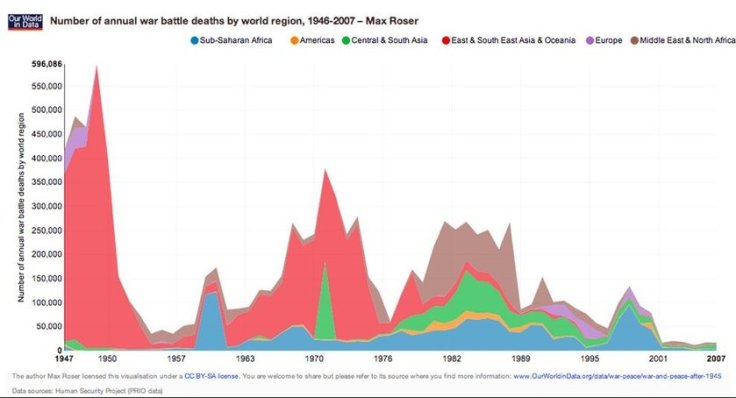
The World Is Becoming A Better Place

“People who love to complain about how horrible everything is also love to point out that the world is always changing — and change is of course always horrible, because it destroys the way things used to be. It’s easy to get depressed by all the ‘everything is horrible’ talk.  So it’s nice to sometimes remind ourselves that some things — many things, in fact — are getting better all the time.”

Source: www.businessinsider.com

While it might be easy to concentrate on the negative aspects of globalization, the positives are worth remembering.  Even hunger problems in the developing world is getting better (but hardly eradicated).

Tags: development, economic, globalization, war.

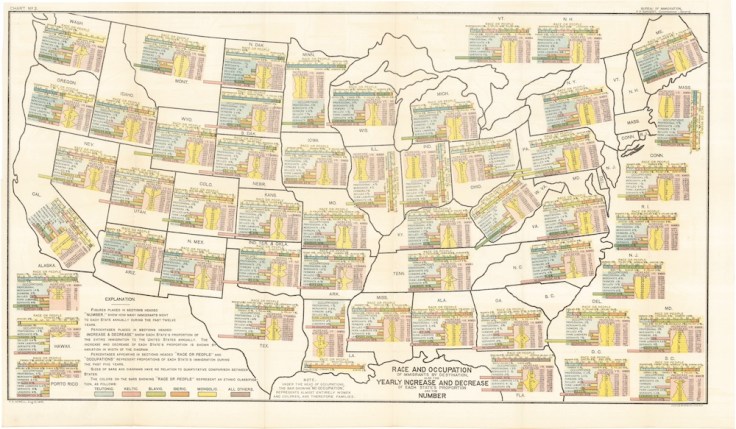
Map shows how race is a social construct

“Americans’ understanding of who counts as ‘white’ has changed dramatically throughout the country’s history and even over the last century alone. This map — which covers a decade of immigration to the US, from 1892 to 1903 — is a dramatic illustration of what it looked like when ‘white’ wasn’t the same thing as European.  Mouse over any part of the map to magnify it.”

Tags: race, historical, USA, map.

Source: www.vox.com

The price of passage

Almost 35,000 people have reached the shores of Italy and Malta in 2013 and two-thirds have filed for asylum.

Source: www.aljazeera.com

This interactive map/infographic is a wealth of information about migration to Europe. 

TagsEurope, migration, economic, labor, infographic

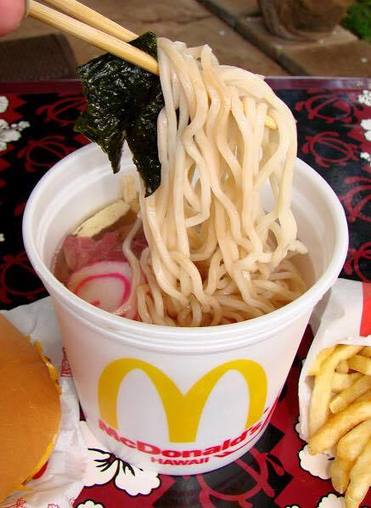
McDonald’s International

Source: coronado.maps.arcgis.com

Think the McDonald’s Menu is the same everywhere?  Think again.  A fantastic geography teacher compiled these images and descriptions of the McDonald’s menu from around the world and put them into an ESRI storymap.  This interactive feature shows how a successful global brand like McDonald’s should be keenly aware of local tastes and customs.  Some call that “glocalization.” 

TagsESRI, foodculturediffusion, globalization, consumption, APHG.

7 of the Best Dialect Quizzes

If you’re feeling particularly nationalistic, or just want to see how consistently you speak like your friends and neighbors, here are all the dialect quizzes that I could find. Find out what your dialect most resembles, and, in many cases, help science at the same time!

Tags: language, culture, English.

Source: www.slate.com

Blog at WordPress.com.

Up ↑