Search

GEOGRAPHY EDUCATION

Supporting geography educators everywhere with current digital resources.

Why the Violence in Mexico is Getting Worse

“Mass killings have become increasingly common across Mexico due to the country’s ongoing war on drugs. Cartels and gangs, often working with help from local police, are murdering innocent victims by the dozens and leaving them in unmarked graves. So just how bad is the violence in Mexico, and what is the Mexican President doing to stop it?”

Source: www.youtube.com

Read the transcript of the video here, as well as some good links for additional research on the topic.
Tags: Mexico, narcotics.

How harsh environments make you believe in God (or gods)

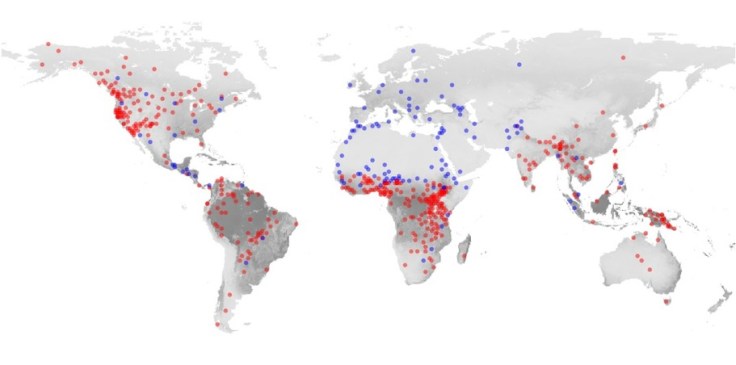
A new study links climatic instability and a lack of natural resources to belief in moralizing gods in cultures around the world.

Source: www.washingtonpost.com

I’m not posting this in spite of its controversial nature—I am sharing this precisely because it has raised eyebrows.  Many have read this and seen elements of environmental determinism in the cultural analysis of religions (despite the researcher’s insistence that their findings should not be taken as a form of geographical determinism).

While there appears to be a correlation between a belief in moral god(s) and a harsh environment, others could also look at this map and see the mapping of poverty, colonialism or historical evangelism.  Environmental determinism was used to justify colonialism and racist ideologies, geography fully rejected anything with even a hint of environmental determinism.  Geographers are hypersensitive to the critique of environmental determinism; that is why it is difficult to find modern geographic research that knocks on the door of determinism. 

Questions to Ponder: How much environmental determinism is in this research?  What alternatives exist to environmental determinism?  How much of a factor is the environment in shaping cultural patterns? 


Tags: environment, religion, culture,  unit 1 GeoPrinciples.

That Map from The Washington Post About Female/Male Ratios Is Way Off. Here’s a New One…

“While women comprise 49.6% of the global population, they have the majority in the United States, where 50.8% of the total population is female. But what do the numbers look like at the state level? The Washington Post put together a map yesterday purporting to show which states had more women than men and vice versa. Their map was widely circulated, jumping to the number one spot on the popular subreddit Data is Beautiful and was the most read story on the Washington Post for a while…”

Source: twentytwowords.com

Unfortunately the top map was pretty sloppy way to visually explain the census data…it’s wasn’t THAT wrong (sorry Alaska and Hawaii), but the symbols convey a greater degree of difference than actually exists.  Below is a map that shows the differences in the data in a much more informative matter. 

Tags: cartography, mapping201, visualization, gender, census, USA.

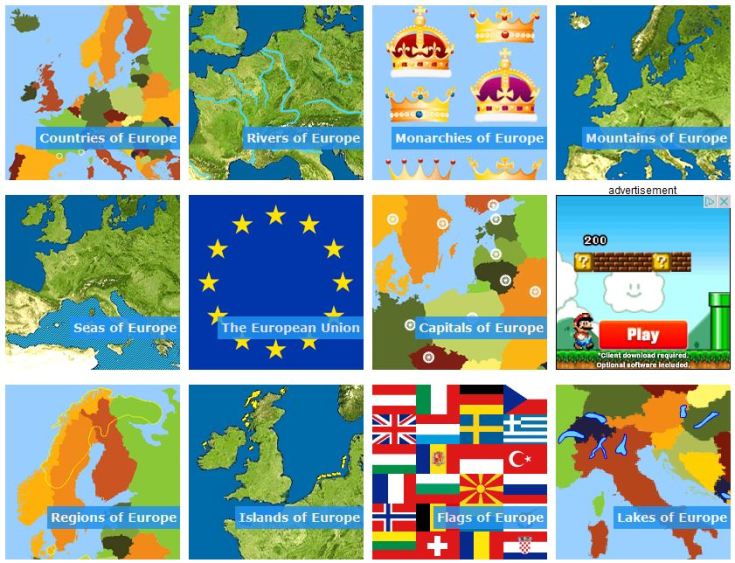
Geography of Europe Games

Source: www.toporopa.eu

Toporopa is compilation of different games and app for secondary students to review their geographic knowledge of geography, and learn new concepts in a fun and entertaining way.  It does reinforce the ‘encyclopedic’ view of geography education, but the games are well-crafted and available in most of the major languages of the European Union.  See a Spanish-language review of the site here.   

Tags: Europe, regions, trivia, games.

A liter of acid can destroy someone’s life

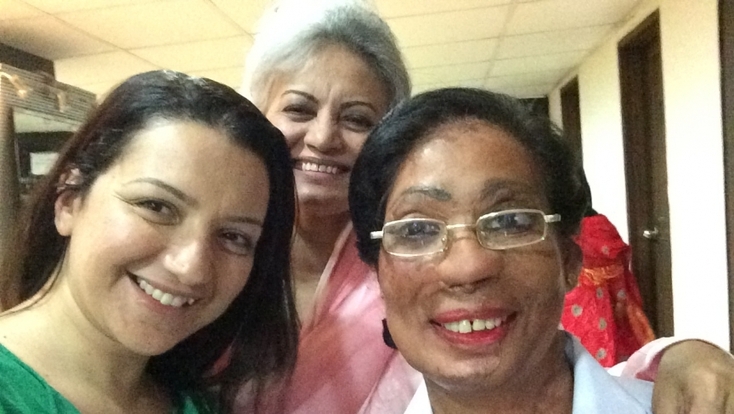
Almost 10 years ago, a young Pakistani woman was held down by her mother-in-law while her husband and father-in-law threw acid on her. Some 150 operations later, Bushra Shafi is working as a beautician in a hair salon in Lahore, started by a hairdresser who was moved to help victims of acid attacks when one of them came into her salon and asked simply: “Can you make me beautiful again?”

Source: www.pri.org

Like any form of violence against women, this is not entirely representative of the region in which this found.  But this type of crime is much more prevalent in South Asia than in any other region. 

TagsSouth Asia, development, Pakistangender, culturepodcast.

Using BatchGeo

“Quick 1 minute tutorial on using BatchGeo to create a map. This example shows copying data straight from Wikipedia and mapping, but you can also use spreadsheets, databases, or any other tab delimited dataset.”

Source: www.youtube.com

BatchGeo is incredibly easy to use mapping platform…think of it as GIS-lite.  If you have a spreadsheet full of point data, you can make a map with your own data.  

Tagsmapping, 201, CSV, edtech.


Spatial Design

“How much does size really matter? Judging by this tiny home in France, not a whole lot — as long as the space is functional.

On the seventh floor of an apartment building in Paris, there’s an 86-square-foot apartment complete with a bed, kitchen, bathroom, table and chairs, closet, bathroom and storage space.” —HPost

Source: vimeo.com

Space in a home matters, but the functionality of that space is critical.  Geography is about spatial thinking, and this video promotes a different type of spatial thinking, but one that still will help geographic thought.  As our metropolitan areas get more and more crowded, planning of this type might become increasingly common.  What advantages to you see in interior design that seek s to maximize space?  What are some drawbacks to a design such as this?

Tags: spatialdensity, urbanism, housing.

Cityscapes of Chicago

Cityscape Chicago II is a personal timelapse piece that I have worked on periodically over the past two years. The inspiration behind the project ties similarly with the original piece. As the city of Chicago continues to change, my fascination with it grows as well. The goal for me is always to capture the city in a unique way from new perspectives, and to continue exploring it.

Tags: Chicago, urban, place, landscape,  video.

Source: vimeo.com

How cultures around the world make decisions

Is the American obsession with individual freedom really such a great idea? What other cultures know about how to make good choices.

Source: ideas.ted.com

This article show three distinct cultural approaches to the concept of choice, showing how they shape people and communities and cultural systems.  The three models discussed are:

  • One American model: Give me personal autonomy or give me death.
  • The Amish model: Belonging, not choice, is crucial.
  • One Asian model: Focus on interdependence and harmony, not independence and self-expression.


Tagsculture, worldwideTED.

Blog at WordPress.com.

Up ↑