Search

GEOGRAPHY EDUCATION

Supporting geography educators everywhere with current digital resources.

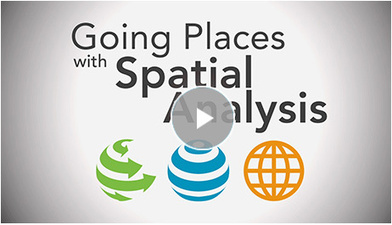
Learn What Spatial Analysis Can Do for You

“This Massive Open Online Course (MOOC) is for people who know something about data analysis and want to learn about the special capabilities of spatial data analysis. Spatial analysis focuses on location to gain a deeper understanding of data. Spatial analysis skills are in high demand by organizations around the world. You’ll get free access to the full analytical capabilities of ArcGIS Online, Esri’s cloud-based GIS platform. Previous experience with GIS software is helpful, but not necessary for tech-savvy problem solvers. Could you and your career go places with spatial analysis?”

Source: www.esri.com

This course starts tomorrow…if you’ve wanted to learn about GIS with a no-risk on-ramp, this looks to be a safe bet from the worldwide leader in geospatial software.  While a grad student at Penn State, I was a TA for a course designed by David DiBiase (the instructor of the MOOC), and I still refer back to that class as one of the best courses to teach geographic skills for the non-geography major.  

Tagsmappingspatial, teacher training, GIS,  ESRI, geospatial, edtech.
Population Density

“This talks about what population density is and why people live where they do.”

Tags: population, density

Source: www.youtube.com

Ukraine’s Geographic Challenge

“Ukraine is the quintessential borderland state. The country borders three former Soviet states and four countries in the European Union.  Ukraine sits on the Northern European Plain, the area that has historically served as an invasion superhighway going east and west.”

Tags: Ukraine, geopoliticspolitical.

Source: www.youtube.com

NORWAY – A Time-Lapse Adventure

www.rustadmedia.com Please watch in HD with good speakers for the optimal experience. You can watch it in 4K here: https://www.youtube.com/watch?v=Scxs7L0vhZ4 This…

Source: vimeo.com

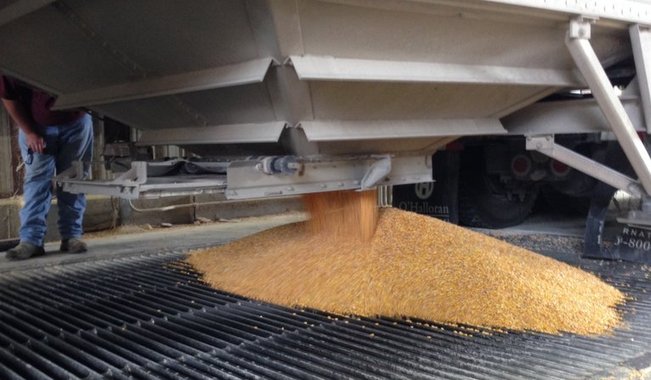
A hard look at corn economics — and world hunger

Corn is not what you think. For starters: Most of the time, it’s not human food.

Source: www.marketplace.org

Land use practices that determine what is grown in a particular place are partly determined by the health needs of a local population, but they are more directly shaped by economic markets.  Over 75% of the corn produced in the United States is destined for animal feed or fuel; since global population projections are now supposed to be 11 billion by 2100, these are some important issues for us to consider before we are forced to reassess our societal choices.    


Tagspodcast, political ecologyagriculture, food production, land use.

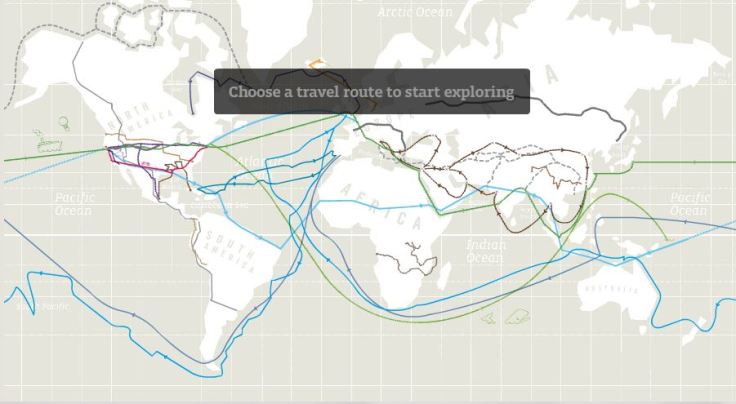
The most famous trips in history

“An interactive map to explore history’s greatest journeys, from Magellan to Kerouc.” 

Source: awesome.good.is.s3.amazonaws.com

This use-to-use interactive map let’s users digitally walk in the footsteps of some of the greatest explorers ever.  Some of the pivotal moments in history was when geographers sought out lands that were unknown to them. 

Feeding the Whole World

“Louise Fresco argues that a smart approach to large-scale, industrial farming and food production will feed our planet’s incoming population of nine billion. Only foods like (the scorned) supermarket white bread, she says, will nourish on a global scale.”

Source: www.youtube.com

Many advocates of local foods favor a small-scale approach to farming and are opposed to large-scale agribusiness. It might be easy for those disconnected from the food production system (like me) to romanticize and mythologize the farmers of yesteryear and yearn to return to this past.  This talk highlights how essential large-scale farming is absolutely critical to feeding the global population; this other TED talk discusses many of the hunger problems especially the uneven access to food.  Here are some other pro-agribusiness resources.   

Tags: agriculture, food production, food distribution, agribusiness, TED

Minnetonka’s last family farm to become housing development

For more than 50 years, the Jondahl family raised horses, sheep and chickens, grew corn, beans and berries on their farm in Minnetonka — all the while watching as Hwy

Source: www.startribune.com

Break Dancing, Phnom Penh-Style

“A former gang member from Long Beach, California, teaches break dancing to at-risk youths in Cambodia.”

Source: www.youtube.com

This video is a great example of cross-cultural interactions in the era of globalization.  Urban youth culture of the United States is spread to Cambodia through a former refugee (with a personally complex political geography).  What geographic themes are evident in this video? How is geography being reshaped and by what forces?

Create a free website or blog at WordPress.com.

Up ↑