Search

GEOGRAPHY EDUCATION

Supporting geography educators everywhere with current digital resources.

A World With 11 Billion People? New Population Projections Shatter Earlier Estimates

“In a paper published Thursday in Science, demographers from several universities and the United Nations Population Division conclude that instead of leveling off in the second half of the 21st century, as the UN predicted less than a decade ago, the world’s population will continue to grow beyond 2100.”

Source: news.nationalgeographic.com

These articles from the Guardian and National Geographic were the first I’d heard of the new population projections for the future.  For many years it was assumed that the global population would level out at around 9 billion; while that is still within the range of possibilities but these new projections indicate that it is much more likely that the total global population will be much higher than that.  The geographic implications of this are far reaching.

Tag: population, demographic transition model, unit 2 population.

How Breastfeeding Is Viewed Around the World

Breastfeeding can be a polarizing topic. Views vary not only from person to person, but also country to country, according to a new survey examining women’s opinions on breastfeeding.

Source: blogs.wsj.com

This is just one example of how our opinions, cultural values and sensibilities are shaped by the cultures and places in which we are immersed.  How do normative attitudes shape how people use public space?  How is the body (especially the female body) regulated in public space?   

Tags: perspective, culture, gender.

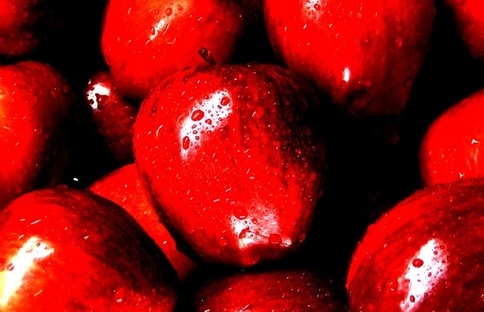
The Awful Reign of the Red Delicious

For at least 70 years, the Red Delicious has dominated apple production in the United States. But since the turn of the 21st century, as the market has filled with competitors—the Gala, the Fuji, the Honeycrisp—its lead has been narrowing. Annual output has plunged.”

Source: www.theatlantic.com

The story of the Red Delicious is almost a perfect analogy for the food industry.  It was genetically selected for its marketable skin, an aesthetically sumptuous red.  The skin of the Red Delicious better covers bruises than other varieties and tastes more bitter.  Consumers were buying what the industry promoted and “eating with their eyes and not their mouths.”  But recently there has been a backlash in the United States and more American consumer are seeking out other varieties; meanwhile the apple producers are working on exporting this variety to around the world, but especially into Chinese markets.  


Tags: agriculture, food production, food distribution, agribusiness, USA

Cultural Patterns and Food

“Berlin Bureau Chief Michael Slackman looks into the obsession with currywurst, a popular street dish that combines sausage, ketchup and curry powder, and brings different Berliners together.”

Source: www.youtube.com

This short video has been added to the the interactive map, Place-Based Geography VideosThis depiction of street foods in German cities is a rich, tangible example to show cultural patterns and processes.  Currywurst is a unifying force across socioeconomic classes in Germany, but it is also a product of globalization and cultural interactions across regions.  Culture is not static and this New York Times video can be used to teach the various concepts of culture; per the updated APHG outline, the initial concepts of culture are:  

  • Culture traits
  • Diffusion patterns
  • Acculturation, assimilation and multiculturalism
  • Culture region, vernacular region, cultural hearth
  • Globalization and the effects of technology on culture.


Question to Ponder: How are these 5 major elements of culture seen in this video?

Tags: food, migration, culturediffusion, globalization, consumption, APHG.

Get Connected with Global Collaborative Projects

“Join us to learn how you can connect your students with students around the world through global collaborative projects. Register at: http://on.natgeo.com/1ymyZdC

Source: www.youtube.com

The Geo-Educator Community is planning a Google + Hangout on Wednesday, October 1st (7-8pm EST) to help link educators and organizations so you can link your students with classes around the world and learning to think globally.    

Fire and Weather

“This is what a pyrocumulus cloud caused by the burning of over 28,000+ acres of forest looked like as the sun set.  In person as these clouds were changing it wasn’t all that noticeable when the huge plumes of smoke changed shape, but thanks to the magic of a time-lapse we get to behold the violent nature of the smoke cloud, including a storm cloud that emerged behind the main pyrocumulus.”

Source: vimeo.com

Seeing this fire essential create it’s own weather system is riveting.  While this scene can be seen as beautiful on the macro-scale, it is horrific on the ground where the fire ravaged physical and human landscapes alike.


Tagsdisasters,  weather and climateCalifornia, landscape, time lapsevideo.

13 amazing coming of age traditions from around the world

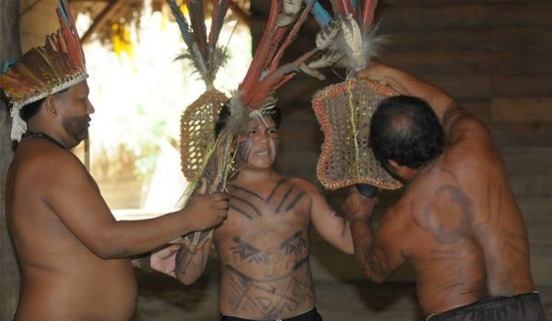
“The transition from childhood to adulthood — the ‘coming of age’ of boys who become young men and girls who become young women — is a significant stepping stone in everyone’s life. But the age at which this happens, and how a child celebrates their rite of passage into adolescence, depends entirely on where they live and what culture they grow up in.  Looking back, we’ll never forget the majesty that was prom, or the excitement of hitting the dance floor at our friends’ co-ed Bar and Bat Mitzvah parties, and why should we? Embarassing or amazing, they were pivotal moments in our lives that deserve remembering. On that note, here are thirteen of it the world’s most diverse coming of age traditions.”

Tags: gender, folk culture, culture, indigenous, worldwide.

Source: www.globalcitizen.org

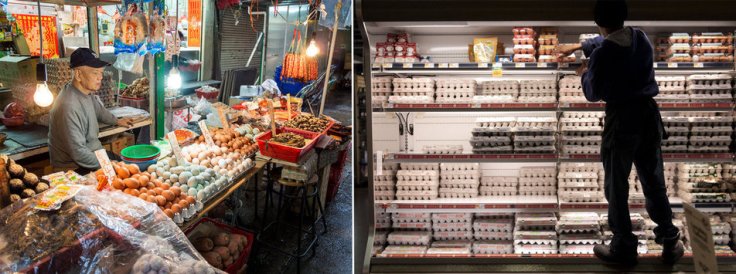
Why The U.S. Chills Its Eggs And Most Of The World Doesn’t

In many countries, eggs aren’t refrigerated and they’re still considered safe to eat. But in the U.S., we have to chill them, because we’ve washed away the cuticle that protects them from bacteria.

Source: www.npr.org

For many Americans that are traveling abroad for the first time, realizing that eggs aren’t in the refrigerator is a bit of a culture shock (not to mention the moment they find milk in a box that also isn’t being refrigerated).  Agricultural practices dictate storage requirements and some things we might have imagined were universal are actually place-specific or peculiar to our cultural setting.  What we are taught to think of as gross, appropriate, attractive or even sanitary is often steeped in a cultural context.  So is it strange the we refrigerate our eggs in the United States, or that they don’t in other places? 


Tagsfood productiontechnology, industry, food, agriculture, perspective.

The world as it is: The influence of religion

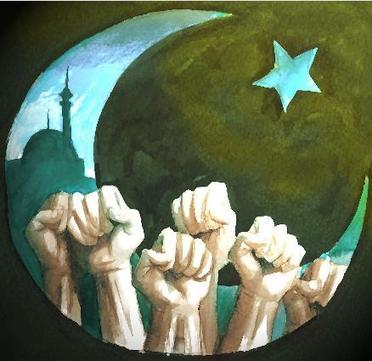
“Seldom has it been more important for Americans to form a realistic assessment of the world scene. But our current governing, college-­educated class suffers one glaring blind spot.

Modern American culture produces highly individualistic career and identity paths for upper- and middle-class males and females. Power couples abound, often sporting different last names. But deeply held religious identities and military loyalties are less common. Few educated Americans have any direct experience with large groups of men gathered in intense prayer or battle. Like other citizens of the globalized corporate/consumer culture, educated Americans are often widely traveled but not deeply rooted in obligation to a particular physical place, a faith or a kinship.”

Source: www.startribune.com

This is a truly intriguing op-ed that argues that many Americans have a ‘blind spot’ by failing to recognize the power of religion and tribal bonds in global affairs. While many in the west assume that a new world order has emerged, these old communal forces still rule much of the world and they have some profound geopolitical implications (the author explores Russia, Asia and the Middle East in particular). 

Tags: religion, culture, conflict, political, geopolitics.

Create a free website or blog at WordPress.com.

Up ↑