Search

GEOGRAPHY EDUCATION

Supporting geography educators everywhere with current digital resources.

Alexander von Humboldt

“Have you heard of Alexander von Humboldt? Not likely. The geologist turned geographer and South American explorer was a bit of an 18th century super scientist, traveling over 24,000 miles to understand the relationship between nature and habitat. George Mehler details Humboldt’s major accomplishments and why we should care about them today. See this TED ED lesson plan that accompanies the video.”

Source: www.youtube.com

Alexander von Humboldt has been described as the last great ancient geographer concerned with understanding an eclectic cosmography as well as the first modern geographer. He is honored far and wide throughout Latin America and Europe, but given that intellectually people are confused as how to categorize him and classify his contributions, today he is under-appreciated.  Geographers need to reclaim his memory and call his extensive, globetrotting work on a wide range of subjects ‘geography.’    


Tags:  historicalbiogeography, unit 1 Geoprinciples, TED.
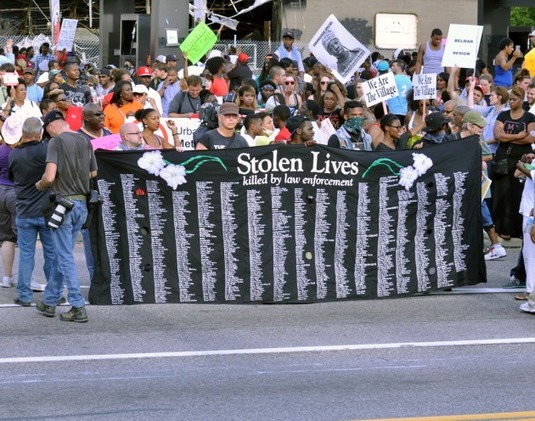
Remembering the Real Violence in Ferguson

“Violence has a geography and for this reason, geography lies at the center of discussions of violence. Within the United States a myriad of taken for granted assumptions about identity, place, power, and memory undergird the nation’s psyche.  These normative interpretations intersect with a particular kind of geographic formulation that places persons of color in general, but black men most specifically, at the center of the violent structures of the nation.”

Source: societyandspace.com

This isn’t merely commentary about social upheaval or some musing about the social inequities (I think we’ve all read a ton of those articles).  This is a geographic analysis that discusses the interactions, interconnections and implications of a social and spatial conflict between citizens and the institutions of the state.  Ferguson, MO is undoubtedly a lightning rod today and some might prefer to avoid discussing it in a classroom setting; I find that as long as we put analysis before ideology, issues such as these show students the relevance and importance of geographic principles to their lives. 

Tags: race, class, gender, place, poverty, socioeconomic.

Teaching September 11th

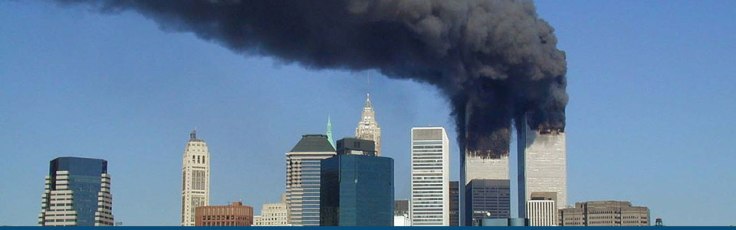
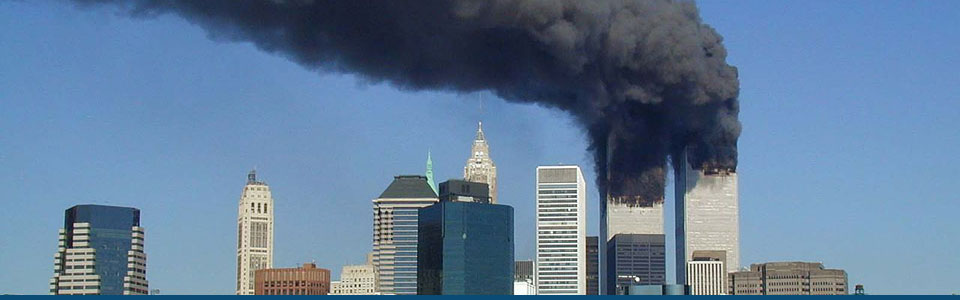
“In the years after the attacks of September 11, debates about how the United States should respond to the threat of terrorism remain of central importance. The death of Osama bin Laden, the rise of ‘homegrown’ terrorists, and the use of drones to kill suspected terrorists pose new questions and challenges for policy makers and citizens. Responding to Terrorism: Challenges for Democracy helps students consider the issues surrounding the 9.11.01 attacks and the U.S. response to terrorism in a constructive context that promotes dialogue about future policy directions.”

Source: www.choices.edu

This lesson plan from the Choices Program will help students explore the human dimension of the September 11 attacks as will this lesson from Teaching History. For a geospatial perspective on 9-11, this page from the Library of Congress, hosted by the Geography and Map Division is a visually rich resources (aerial photography, thermal imagery, LiDAR, etc.)  that show the extent of the damage and the physical change to the region that the terrorist attacks brought.  Also on global terrorism, the Choices Program has also produced some materials on how to teach about ISIS as a new emerging geopolitical threat. 

Teaching September 11th

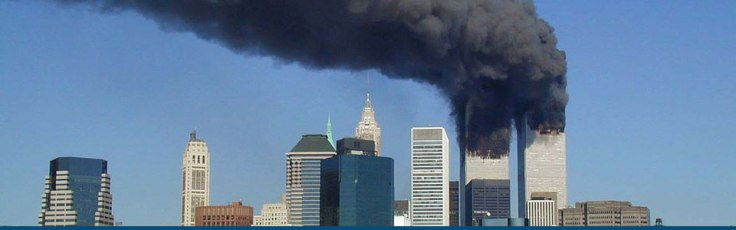
“In the years after the attacks of September 11, debates about how the United States should respond to the threat of terrorism remain of central importance. The death of Osama bin Laden, the rise of ‘homegrown’ terrorists, and the use of drones to kill suspected terrorists pose new questions and challenges for policy makers and citizens. Responding to Terrorism: Challenges for Democracy helps students consider the issues surrounding the 9.11.01 attacks and the U.S. response to terrorism in a constructive context that promotes dialogue about future policy directions.”

Source: www.choices.edu

This lesson plan from the Choices Program will help students explore the human dimension of the September 11 attacks as will this lesson from Teaching History. For a geospatial perspective on 9-11, this page from the Library of Congress, hosted by the Geography and Map Division is a visually rich resources (aerial photography, thermal imagery, LiDAR, etc.)  that show the extent of the damage and the physical change to the region that the terrorist attacks brought.  The images from that day are a part of American memory and change how the event is remembered and memorialized in public spaces.  Also on global terrorism, the Choices Program has also produced some materials on how to teach about ISIS as a new emerging geopolitical threat. 

Earth’s Cosmic Context

“Superclusters – regions of space that are densely packed with galaxies – are the biggest structures in the Universe. But scientists have struggled to define exactly where one supercluster ends and another begins. Now, a team based in Hawaii has come up with a new technique that maps the Universe according to the flow of galaxies across space. Redrawing the boundaries of the cosmic map, they redefine our home supercluster and name it Laniakea, which means ‘immeasurable heaven’ in Hawaiian.  Read the research paper here.”

Source: www.youtube.com

Spatial thinking and geographic exploration is constantly seeking to understand place in context to other places.  More often than not, that is done without every venturing beyond this planet, but in many respects, space is the greatest of contexts on the grandest of scales for us to understand ourselves.  I first saw this video embedded in an NPR article and it filled me with wonder to think about the immensities of space and that the Earth is such a small little corner of the universe. 

Tags: space, scale, perspective

America’s coal heartland is in economic freefall

The coal economy in Central Appalachia is in an unprecedented freefall. Which isn’t making it easier for workers to move on.

Source: www.washingtonpost.com

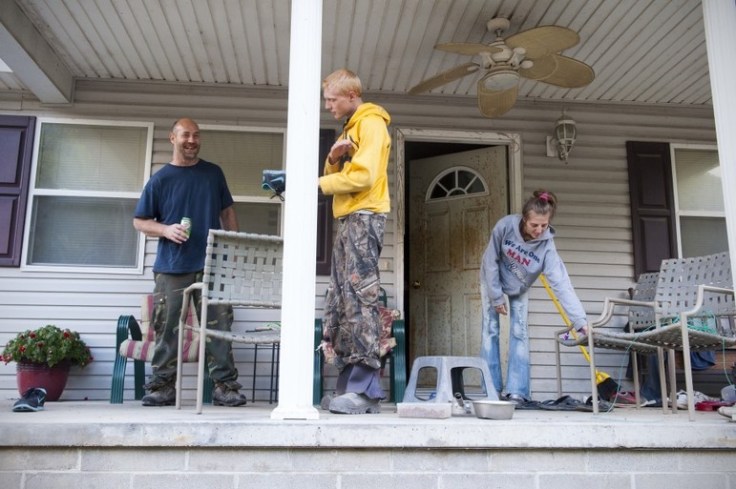
West Virginia and ‘coal country’ are in steep economic decline, but that doesn’t mean people are eager to leave.  Leaving for many is a last resort, but when residents feel a familial and emotional connection to a place–to the land–that can create a rationale for staying that is stronger than economic push factors.  This video set in West Virgina captures the strong sense of place and community that can exist in a place even in in the face of tough times economic prospects. 

Tagseconomicplace, industry, location, migration, APHG, poverty, socioeconomic.

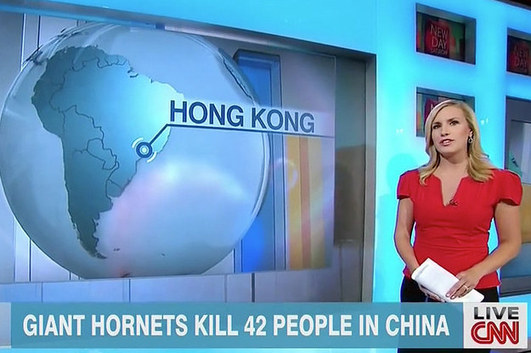
18 “Geography Fail” Media Gaffes

Maps are hard. Not that hard, though.

Source: www.buzzfeed.com

I’ve tried to resist sharing each individual geographic gaffe that the media makes over the years as evidence that we need to strengthen geography education.  Unfortunately, though these media cartographic errors are all to common, geographic ignorance runs much deeper that.  Creating a geo-literate society entails so much more than just knowing where places are on the map…although that is a good start.  


Tags: geo-inspiration, geography education, media.

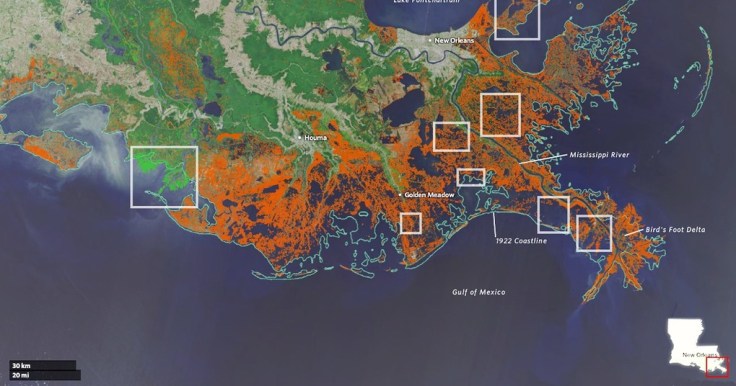
This is what Louisiana stands to lose in the next 50 years

The USGS says sea-level rise and sinking could claim up to 4,677 square miles of land along the coast if the state doesn’t implement major restoration plans.

Source: projects.propublica.org

This is a gorgeous interactive map which pulls together some high  high quality source materials on a wide range of issues to look at this environmental issues of this region in a holistic manner. 

Tagsmappingcoastal, environment, erosion, landscape.

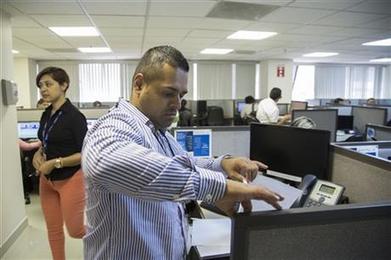
Deported Mexicans find new life at call centers

“Henry Monterroso is a foreigner in his own country. Raised in California from the age of 5, he was deported to Mexico in 2011 and found himself in a land he barely knew. But the 34-year-old now supervises five employees amid rows of small cubicles who spend eight hours a day dialing numbers across the United States. He is among thousands of deported Mexicans who are finding refuge in call centers in Tijuana and other border cities. In perfect English — some hardly speak Spanish — they converse with American consumers who buy gadgets, have questions about warrantees or complain about overdue deliveries.”

Source: bigstory.ap.org

I have family on both sides of the line; sometimes the border can feel like and artificial an inconsequential separation, at other times it feels like to biggest reality in the region.  This article provides just one intriguing example of how the border both unites and divides economies, peoples, and places.

Tags: Mexicolabormigration, borders, political.    

Blog at WordPress.com.

Up ↑