Search

GEOGRAPHY EDUCATION

Supporting geography educators everywhere with current digital resources.

Beautiful Landscapes

“Here’s a collection of timelapses I shot during the past year. Amazing landscapes from California, Arizona, Bahamas, Florida, Japan, Taiwan to Italy.”

Source: vimeo.com

Part of a teaching geography is showing the wonders of the Earth in as way that will hopefully spark some awe, curiosity, and desire to see more of the planet.  I think this video is a nice primer for that.  

Tags: landscape, time lapse, video.

Comparing the five major world religions

“It’s perfectly human to grapple with questions, like ‘Where do we come from?’ and ‘How do I live a life of meaning?’ These existential questions are central to the five major world religions — and that’s not all that connects these faiths. John Bellaimey explains the intertwined histories and cultures of Hinduism, Judaism, Buddhism, Christianity and Islam.”

Source: www.youtube.com

This TED ED Lesson outlines the basics of five major world religions which in turn have profoundly reshaped the cultural geographies we see today.  While the narration in the video might be a bit dry, the visuals immerse the viewer into the cultural context from which these religions emerged.   


Tags: religion, culture, TED, Christianity, Islam, unit 3 culture.

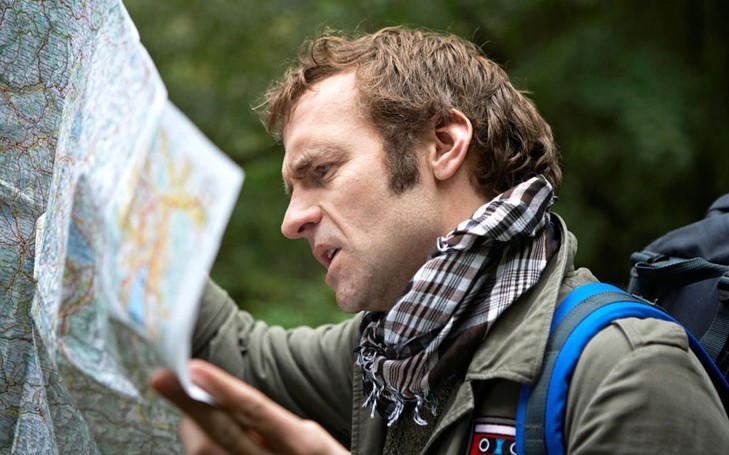
Why everyone should be able to read a map

New research suggests that map reading is a dying skill in the age of the smartphone. Perish the thought, says Rob Cowen

Source: www.telegraph.co.uk

Despite the gendered overtones of the article (that it’s important for men to learn to read a map), this is some good advice, regardless of gender.  The vocabulary and concepts of maps can strengthen spatial cognition and geography awareness.  While GPS technology can help us in a pinch, relying primarily on a system that does not engage our navigation skills will weaken our ability to perform these functions.  While it intuitively makes sense, that the ‘mental muscles’ would atrophy when not used, it is a reminder that an overuse of geospatial technologies can be intellectually counterproductive.  So break out a trusty ol’ map, but more importantly, be a part of the spatial decision-making process. 


Tags: mapping, spatial, technology, education.

This Fall, Minorities Will Outnumber White Students in U.S. Schools

“While 62 percent of the total U.S. population was classified as non-Hispanic white in 2013, when public schools start this fall their racial landscape will reflect a different America.”

Source: www.theatlantic.com

A new report new shows the changing demographics in American education and how it differs from that of the general population.  The demographic shifts in the United States are transforming the cultural fabric of the country and this interactive feature from the Pew Research Center explores some of these changes.  What are some of the reasons and what are some of the impacts?

Tag: declining populations, population, demographic transition model, USA.

Mystery of Death Valley’s ‘Sailing’ Stones Solved

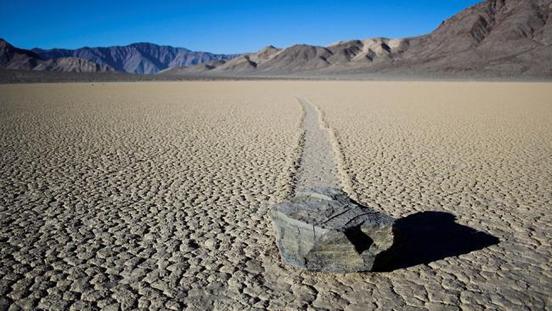
There’s a place in Death Valley National Park where a mystery that has puzzled scientists and park visitors for decades finally has been solved.

Source: www.weather.com

The video in this article (weather.com) nicely explains how the non-aerodynamic rocks of Death Valley’s Racetrack Playa move, leaving behind their trail in the hot desert.  Numerous attempts using GPS receivers (NatGeo.com) and good ol’ fashioned observations have been made, but observing ice in Death Valley is so rare that no one had ever seen it until now (phys.org).  On very rare occasions, when it rains in the region, water will accumulate in the playa (discovermagazine.com).  If the wind is powerful and consistent enough, the wind will push the panels of ice against these rocks and over time, the ice floes will push these rocks, leaving behind distinctive trails (latimes.com). This perfect combination of water, wind, ice and heat creates a remarkable signature on the landscape (livescience.com).

Tags: physical, geomorphology, landforms, desert,  erosion, weather and climate, landscape.

The First Day of School Around the World

Take a look at the first day of school celebrations around the world!

Source: kidworldcitizen.org

Access to education is one of the great indicators of development and political stability–educators wish nothing but the best education possible for the next generation, but the experience is quite variable across the globe.  As many places have recently started school again, this article is a reminder that this practice is experienced differently around the world. 

Tags: education, K12, development, perspective, worldwide.

Local Shifts in Labor Demand

“Daily oil production in the Bakken is approaching one million barrels per day, placing it in an elite group of only ten super-giant oil fields in the world that have ever produced that much oil at peak production. In total, nearly one billion barrels of oil have now been produced in the Bakken oil fields, and all of that oil production and related activities have brought the unemployment rate in the Williston area down to below 1% in most months over the last three years. For the most recent month – April – the jobless rate here was 0.9%.”

Source: www.aei-ideas.org

As an oil boom has transformed North Dakota, the influx of oil workers has changed all the sectors of the local economy.  Agriculture has historically been the #1 economic contributor in the region, but huge piles of grain aren’t be shipped to the market, as oil by rail is much more profitable.   

Questions to Ponder: Why is WalMart offering such high wages in North Dakota?  What local factors impact the prevailing wage rate?  What does this tell us about places with low wages?  How does the oil industry impact all the others in the region?     

Tags: manufacturing, economic, North America, labor, USA.
Fragile States Index

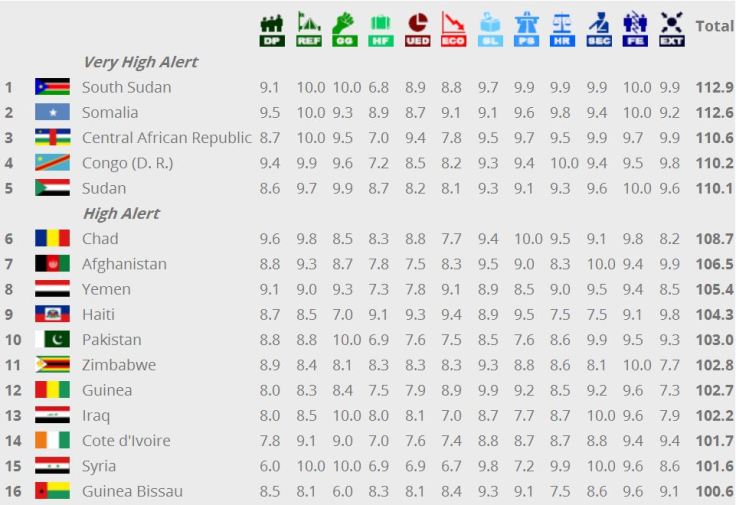
“Weak and failing states pose a challenge to the international community. In today’s world, with its highly globalized economy, information systems and interlaced security, pressures on one fragile state can have serious repercussions not only for that state and its people, but also for its neighbors and other states halfway across the globe.  The Fragile States Index (FSI), produced by The Fund for Peace, is a critical tool in highlighting not only the normal pressures that all states experience, but also in identifying when those pressures are pushing a state towards the brink of failure.”

Source: http://fundforpeace.org/fsi/analytics/fsi-heat-map/

How can political stability and security be measured?  What constitutes effective governance?  The Fragile States Index (formerly known as the Failed States Index) is a statistical ranking designed to measure the effective political institutions across the globe.  There are  12 social, economic, and political/military categories that are a part of the overall rankings and various indicators are parts of the metrics that are a part of this index are:

SOCIAL

•Demographic Pressures

•Refugees/IDPs

•Group Grievance

•Human Flight and Brain Drain

ECONOMIC

•Uneven Economic Development

•Poverty and Economic Decline

POLITICAL/MILITARY

•State Legitimacy

•Human Rights and Rule of Law

•Public Services

•Security Apparatus

•Factionalized Elites

•External Intervention


Tags: political, statistics, development, territoriality, sovereignty, conflict, political, devolution, war.

The 9 biggest myths about ISIS

If you want to understand the Islamic State, better known as ISIS, the first thing you have to know about them is that they are not crazy. Murderous adherents to a violent medieval ideology, sure. But not insane.

Source: www.vox.com

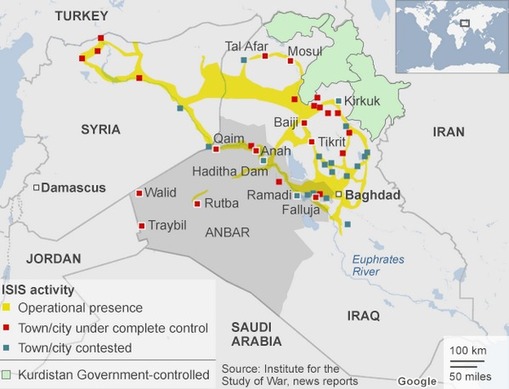
This interactive is a series of related articles, each designed to tackle popular narratives that have been constructed to explain ISIS; there are bits of truths in these myths, but they fail to fully contextualize the reality on the ground.  These nine myths are:

  1. ISIS is crazy and irrational
  2. People support ISIS because they like its radical form of Islam
  3. ISIS is part of al-Qaeda
  4. ISIS is a Syrian rebel group
  5. ISIS is only strong because of Iraqi Prime Minister Maliki
  6. ISIS is afraid of female soldiers
  7. The US can destroy ISIS
  8. ISIS will self-destruct on its own
  9. ISIS is invincible


Tags: Syria, Iraq, MiddleEast, conflict, political, geopolitics.

Blog at WordPress.com.

Up ↑