Search

GEOGRAPHY EDUCATION

Supporting geography educators everywhere with current digital resources.

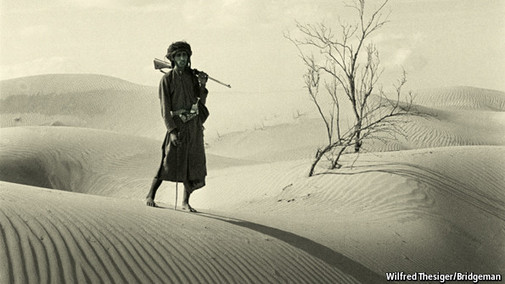
The tragedy of the Arabs

“A THOUSAND years ago, the great cities of Baghdad, Damascus and Cairo took turns to race ahead of the Western world. Islam and innovation were twins. The various Arab caliphates were dynamic superpowers—beacons of learning, tolerance and trade. Yet today the Arabs are in a wretched state. Even as Asia, Latin America and Africa advance, the Middle East is held back by despotism and convulsed by war.  

Pluralism, education, open markets: these were once Arab values and they could be so again. Today, as Sunnis and Shias tear out each others’ throats in Iraq and Syria and a former general settles onto his new throne in Egypt, they are tragically distant prospects. But for a people for whom so much has gone so wrong, such values still make up a vision of a better future.”

Source: www.economist.com

While the title of the article is more inflammatory than I would prefer, the analysis in this article from the Economist does a good job linking the cultural, economic and political struggles in the Middle East.

Tags: political, culture, economic, Islam, MiddleEast.
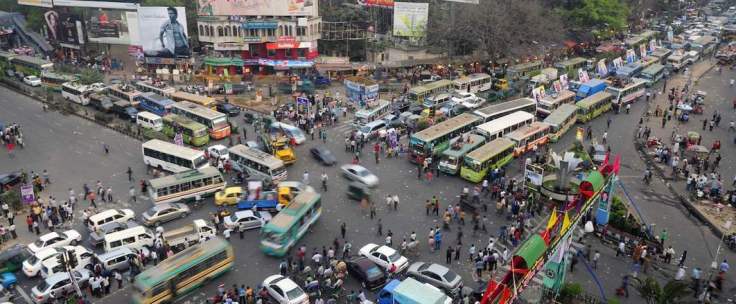
This Is the Traffic Capital of the World

There are only 650 major intersections here—but somehow only 60 traffic lights.

Source: www.newrepublic.com

Dhaka is the capital of Bangladesh and (as I often tell my students) it is the biggest city that nobody has ever heard of.  The infrastructure is so incredibly limited that traffic jams cost the city an estimated $3.8 billion in delays and air pollution.  This is an excellent article to explore some of the problems confronting megacities. 

Tags: Bangladesh, transportation, planning, density, South Asia, development, economic, megacities.

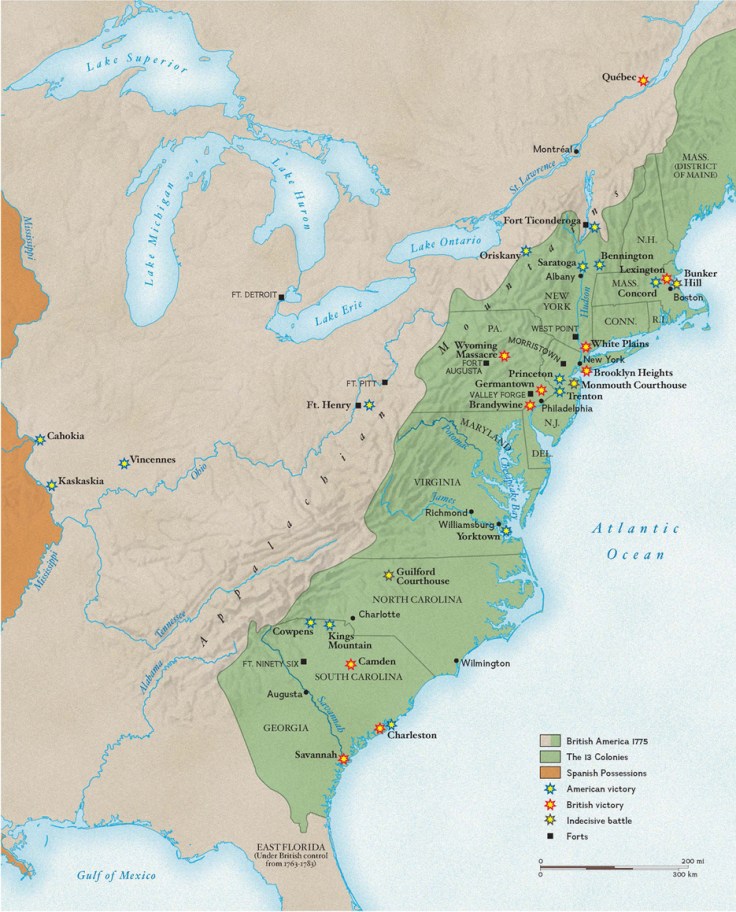
Revolutionary War Battles

America’s war for indpendence began on April 19, 1775, when the first shots were fired at Lexington and Concord in Massachusetts.

Tags: USA, historical, mapping, National Geographic.

Source: education.nationalgeographic.com

Google Maps Smarty Pins

Smarty Pins is a Google Maps based geography and trivia game.

Source: smartypins.withgoogle.com

As stated in a review of Smarty Pins on Mashable, “Google unveiled a fun new game this week that tests players’ geography and trivia skills.  Called ‘Smarty Pins’ the game starts players off with 1,000 miles (or 1,609 kilometers if they’re not based in the United States), and asks them to drop a pin on the city that corresponds with the correct answer to a given question.” 


This game is wonderfully addictive…I haven’t enjoyed a mapping trivia platform this much since I discovered GeoGuessr.  I answered 38 questions before I ran out of miles…how far did you get?  

Tags: google, fun, mapping, place, trivia.

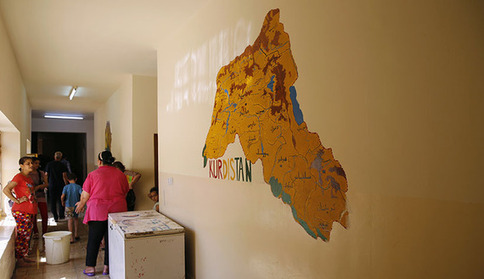
Would Turkey accept a Kurdish state?

As the likelihood of an independent Kurdish state on Turkey’s eastern border grows, Ankara is losing its historical resistance to the idea.

Developments in Iraq have left Turkey facing the prospect of an independent Kurdish state on its eastern border. Such an idea would have been abhorrent for Turkey a mere decade ago for fear that its existence would incite separation among its own restive Kurds. The standard Turkish narrative at the time was that an independent Kurdistan was a Western project aimed at destroying Turkey, an age-old ambition. Even the 2003 US invasion of Iraq was viewed in this context by many. The picture is no longer so black and white.

Source: www.al-monitor.com

Sustaining Seven Billion People

“With seven billion people now living on Earth, the ever growing demand is putting unprecedented pressure on global resources—especially forests, water, and food. How can Earth’s resources be managed best to support so many people? One key is tracking the sum of what is available, and perhaps nothing is better suited to that task than satellites.”

Source: earthobservatory.nasa.gov

Agricultural production is one of the ways in which people modify the environment more than any other.  Global population is expected to top out at around 9 billion around 2050, so will we be able to sustainably feed all of the entire human population?  Satellite imagery can help answer these questions. 

Tags: remote sensing, geospatial, images, sustainability, agriculture, food production, environment modify, unit 5 agriculture. 

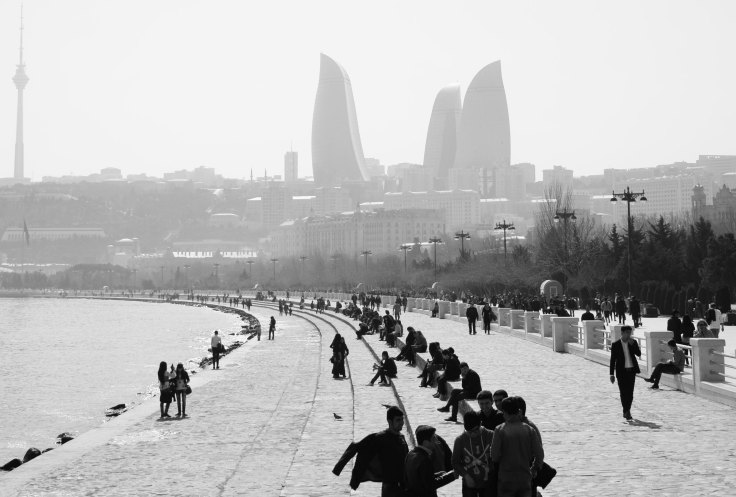
Welcome to Baku, the Fiercely Modern, Millennia-Old, Capitalist-Socialist, Filthy-Rich Capital of Azerbaijan

“Since 2006, when the opening of the Baku-Tbilisi-Ceyhan pipeline prompted a surge in crude oil exports — up to a million barrels a day travel through neighboring Georgia and on to Turkey and the West — there’s been no shortage of cash in Baku. Now, the city is eager for the prestige that goes with it.”

Source: www.bloomberg.com

Baku is described in this article as an East-West, socialist-capitalist, Muslim-secular, ancient-modern mishmash due to the numerous cultural and political interactions that it has had.  This makes for a fascinating cultural landscape emerging in a city that has been dubbed “the Dubai of the Caucasus” but still has a rich Silk Road history.  Caspian Sea oil lies at the heart of Azerbaijan’s geopolitical importance and cultural aspirations. 


Tags: Azerbaijan, political, Central Asia.

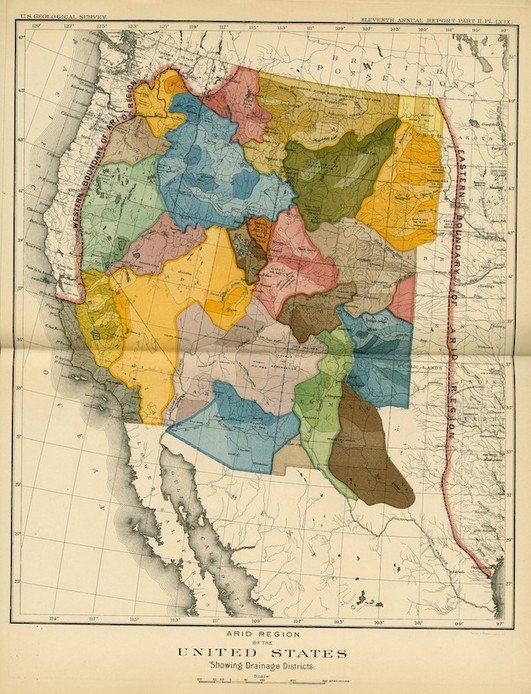
This 19th Century Map Could Have Transformed the West

Today’s drought-riven west would look very different if Congress had listened to John Wesley Powell

Source: www.newrepublic.com

Author of Mapping the Nation, Susan Schulten explains how western expansion failed to recognize the basic physical geographic reality of the United States–that the west is much drier than the east.  Given that much of the west, especially California, is in the midst of a severe drought, this article serves as a reminder to recognize that localized understandings of human and environmental actions are necessary.  Do you know what watershed you live in?  How does and should that impact us?   


Tags: physical, historical, California, water, environment.

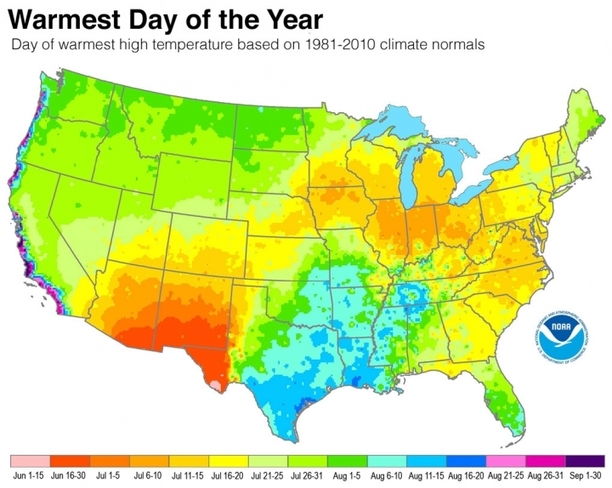
Maximum Summer Heat

A new analysis shows when summer reaches peak heat across the U.S.

Tags: physical, weather and climate, seasonal.

Source: www.climatecentral.org

Blog at WordPress.com.

Up ↑